If the Old Town is the heart
of Barcelona and the green mountains of Tibidabo and Montjuïc the lungs,
the Eixample is the city’s nervous system – its economic and commercial
core. The area began to take shape in 1860 when the city was permitted
to expand beyond the medieval walls .
Its design, based on plans by Catalan engineer Ildefons Cerdà,
comprises hundreds of symmetrical grid-like squares. Construction
continued into the 20th century at a time when Barcelona’s elite was
patronizing the city’s most daring architects. Modernisme was flourishing and the area became home to the cream of Barcelona’s Modernista
architecture, with myriad elegant façades and balconies. Today, a
wealth of enchanting cafés, funky design shops, gourmet restaurants and
hip bars and clubs draws the professional crowd, which has adopted the
neighbourhood as its own.

Sights
Mansana de la Discòrdia
At the heart of the city’s Quadrat d’Or
(Golden Square) lies this stunning block of houses. Literally “the
block of discord”, the Mansana de la Discòrdia is so-called because of
the dramatic contrast of its three flagship buildings. Built between
1900 and 1907 by the three Modernista
greats, rival architects Gaudí, Domènech i Montaner and Puig i
Cadafalch, the buildings were commissioned by competing bourgeois
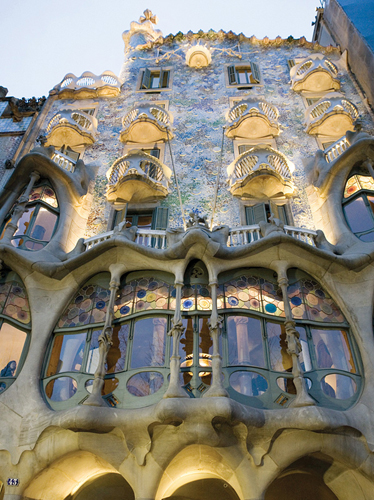
families. Domènech is represented by the ornate Casa Lleó MoreraCasa AmatllerCasa Batlló.
All boast superb interiors: Casa Amatller runs tours of the vestibule
but Casa Lleó Morera is sadly closed to the public. The lesser-known
houses at Nos. 37 and 39 add to the overall splendour of the block. The Perfume Museum at No. 39 is heaven for scent-lovers.Pg de Gràcia 35–45

Windows, Casa Battló, Mansana de la Discòrdia
Hospital de la Santa Creu i de Sant Pau
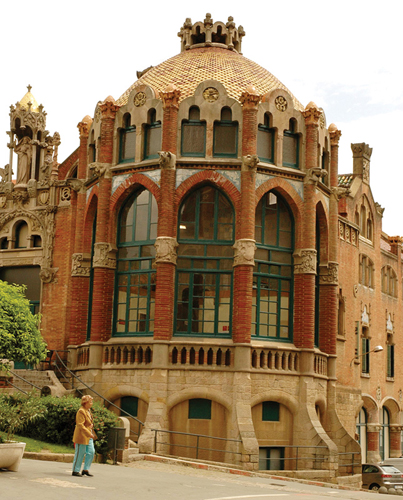
Still a fully functioning hospital, it was built in two stages from 1905 by Domènech i Montaner and his son. A tribute to Modernisme
– and Domènech’s answer to Gaudí’s Sagrada Família – the sumptuous
design comprises eight pavilions and various other buildings linked by
underground tunnels. The pavilions, each different, recall the history
of Catalonia with murals, mosaics and sculptures. Interlacing the
buildings are gardens creating beautiful outdoor oases. The courtyards
and gardens are open to visitors. Part of the Ruta del Modernisme .C/Sant Antoni Maria Claret 167

Hospital de la Santa Creu i de Sant Pau
Fundació Tàpies
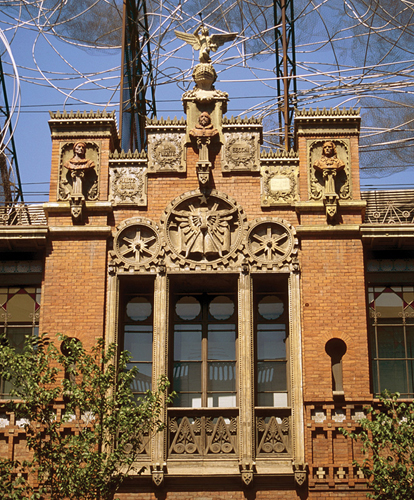
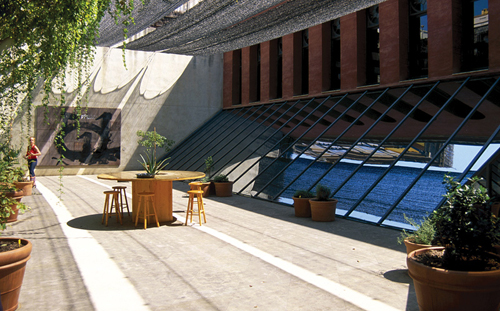
Paintings and sculptures by Antoni Tàpies (b. 1923), Catalonia’s foremost living artist, are housed in this early Modernista building . For a glimpse of what awaits inside, look up: crowning the museum is the artist’s eye-catching wire sculpture Cloud & Chair (1990). The collection of over 300 pieces covers Tàpies’ whole range of work, including impressive abstract pieces such as Grey Ochre on Brown (1962). Temporary exhibitions are also held here, with past shows by Mario Herz, Hans Hacke and Craigie Horsfield.

Cloud & Chair sculpture, Fundació Tàpies


Modernista hotel entrance
Palau Macaya
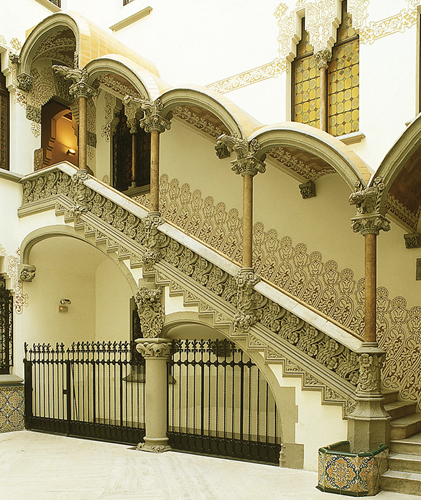
Designed by Puig i Cadafalch (1901), this palace is a fine example of the Neo-Gothic style in Modernista architecture. A magical, white façade is broken up by engravings and two towers. Of note are the decorative sculptures by Modernista
sculptor Eusebi Arnau. The palace belongs to the Centre Cultural de la
Caixa is closed at the moment; it is worth a visit to see the outside
alone.Pg Sant Joan

Courtyard, Palau Macaya
Fundació Francisco Godia
Although
Francisco Godia (1921–90) was best known for his prowess behind the
wheel – notably as an F1 racing driver – his passions extended to the
art world. His once private collection now forms this museum and
encompasses a range of art from medieval times to the 20th-century: from
Jaume Huguet’s altarpiece
St Mary Magdalene (c. 1445) to a range of Spanish ceramics and works by 17th-century fresco-painter Luca Giardano.C/Disputacio 250
93 272 31 00
Open 10am–8pm daily
Adm
Rambla de Catalunya
This
elegant extension of the better-known Rambla is a more up-market
version. Lined with trees that form a leafy green tunnel in summer, it
boasts scores of pretty façades and shops, including the Modernista Farmàcia Bolos (No. 77). The avenue teems with terrace bars and cafés, which are ideal for people-watching.
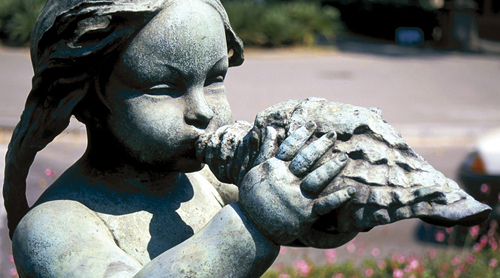
Fountain, Rambla de Catalunya
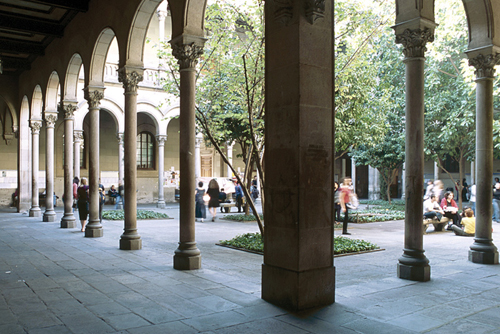
Universitat de Barcelona
Until
1958, this was the only university in Barcelona – today it is one of
six. The graceful building (1861–1889) occupies two blocks of the
Eixample and has a distinct air of academia. The interior gardens with
their fountains and patios make for a cool, shady hideaway on hot
afternoons.Pl de la Universitat

Interior courtyard, Universitat de Barcelona