The sleek, shiny, white walls
of the Museu d’Art Contemporani (MACBA) juxtapose the decrepit,
ramshackle tenement buildings; Asian grocery stores sell herbs and
spices next to what were once the most decadent brothels in Europe; and
smoky, decades-old bars share dark, narrow streets with high-ceilinged
art galleries showcasing video installations. The old-town barrio of El
Raval is a traditional working-class neighbourhood in flux. Over the
last decade it has been undergoing an enthusiastic urban renewal, led by
the arrival of the MACBA. The barrio now even has its very own Rambla, a
new pedestrian street called La Rambla del Raval. Not surprisingly, all
of this has sparked a real-estate boom, with renovated old-fashioned
flats now commanding top-tier prices and acting as a magnet to the
city’s young, savvy crowd.
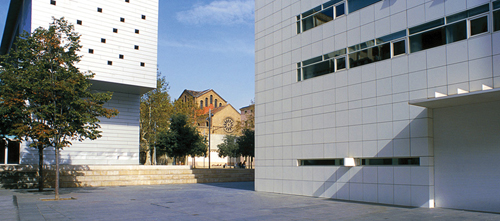
Plaça de Joan Coromines
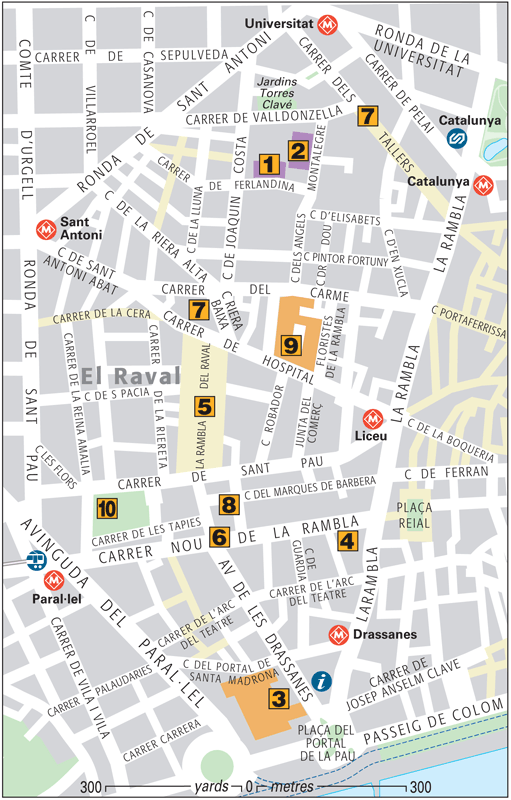
Sights
Centre de Cultura Contemporània & Foment de les Arts Decoratives
Housed
in the 18th-century Casa de la Caritat, the CCCB is a focal point for
the city’s thriving contemporary arts scene. It hosts innovative art
exhibitions, lectures, film screenings and more, including multimedia
and technology fairs during the popular Festival del Sònar.
A medieval courtyard is dazzlingly offset by a massive, angled glass
wall, which has been cunningly designed to reflect the city’s skyline.
Nearby, Foment de les Arts Decoratives
is an umbrella organization of art and design groups, founded in 1903
and housed in the restored, Gothic-style, 16th-century Convent dels
Àngels. Here you’ll find exhibits, lectures and debates, and a smashing
café-restaurant, Fad Food (open Mon–Fri).Museu Marítim
Barcelona’s
mighty seafaring legacy comes to life at this impressive museum housed
in the vast, 13th-century Drassanes Reials (Royal Shipyards). Wander
beneath looming Gothic arches and relive Barcelona’s maritime history
through exhibits of model ships, old maps and figure-heads. A highlight
is the full-scale replica of the royal galley, commanded by Don Juan of
Austria during the Battle of Lepanto in 1571. Entrance also includes a
visit to the Pailebot Santa Eulàlia
, a restored wooden sailing ship dating from 1918.Av de les Drassanes
Open 10am–8pm daily
Adm
Palau Güell
For
an artist, a wealthy patron spells survival. The luck of young Gaudí
turned when count Eusebi Güell recognized his talents. In 1886, Güell
commissioned Gaudí to build a mansion that would set the count apart
from his wealthy neighbours. The result is the Palau Güell, one of
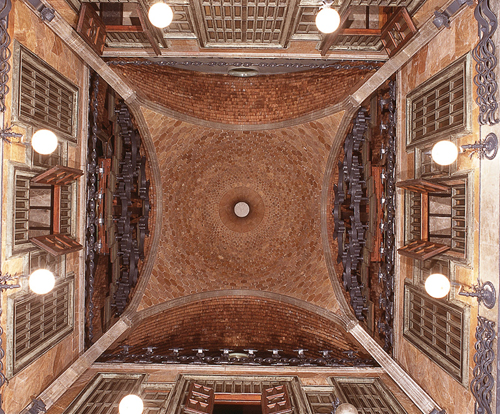
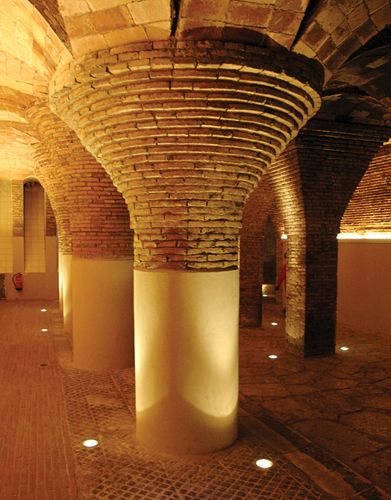
Gaudí’s earliest works. An imposing façade gives way to an elaborate
interior of lavish pillars and carved wooden ceilings, while the rooftop
has a melange of mosaic chimneys. The building is partially open due to
restoration work.

Central salon cupola, Palau Güell

La Rambla del Raval
This
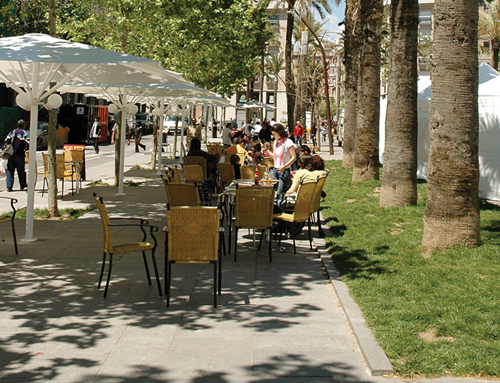
palm tree-lined, pedestrian walkway is the latest attempt by city
planners to spark a similar social environment to that of the city’s
famed La Rambla.
So far it is off to a creaking start, with barely a fraction of the
crowds that ply the original Rambla. Its advocates, however, are quick
to point out that La Rambla del Raval is far better than the two dark,
run-down streets that formerly existed here. New shops, bars and cafés
mean it could well rival its cousin in years to come.

Carrer Nou de la Rambla
In
the first half of the 19th century, El Raval’s main street was a
notorious strip of cabarets, brothels and other nocturnal dens. Today it
still bustles with transactions, but of a different sort.
Frayed-at-the-edge local eateries, ethnic grocery stores, and discount
clothing and shoe shops dot the street. And nightspots, such as the
atmospheric London Bar, which have conserved their age-old identity and fixtures, lure partying visitors.Carrers Tallers & Riera Baixa
Looking
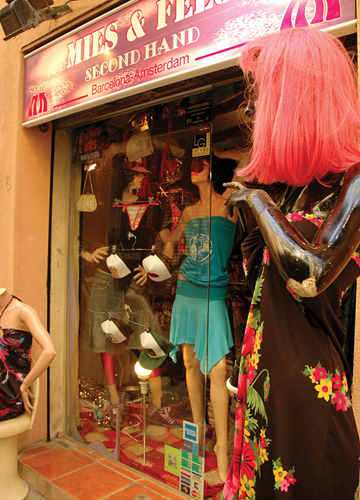
for bootleg CDs of Madonna’s European tour? Or vintage blue-and-white
French navy tops once favoured by the likes of Picasso? Dotting Carrers
Tallers and Riera Baixa, in the heart of El Raval, is a host of vintage
music and clothing shops selling everything from vinyl to the latest
CDs, original Hawaiian shirts and Dickies workwear. On Saturdays from
11am to 9pm, Carrer Riera Baixa hosts its own market, when the stores
display their wares on the street.

Shoppers, Carrer Taller
Barri Xinès
The
first thing locals will say when you ask about the Barri Xinès is that
it no longer exists; the second is that the name has no real connection
with the Chinese (Xinès).
Both statements are true. This barri, unfolding south from Carrer Sant
Pau towards Drassanes, was once one of Europe’s most infamous
neighbourhoods, inhabited by the poor and working-class and rife with
prostitutes, pimps, strippers and drug dealers. Today, due to
enthusiastic clean-up efforts, mere vestiges remain of the barrio’s
previous life (though some alleys still hint at illicit activity). As
for the name, the area has nothing to do with the Chinese, but was named
in the barrio’s early-1900s heyday as a general reference to its large
immigrant population. Today you can browse in cheap thrift shops and
small grocery stores by day and bar-hop your way through the area by
night.Deep
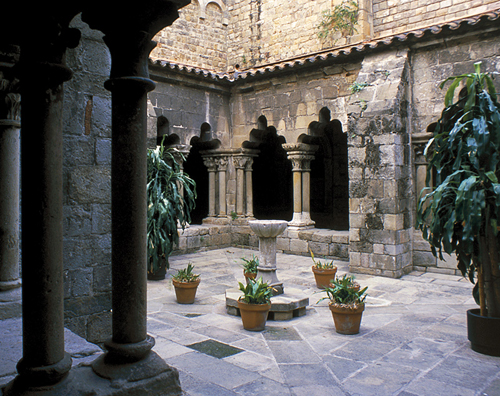
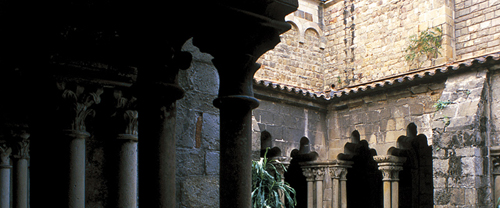
in the heart of El Raval is this Romanesque church, one of the oldest
in Barcelona. Originally founded as a Benedictine monastery in the 9th
century and subsequently rebuilt, this ancient church reveals a
12th-century cloister.C/Sant Pau 101
Church open for mass only: 8pm Sat, noon Sun; cloister open 10am–1:30pm Tue–Sat, 5–8pm Mon–Fri
Adm

Cloister, Església de Sant Pau del Camp

Columns, Església de Sant Pau del Camp