Named the “Jewish Mountain”,
after an important Jewish cemetery that existed here in the Middle Ages,
this sizeable and mountainous park rises 213 m (700 ft) above the port.
The park itself was first landscaped for the 1929 International
Exhibition, when the elegant Palau Nacional and the strikingly modern
Mies van der Rohe Pavilion were also built. During the following decade,
the area fell into general disuse and soon became synonymous with
decline. Together with the grim shadow cast over the hill by the castle,
which for years acted as a slaughterhouse for Franco’s firing squads,
it is little short of miraculous that Montjuïc is now one of Barcelona’s
biggest tourist draws. However, as the main site for the 1992 Olympics,
held on its southern slopes, Montjuïc was given a comprehensive
face-lift and the area was transformed into a beautiful green oasis,
with two fabulous art museums and a host of stunning sports facilities.
All these elements are interconnected by a network of exterior
escalators and interlaced with quiet, shady gardens, which offer
dazzling views over Barcelona and a welcome respite from the bustle of
the city.
NOTE
Sights
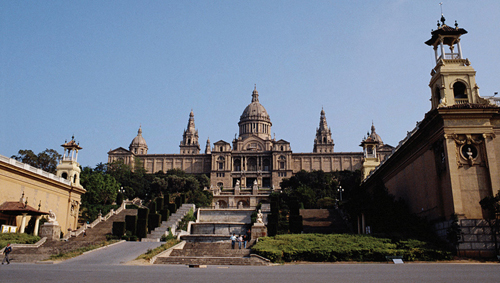
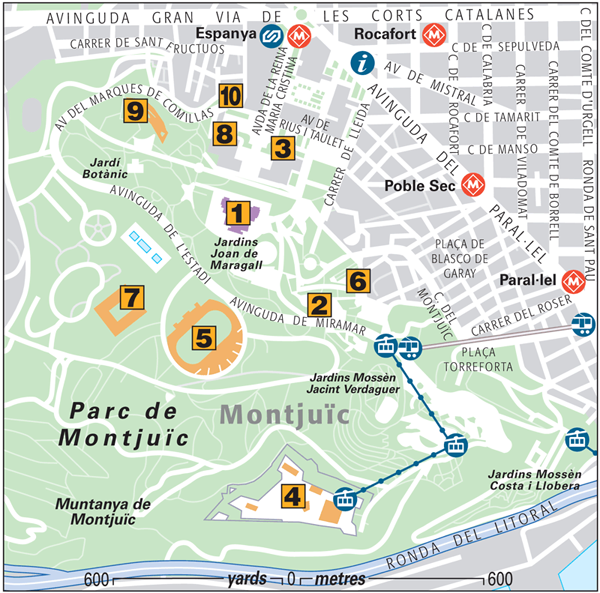
Palau Nacional & Museu Nacional d’Art de Catalunya
The
Palau Nacional is home to the Museu Nacional d’Art de Catalunya which
exhibits Catalonia’s historic art collections. Boasting one of Europe’s
finest displays of Romanesque art, the museum includes a series of
breathtaking, 12th-century frescoes, rescued from Catalan Pyrenean
churches and painstakingly reassembled in a series of galleries here.

Palau Nacional
Fundació Joan Miró
One
of Catalonia’s most representative painters, Joan Miró (1893–1983),
donated many of the 11,000 works held by the museum. Housed in a stark,
white building designed by his friend, architect Josep Lluís Sert, the
collection – the world’s most complete array of Miro’s work – was
recently extended to include 25 new pieces by him.

Font Màgica
Below
the cascades and fountains that splash down from the regal Palau
Nacional is the Magic Fountain, designed by Carles Buigas for the
International Exhibition of 1929. As darkness descends, countless jets
of water are choreographed in a mesmerizing sound and light show. When
the water meets in a single jet it can soar to 15m (50ft). The
extravagant finale is often accompanied by a recording of Freddie
Mercury and Montserrat Caballé singing the anthem Barcelona as the fountain fades from pink to green and back to white before silently and gracefully disappearing.Av de la Reina Maria Cristina
May–Sep: every 30 minutes 9:30–11:30pm Thu–Sun; Oct–Apr: every 30 minutes 7–8:30pm Fri & Sat
Free
DA

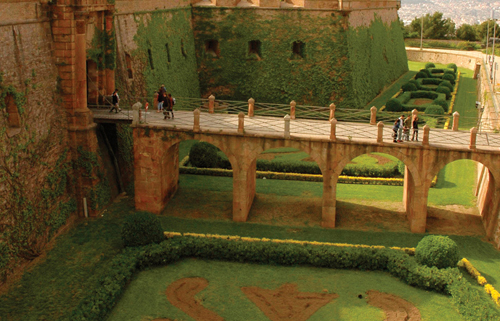
Castell de Montjuïc
Dominating Montjuïc’s hill, this gloomy castle was once a prison
and torture centre for political prisoners. At the end of the Spanish
Civil War, 4,000 Catalan nationalists and republicans were shot in the
nearby Fossar de la Pedrera, now a grassy field overlooked by thick
stone walls. After such a tragic history, the castle is entering a
happier phase: it is being developed into an international peace centre,
but visitors can still climb the sturdy bastions for superb views of
the port below.

Statue, Castell de Montjuïc

Castell de Montjuïc
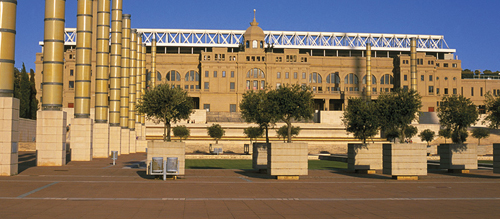
Estadi Olímpic
The
Olympic Stadium was first built for the 1936 Workers’ Olympics, which
were cancelled with the outbreak of the Spanish Civil War . Today, the original Neo-Classical façade is still in place, though the stadium was entirely rebuilt for the 1992 Olympic Games. It is home to Espanyol football team . The nearby Museu Olímpic i de l’Esport is a modern interactive museum dedicated to all aspects of sport.Av de l’Estadi
Open 10am–6pm (to 8pm Apr–Sep) Tue–Sat, 10am–2pm Sun
Adm
DA

Estadi Olímpic
Teatre Grec
This beautiful, open-air amphitheatre was inspired by the Classical ideas of what was known as
Noucentisme. This late 19th-century architectural movement was a reaction to the overly-decorative nature of Modernisme. With its leafy, green backdrop and beautiful gardens, there are few places more enchanting than this to watch Swan Lake or listen to some jazz. The theatre is used for shows during the summertime Festival del Grec , when it also becomes home to a luxurious outdoor restaurant.Palau Sant Jordi
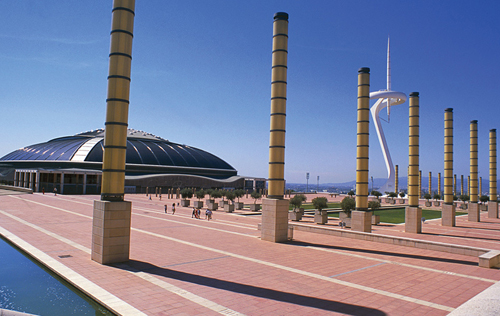
The star of all the Olympic installations is this steel-and-glass indoor stadium
designed by Japanese architect Arata Isozaki. Holding around 17,000
people, the stadium is the home of the city’s basketball team .
The esplanade – a surreal forest of concrete and metal pillars – was
designed by Aiko Isozaki, Arata’s wife. Further down the hill are the
indoor and outdoor Bernat Picornell Olympic pools; both open to the public.Av de l’Estadi
Open 10am–6pm (to 8pm May–Sep) Sat & Sun
Free
DA

Palau Sant Jordi
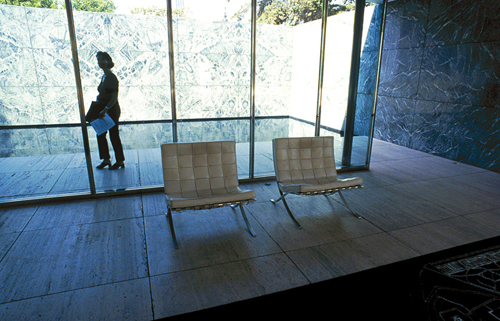
Pavelló Mies van der Rohe
You
might wonder exactly what this box-like pavilion of stone, marble, onyx
and glass is doing bang in the middle of Montjuïc’s monumental
architecture. Years ahead of its time, this surprisingly rationalist gem
represents Germany’s contribution to the 1929 Exhibition. Built by
Ludwig Mies van der Rohe (1886–1969), the elegant pavilion was soon
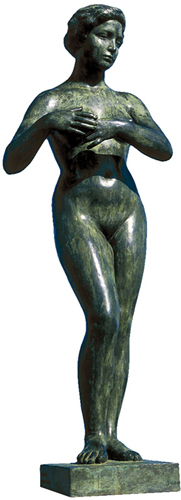
demolished, only to be reconstructed in 1986. Inside, the elegant
sculpture
Morning by Georg Kolbe (1877–1947) is reflected in a small lake.Av Marquès de Comillas
Open 10am–8pm daily
Adm
Barcelona Chairs, Pavelló Mies van der Rohe
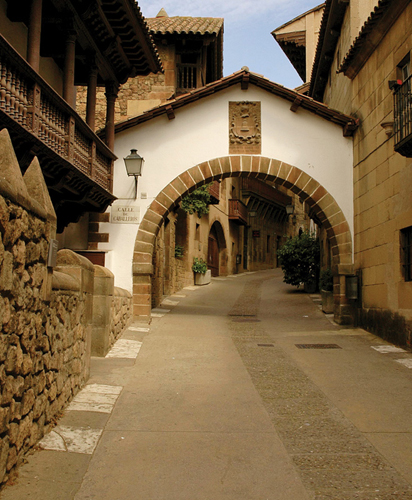
Poble Espanyol
This Spanish poble
(village) has been recreated from a hotchpotch of scaled-down famous
buildings and streets from around Spain. Although a bit tacky, it has
become a centre for arts and crafts, including an impressive
glass-blowers’ workshop. There are restaurants and cafés aplenty, and a
couple of trendy nightclubs (see La Terrrazza).Av Marquès de Comillas
Open 9am–8pm Mon, 9am–2pm Tue–Thu, 9am–4am Fri, 9am–5pm Sat, 9am–midnight Sun
Adm

Poble Espanyol
Caixa Forum
The Fundació La Caixa’s impressive collection of contemporary art is housed in a former textile factory, designed by
Modernista
architect Puig i Cadafalch. The collection began in 1985 and assembles
some 800 works by Spanish and foreign artists, which are shown in
rotation along with temporary international exhibitions.