There may be no better place in the country to indulge in the Spanish ritual of the paseo
(stroll) than on this wide, pedestrian street that is anything but
pedestrian. An orgy of activity day and night, La Rambla is voyeuristic
heaven. Spray-painted human statues stand motionless among the passing
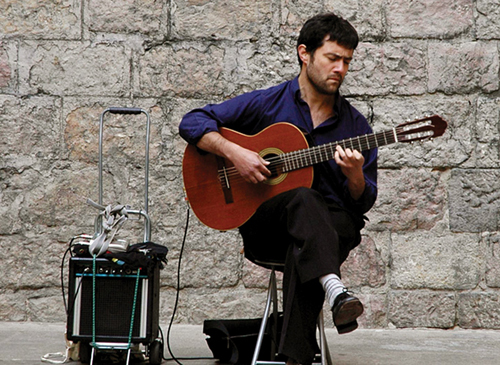
crowds; buskers croon crowd-pleasing classics; caricaturists deftly
sketch faces; bustling stalls create an open-air market of bright
bouquets and chattering parakeets; and round-the-clock kiosks sell
everything from The Financial Times to adult videos.
Gran Teatre del Liceuopen 11:30am–1pm daily €4 guided tour of the main building: 10am(€8.70) guided
backstage tour of the stage, rehearsal rooms, wardrobe and make-up
room: 9:30am(€10); box office: open 1:30–8pm Mon–Fri, one hour before
the performance Sat–Sun
Mercat de La BoqueriaPalau de la VirreinaCentre d’Art Santa MònicaEsglésia de Betlem |

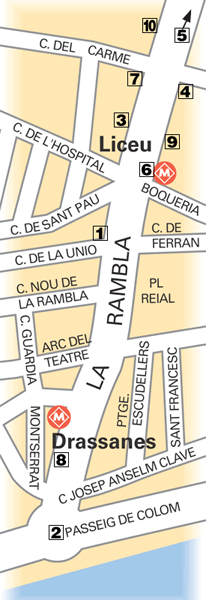
La Rambla

Top 10 Attractions
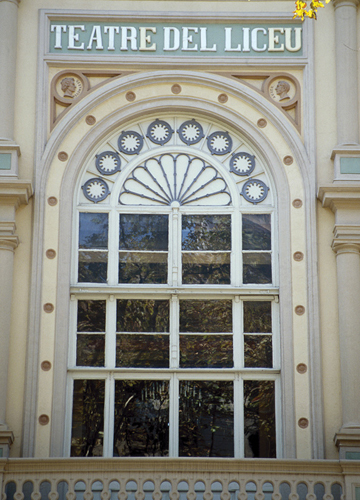
Gran Teatre del Liceu
The
city’s grand opera house founded in 1847, brought Catalan opera stars
such as Montserrat Caballé to the world. Twice gutted by fire, it has
been fully restored.

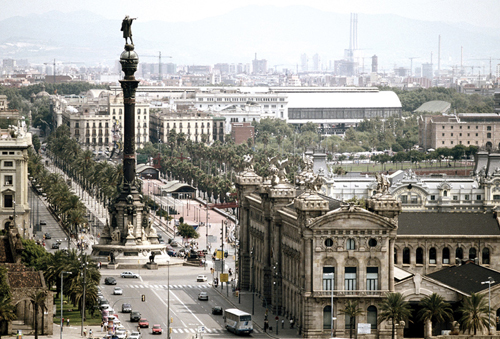
Monument a Colom
Pointing
resolutely out to sea, this statue of Christopher Columbus (1888)
commemorates his return to Spain after discovering the Americas. An
elevator takes visitors to the top for sensational views.

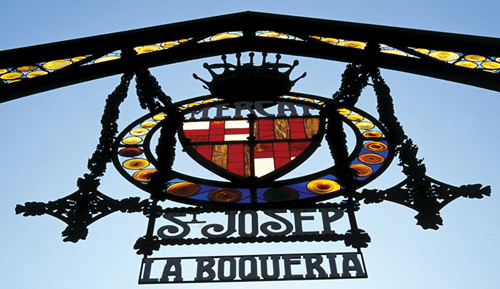
Mercat de La Boqueria
A cacophonous shrine to food, this cavernous market has it all, from stacks of fruit to suckling pigs and writhing lobsters.

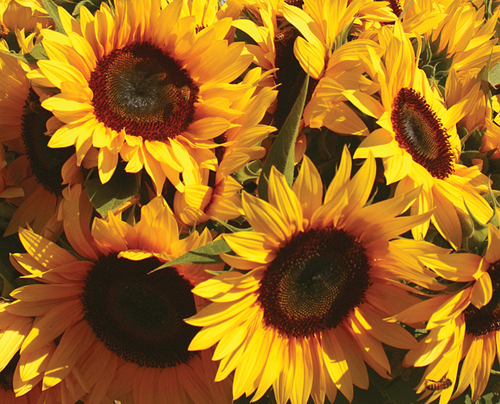
Flower & Bird Stalls
Will
the real Rambla please stand up? Amid the here-today-gone-tomorrow
street performers and tourists, the true Rambla old-timers are the
flower and bird stalls that flank the pedestrian walkway. Many of the
stalls have been run by the same families for decades.

Font de Canaletes
Ensure
your return to the city by drinking from this 19th-century fountain,
inscribed with the legend that anyone who drinks from it “will fall in
love with Barcelona and always return”.
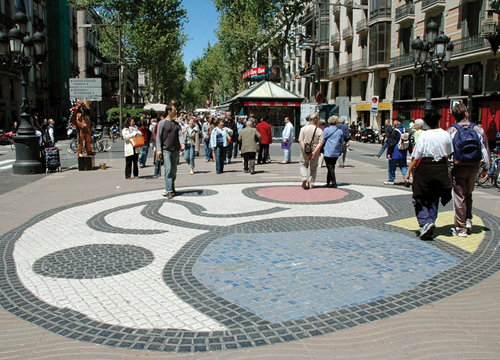
Miró Mosaic
Splashed
on the walkway on La Rambla is a colourful pavement mosaic by Catalan
artist Joan Miró. His signature abstract shapes and primary colours
unfold at your feet.

Palau de la Virreina
Constructed
by the viceroy of Peru in 1778 – the name means “Palace of the
Viceroy’s Wife” – this Neo-Classical palace hosts a range of temporary
exhibitions, from sculpture to photography to video.
Centre d’Art Santa Mònica
Once
the hallowed haunt of rosary beads and murmured prayers, this former
17th-century monastery was reborn in the 1980s. Thanks to a massive
government-funded facelift, it is now a cutting-edge contemporary art
centre. Temporary exhibitions run the gamut from large-scale video
installations to sculpture and photography.
Bruno Quadras Building
Once an umbrella factory, this playful, late 19th-century building is festooned with umbrellas.
Església de Betlem
A
relic from a time when the Catholic Church was rolling in pesetas (and
power), this hulking 17th-century church is a seminal reminder of when
La Rambla was more religious than risqué.