Barcelona’s Top 10 : Sagrada Família (part 2) – Key Sagrada Família Dates
Key Sagrada Família Dates


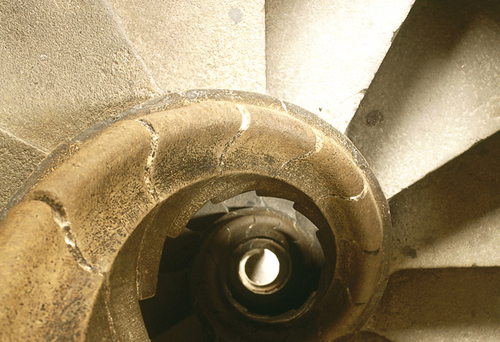
Spiral staircase


Detail of doorway, Passion Façade

  1. 1882

    The
    first stone of the Sagrada Família is officially laid, with architect
    Francesc del Villar heading the project. Villar soon resigns after
    disagreements with the church’s religious founders.

  2. 1883

    The
    young, up-and-coming Antoni Gaudí is commissioned as the principal
    architect. He goes on to devote the next 40 years of his life to the
    project: by the end he even lives on the premises.

  3. 1889

    The crypt is completed, ringed by a series of chapels, one of which is later to house the tomb of Gaudí.

  4. 1904

    The final touches are made to the Nativity Façade, which depicts Jesus, Mary and Joseph amid a chorus of angels.

  5. 1925

    The first of 18 bell towers, 100 m (328 ft) in height, is finished.

  6. 1926

    On
    10 June, Gaudí is killed by a tram while crossing the street near his
    beloved church. Noone recognizes the city’s most famous architect.

  7. 1936

    The
    advent of the Spanish Civil War brings construction of the Sagrada
    Família to a halt for some 20 years. During this time, Gaudí’s studio
    and the crypt in the Sagrada Família are burned by revolutionaries, who
    despise the Catholic church for siding with the nationalists.

  8. 1987–1990

    Artist
    Josep Maria Subirachs (b 1927) takes to living in the Sagrada Família
    just as his famous predecessor did. Subirachs completes the statuary of
    the Passion Façade. His angular, severe and striking sculptures draw
    both criticism and praise.

  9. 2000

    On 31 December, the nave is at long last declared complete.

  10. 2010–2030

    The
    vaults of the crossing and the apse underwent renovation until 2010.
    The completion of the entire Sagrada Família is forecast for 2030,
    though this depends largely on funding. The building of the Sagrada
    Família – as Gaudí intended – relies on donations. With so many paying
    visitors pouring in daily, construction work is gaining momentum.


Antoni Gaudí

A flag bearer for the late 19th-century Modernista
movement, Antoni Gaudí is Barcelona’s most famous architect. A devout
Catholic and a strong Catalan nationalist, he led an almost monastic
existence, consumed by his architectural vision and living in virtual
poverty for most of his life. In 2001, he was beatified and there are
currently moves within the Catalan Catholic Church to declare him a
saint.

Gaudí’s
extraordinary legacy dominates the architectural map of Barcelona. His
name itself comes from the Catalan verb gaudir, “to enjoy”, and an
enormous sense of exuberance and playfulness pervades his work. As was
characteristic of Modernisme,
nature prevails, not only in the decorative motifs, but also in the
very structure of Gaudí’s buildings. His highly innovative style is also
characterized by intricate wrought-iron gates and balconies and
trencadís tiling.
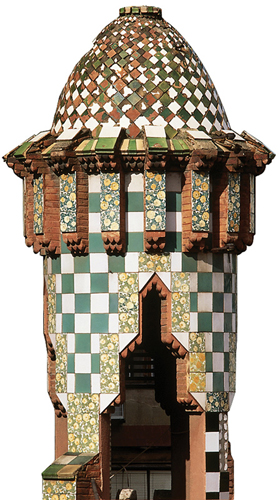


Chimneypot, Casa Vicens

Trencadís Tiling
Gaudí’s revolutionary use of trencadís
tiling, a decorative art form which consisted of smashing up ceramics
and piecing them back together in mosaic patterns, is particularly
prevalent at Parc Güell. Another fine example of this technique is the
rooftop of La Pedrera where some of the chimneys were tiled using
hundreds of broken cava bottles.
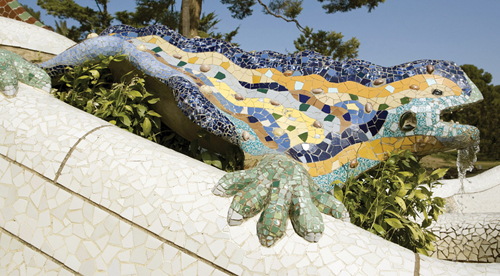


Trencadís-tiled lizard, Parc Güell

Top 10 Gaudí Sights in Barcelona

  1. Sagrada Família


  2. La Pedrera (1910)


  3. Parc Güell (1900)


  4. Casa Batlló (1905)


  5. Palau Güell (1890)

  6. Bellesguard (1875)

  7. Finca Güell (1887)

  8. Casa Calvet (1899)

  9. Colegio Teresiano (1890)

  10. Casa Vicens (1885)