East of central Beijing, in a corridor between the
Second and Third Ring Roads, is the district of Chaoyang. It’s not an
area that is particularly old and it doesn’t have very many significant
monuments, but it is home to two main clusters of international
embassies, and it is where a large proportion of the city’s foreign
expatriate community chooses to live. As a result, Chaoyang is the
city’s entertainment and nightlife center, and, for the visitor, it is
the prime area for eating and shopping.
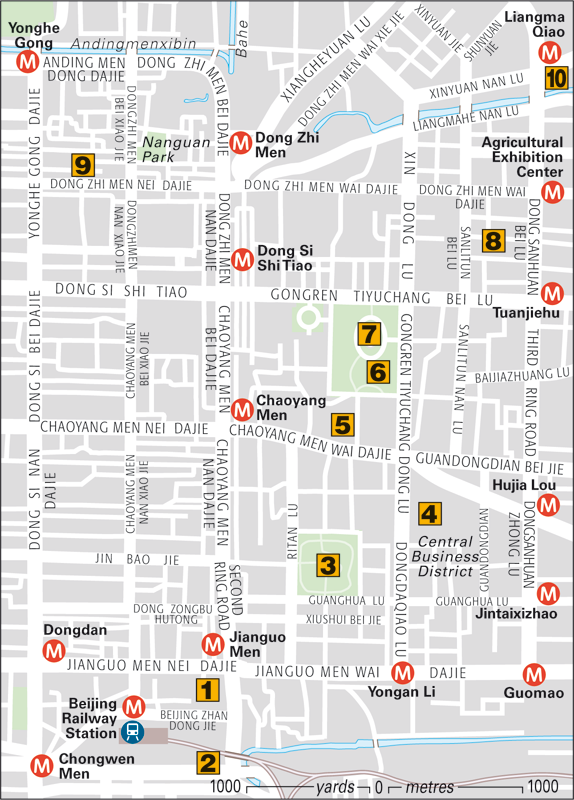
Top 10 Sights
Ancient Observatory
Dating
to 1442, Beijing’s observatory is one of the oldest in the world. In
fact, there was an even earlier Yuan-dynasty (1279–1368) observatory
also located on this site but no trace of that remains. Today, a
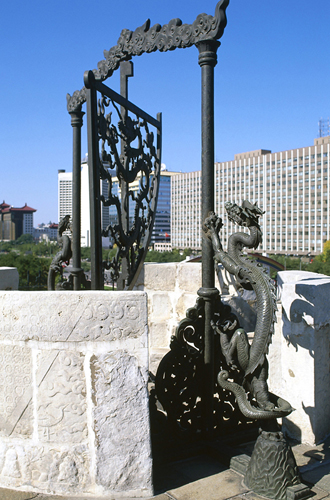
collection of reproduction astronomical devices lies in the courtyard,
some decorated with fantastic Chinese designs. There are more impressive
instruments on the roof.

Ancient Observatory
6524 2202
Subway: Jianguo Men
Open 9am–4pm daily
¥10
Southeast Corner Watchtower
A
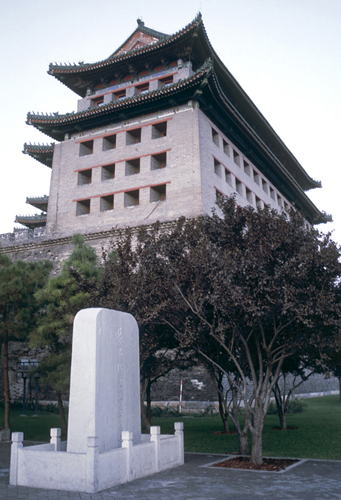
short distance south of the Second Ring Road an imposing chunk of the
old Beijing city wall survives, including an imposing 15th-century
watch-tower. Visitors can climb onto the battlements and walk along a
short stretch of wall. The tower is also home to the commercial Red Gate Gallery.

Southeast Corner Watchtower
South of Jianguo Men Nei Dajie
6527 0574
Subway: Jianguo Men
Open 8am–5:30pm daily
¥10
Ri Tan Park
One
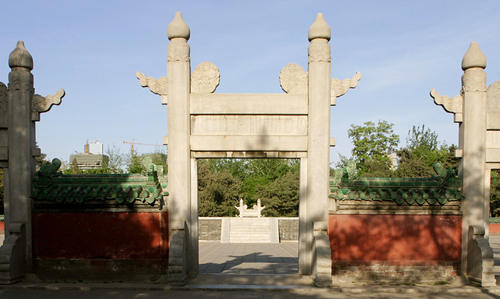
of the city’s oldest parks, Ri Tan was laid out around a sacrificial
altar back in the 16th century. The round altar remains, ringed by a
circular wall, but this is very much a living park, filled daily with
people walking and exercising. Being at the heart of the embassy
district, the park is well tended and surrounded by lots of good
restaurants and cafés.

Ri Tan Park
Central Business District (CBD)
The
Central Business District is Beijing’s business hub, housing more than
60 percent of the city’s foreign-funded companies. Marked by the CCTV
Tower in the northwest and by the Twin Towers of the China World Trade
Center in the southeast, the area is also home to about half of the
city’s luxury hotels and two of its glitziest shopping malls, China
World and Shin Kong Plaza .Subway: Guomao or Dawanglu
Dong Yue Miao
This
colorful and active temple, dating to the early 14th century, was
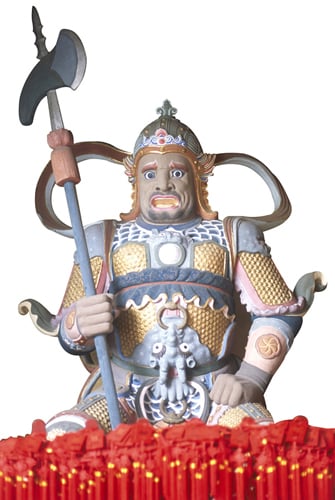
restored in 1999 and is tended by Daoist monks. The main courtyard leads
into the Hall of Tai Shan with statues of gods and their attendants.
Tai Shan is another name for Dong Yue, in Daoist lore the Eastern peak
to which the spirits of the dead travel.

Dong Yue Miao
141 Chaoyang Men Wai Dajie
6551 0151
Subway: Chaoyang Men
Open 8:30am–4:30pm Tue–Sun
¥10
Blue Zoo Beijing
Not
a zoo at all, but an excellent modern aquarium, reckoned to be the best
of its kind in Asia. The main attraction is a central tank holding
literally thousands of fish, plus there are also 18 additional tanks
with specifically themed displays .South gate of Workers’ Stadium
6591 3397 ext. 1560
Subway: Chaoyang Men
Open 8:30am–7:30pm daily
¥75; children ¥50; under 3 ft (1 m) free
Workers’ Stadium
With
an estimated capacity of 72,000, the stadium is home to Beijing’s
premier football club, Hyundai Guo’an, and it is the city’s main venue
for large-scale rock and pop concerts. Perplexingly, it’s also a hub of
Beijing nightlife, with numerous clubs and bars clustered around its
north and west gates, and some very good restaurants too (see Restaurants).
Even oldies get in on the act, with mass open-air dancing taking place
on the forecourt of the north gate most summer evenings.

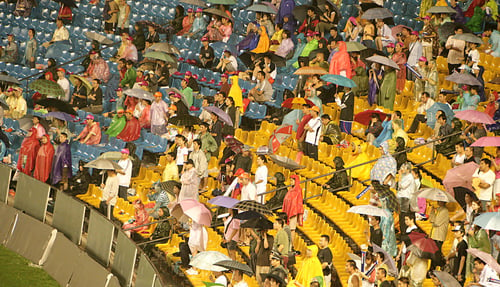
Crowds at the Workers’ Stadium

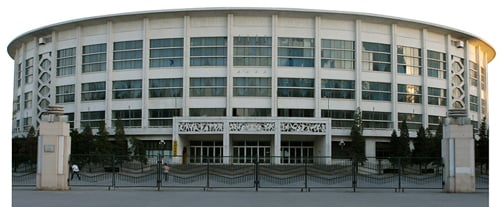
Entrance gate at the Workers’ Stadium
Gongren Tiyuchang Bei Lu
6501 6655
Subway: Dong Si Shi Tiao
Sanlitun
Beijing’s
main expat-friendly boozing district, Sanlitun is famed for its “Bar
Street”, more properly known as Sanlitun Bei Lu. It also has a high
concentration of international restaurants (see Restaurants) and lots of boutique shopping (see Shops, Markets, and Malls).
Streets around here, although modern, are at least tree-lined and, with
plenty of cafés for refreshment stops, it’s a pleasant district in
which to wander.

Sanlitun bar
Subway: Tuanjiehu
Ghost Street
Gui
Jie, or Ghost Street, is a mile-and-a-quarter (2-km) stretch of Dong
Zhi Men Nei Dajie that come nightfall is jammed with cars double-parked
outside its one hundred or so restaurants, many of which open 24 hours.
The roadside is festively lit with strings of red lanterns bobbing in
the breeze, while most establishments favor corny, old-China décor with
lots of red lacquer and pagoda motifs, and waitresses in silk tunics.
This is the home of hotpot, although all regional Chinese cuisines are
represented here.Subway: Beixingqiao
This
glossy mall-style development caters for aspirational Beijingers with a
department store full of imported luxury goods, a basement Continental
deli, and a BMW showroom. More down to earth, just west on the south
bank of the river is the Liang Ma Flower Market, which is a riot of
color and fragrances.50 Liang Ma Qiao Lu
6465 1188
Subway: Liangmaqiao
Open 9am–10pm daily