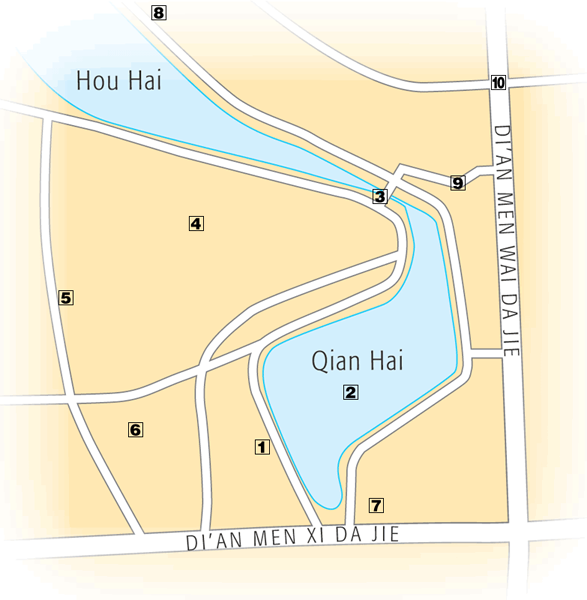
The area around the joined lakes of Qian Hai and Hou
Hai has traditionally been home to nobles and wealthy merchants. Several
grand homes survive, hidden in the labyrinthine old lanes known as hutongs.
This is a rare quarter of Beijing where the 21st century is kept at
bay, and these back alleys represent one of the most satisfying parts of
the city to explore on foot – or by rickshaw.
Mansion of Prince Gong6616 8149 Open: 8:30am–4:30pm daily. Admission: ¥30 or ¥60 with tour guide, tea, and snack tasting, and traditional opera performance (call ahead for times)
Former Residence of Guo MoruoSong Qingling’s Residence |
Traditional Beijing
homes are arranged around a central courtyard. The main dwelling is on
the north, with lesser halls on the other three sides. Originally homes
of the well-to-do, over time many siheyuan
were occupied by poorer families, who squeezed several households into
the space formerly occupied by one. Modernization has destroyed many of
these dwellings, but there is a movement to preserve those that have
survived. A few have been converted into hotels . |


Top 10 Features
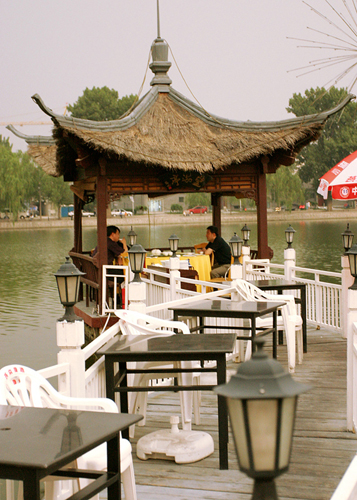
Lotus Lane
This
is the tourist-friendly name attached to Hou Hai’s main lakeside parade
of restaurants, bars, and cafés. Many of these establishments feature
attractive waterfront terraces.
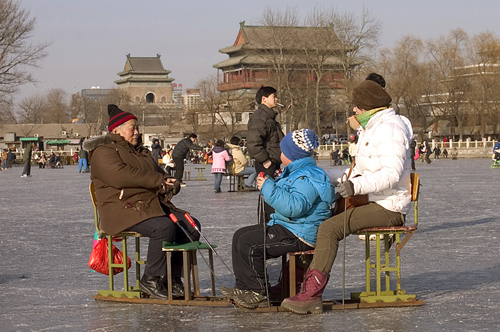
Boating and skating
In
summer the lakes are filled with small pedal boats, rented by the hour.
By mid-December, they are frozen over and a large area is corraled off
for public ice-skating.

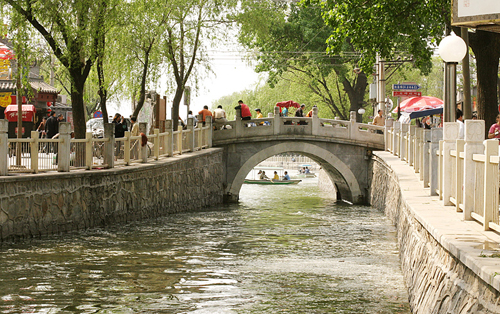
Silver Ingot Bridge
The
narrow channel that connects Hou Hai’s two lakes is spanned by the
pretty, arched Silver Ingot Bridge, which dates from the time of the
Yuan dynasty (1279–1368).

Hutongs
The lakes lie at the heart of a sprawling old Beijing district, characterized by the traditional alleyways known as hutongs. These alleyways are lined for the most part by the blank outer walls of siheyuan, which are inward-looking houses that are arranged around a central courtyard. Each siheyuan houses several families.
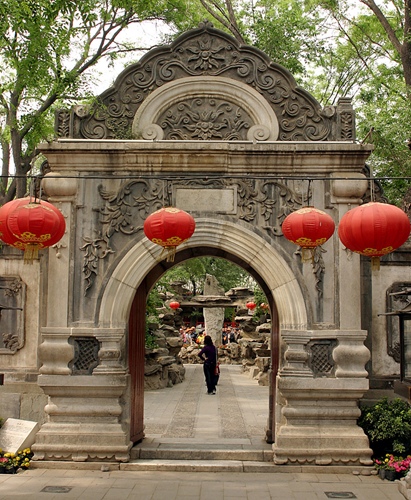
Mansion of Prince Gong
Built
for a Manchu official but seized by the imperial household, the former
residence of Prince Gong is the best preserved historic mansion in
Beijing. The garden is a pattern of corridors and pavilions, dotted with
pools and gates.

Former Residence of Guo Moruo
Beijing
has countless “former residences of,” mostly connected with Party
favorites. Moruo was an author and influential figure in the rise of
communism in China. His house offers the opportunity to see inside a hutong home.
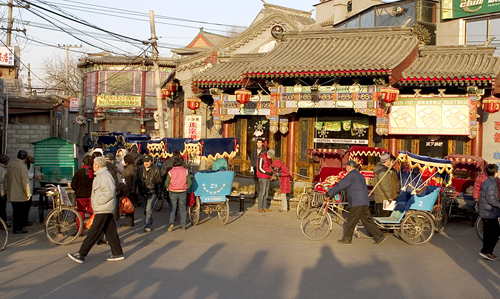
Rickshaw tours
One way of seeing the hutongs
is from a rickshaw. Prices and length of the tour are negotiable, but
expect to pay around ¥180 per person for a two-hour jaunt with stop-offs
at several place of interest.
Song Qingling’s Residence
Song
Qingling was the wife of the revolutionary leader Sun Yat Sen. Her
former living quarters are now a small museum (note the pistol that Sun
Yat Sen gave his wife as a wedding present). The gardens surrounding the
house are beautiful.
Yandai Xie Jie
One
of the loveliest streets in Beijing is lined with historic buildings,
most of which have been converted into small boutiques and bars,
including a temple that is now a café.


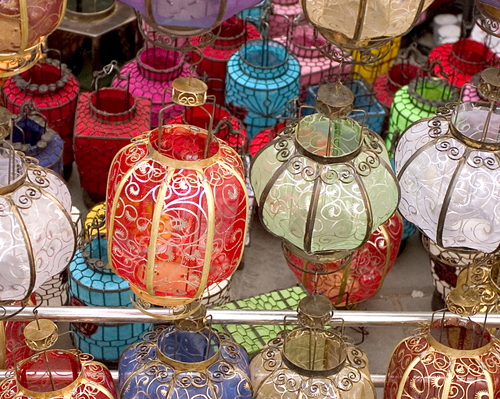
Gaudy lamp shades for sale on Yandai Xie Jie
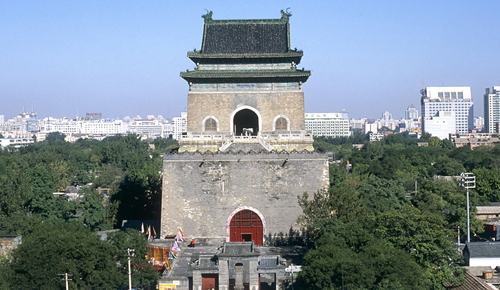
Drum and Bell Towers
Just
north of the eastern end of Yandai Xie Jie these two imposing towers
once marked the northern-most limits of the city. You can ascend the
towers for views of Hou Hai and beyond.