The resting place for 13 of the 16 Ming-dynasty
(1368–1644) emperors, this is China’s finest example of imperial
funerary architecture. The site was selected because of its auspicious
feng shui alignment; a ridge of mountains to the north cradles the tombs
on three sides, protecting the dead from the evil spirits carried on
the north wind. The tombs are spread over 15 square miles (40 sq km).
Three (Chang Ling, Ding Ling, and Zhao Ling) have been restored and are
always busy. Unrestored, the rest are open but quiet.
30 miles (45 km) NW of Beijing 6076 1422 Bus 345 to Changping Dongguan, then bus 314 to the tombs Open: Apr–Oct 8am–5pm (Ding Ling to 5:30pm) daily. Nov–Mar 8:30am–4:30pm (Ding Ling to 5pm) Admission: Spirit Way ¥30. Chang Ling ¥45 (¥30 off-peak). Ding Ling ¥65 (¥45 off-peak). Zhao Ling ¥30 (¥20 off-peak)
www.mingtombs.com
|
The 276-year Ming
(“brilliant”) dynasty rule was one of the longest and most stable
periods in Chinese history. The founder of the Ming rose from humble
beginnings via military successes to become emperor. He was succeeded by
his grandson, who, in turn was succeeded by his son, who proclaimed
himself emperor Yongle (“Eternal Joy”). It was Yongle who moved the
capital from Nanjing to Beijing where he created a new city. |

There are snack kiosks at the site. |
|
The Ming Tombs are most
conveniently seen as part of a trip to the Great Wall at Badaling. Many
hotels will arrange tours. The government operated Tour Bus 2 leaves
regularly for the tombs and the Great Wall from just east of Qian Men
on Tian’an Men Square every day from 6:30am onwards; the fare is ¥50 per
person. |
|
Top 10 Features
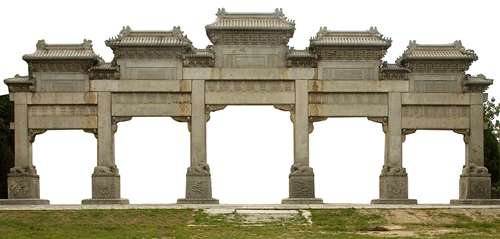
Memorial Arch
Marking
the entrance to the site is a magnificent five-arched gate, built of
white marble, and erected in 1540. At 40 ft (12 m) high and more than 92
ft (28 m) wide, it is the largest of its kind in China, and boasts
beautiful bas-relief carvings.

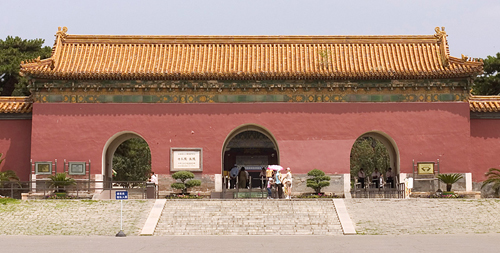
Stele Pavilion
After
the Memorial Arch the road passes through the Great Palace Gate and the
tunnel-like arch of the Stele Pavilion. Here the largest stele in China
projects from the shell of a giant bixi (dragon-tortoise) and bears the names of the emperors buried at the site.
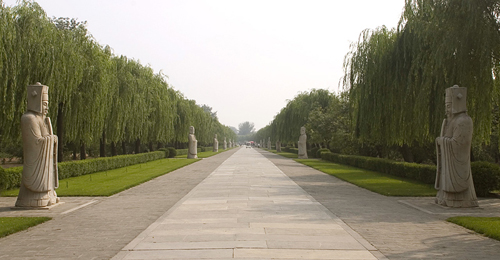
Spirit Way
Part
of the 4-mile (7-km) approach to the tombs, the Spirit Way is lined
with 18 pairs of giant guardians – stone statues of court officials,
imperial warriors, animals, and mythical Chinese beasts.


Chang Ling Tomb
The
resting place of the Yongle emperor, the builder of the Forbidden City
and Temple of Heaven, is the oldest and grandest tomb. It has been well
restored, but the chamber where Yongle, his wife, and 16 concubines are
buried has never been excavated.

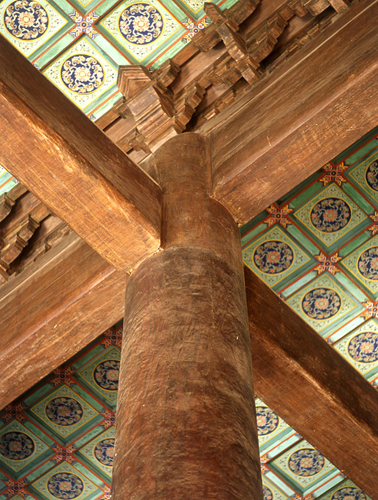
Hall of Eminent Favor
One
of China’s most impressive surviving Ming buildings, this double-eaved
sacrificial hall is the centerpiece of the Chang Ling tomb complex. It
stands on a triple-tiered marble terrace and 32 gigantic cedar columns
support the roof.

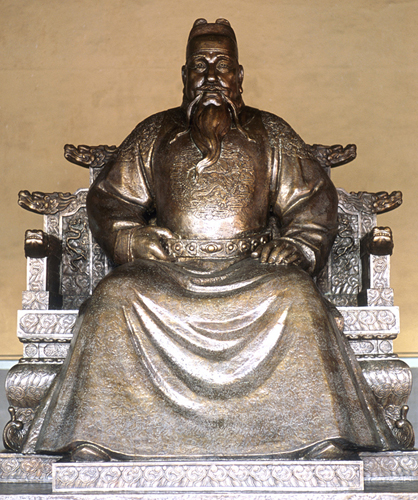
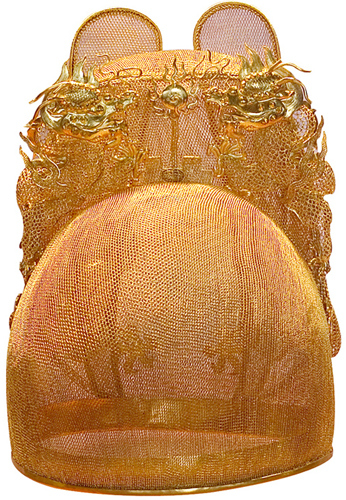
Ding Ling Treasures
In
addition to an impressive statue of the Yongle emperor, the Hall of
Eminent Favor also contains artifacts from the Wanli emperor’s tomb (the
Ding Ling). These include a crown of golden wire topped by two dragons.

Spirit Tower
Rising
up from the third courtyard of the Chang Ling complex, the tower marks
the entrance to the burial chamber. This takes the form of an earthen
tumulus girdled by a wall half a mile (1 km) in circumference.
Ding Ling Tomb
This
is the tomb of the longest-reigning Ming ruler, the emperor Wanli
(1573–1620). His profligate rule began the downfall of the dynasty.
Building his tomb involved 30,000 workers and took six years to
complete.
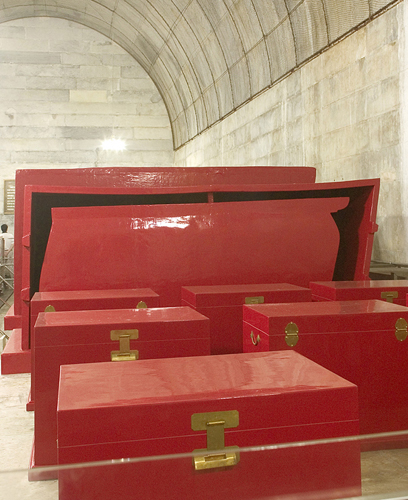
Ding Ling Burial Chamber
This
is the only burial chamber to be excavated and opened to the public.
Visitors descend to a central throne room and a rear annex with three
red-lacquer coffins, belonging to Wanli and his two wives.

Zhao Ling Tomb
The
resting place of the 13th Ming emperor, Longqing (1537–72), who gained
the throne at the age of 30 and died six years later. It has an
attractive triple-bridge over a stream.