Cow Street Mosque
There
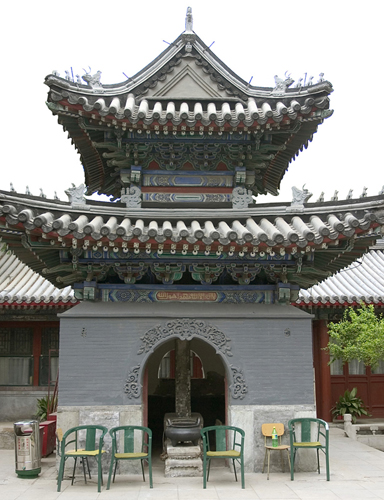
are currently about 200,000 Muslims in Beijing. The majority live in
the Niu Jie district, which is where you find this mosque, also known as
the Niu Jie Mosque. It is the city’s oldest and largest Islamic place
of worship. Despite being over one thousand years old, the mosque has
recently been renovated to the tune of $2.4 million and looks splendid .

Cow Street Mosque
Lama Temple
Formerly
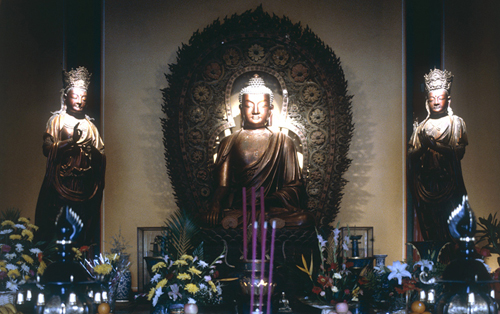
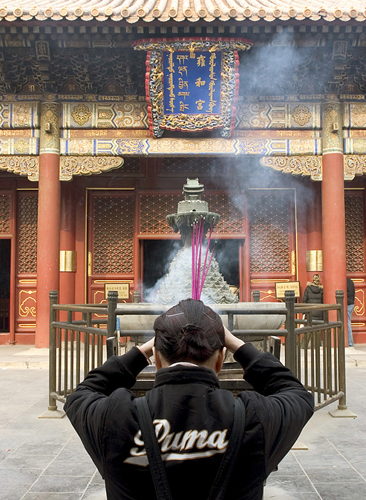
one of the most notable centers of Buddhism outside Tibet until it was
shut down during the Cultural Revolution. It was reputedly saved from
destruction by the intervention of the president, Zhou Enlai. With
Buddhism enjoying a resurgence in popularity, the precincts are once
again home to around 70 monks .

Lama Temple
North Cathedral
Not
far west of Bei Hai Park, this cathedral is a twin-towered piece of
Gothic confectionery, painted in blue with white trim, like a Wedgwood
dish. But the bright façade masks a bloody past: not long after the
Jesuits finished the church in 1889 it came under siege from the Boxers
during the 1900 rebellion. Many of the congregation sheltering inside
were killed.Xishiku Dajie
Subway: Xidan
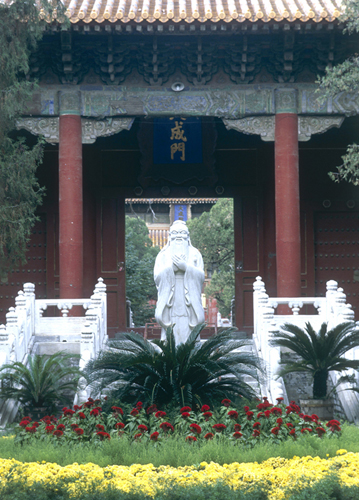
Confucius Temple (Kong Miao)
During
the Cultural Revolution, Confucianism was a dirty word, and its temples
were converted to other uses, or just abandoned. Recent years have seen
a U-turn, with Confucian values being touted anew by Beijing’s leaders,
but this important temple remains neglected .

Confucius Temple
Wanshou Temple
Up
in the northwest Haidian district, the Wanshou (Longevity) Temple is
worth a stop en route to the Summer Palace. Looking not unlike a mini
Forbidden City, the complex houses the Beijing Art Museum – a collection
of historical relics including bronzes, jade, carved lacquer, and a
small but exquisite collection of Buddha images.St. Joseph’s Church
Also
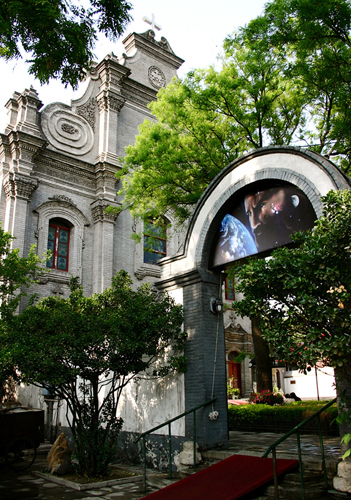
known as the East Cathedral, this is an attractive triple-domed church
in the Baroque style. It was first built on the site of the residence of
a Jesuit missionary in 1655 and, following earthquakes, fire, and the
destruction wrought during the Boxer Rebellion, has had to be rebuilt on
a number of occasions since. It is fronted by a gateway and piazza, and
is beautifully lit at night.White Cloud Temple
Home
to the China Daoist Association, the temple was founded in AD 739 and
is Beijing’s largest Daoist shrine. Daoism, also known as Taoism, is a
Chinese folk religion, which centers around maintaining a positive
relationship with several categories of gods, ghosts, and ancestral
spirits .St. Michael’s Church
One of the city’s less well-known churches, St. Michael’s is hidden away in the old Legation Quarter.
It was built in 1901, with three spires in Gothic style, to serve the
area’s various embassies. Narrowly escaping destruction during the
Cultural Revolution, it was renovated by the Chinese Patriotic Catholic
Church, to whom it now belongs.Dong Jiao Min Xiang
Subway: Chongwen Men