A sprawling landscaped park on the edge of the city,
this seasonal imperial retreat from the stifling confines of the
Forbidden City was the favored haunt of Empress Cixi. She had it rebuilt
twice: once after its destruction by French and English troops in 1860,
and again in 1902, after it was plundered during the Boxer Rebellion.
6 miles (10 km) NW of central Beijing 6288 1144 Subway: Bagou, then bus 394 Open:
Apr–Oct 6:30am–6pm (park), 8:30am–5pm (sights) daily. Nov–Mar 7am–5pm
(park), 9am–4pm (sights) daily. Last admission 2 hrs before closing Admission: ¥60 all inclusive, ¥30 park only Audio guides are available for ¥40 (plus ¥200 deposit)
|
Cixi is remembered as one of
China’s most powerful women. Having borne one emperor’s son as an
imperial concubine, she became the power behind the throne to two more:
her son and her nephew. When she blocked state reforms and lent support
to the xenophobic Boxers in their rebellion, she unwittingly paved the
way for the end of the imperial era. |

There are several small snack kiosks in the park grounds. |
|
Avoid visiting on
days with poor visibility when you risk missing the superb views across
the lake that are one of the highlights of a visit to the Summer Palace. |
|
Top 10 Features
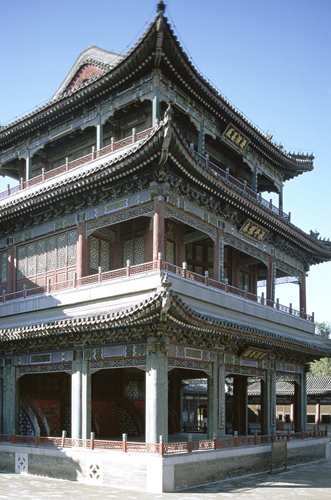
Hall of Happiness and Longevity
This
impressive hall was the residence of the Empress Cixi. It has
supposedly been left just as it was at the time of her death in 1908,
complete with its Qing dynasty-era furniture.
Garden of Virtue and Harmony
This
pretty complex of roofed corridors, small pavilions, rock gardens and
pools also includes Cixi’s private three-story theater. The buildings
now contain Qing-era artifacts, from vehicles to costumes and glassware.

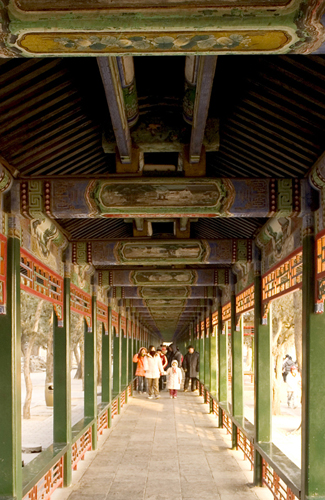
Long Corridor
From
the Garden of Virtue and Harmony the aptly named Long Corridor zigzags
along the shore of the lake, interrupted along its length by four
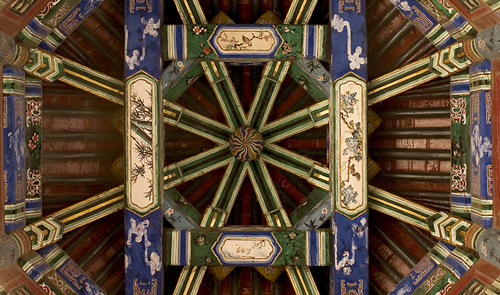
pavilions. The ceilings and beams of this corridor are decorated with
over 14,000 scenic paintings.

Painted ceiling in the Long Corridor

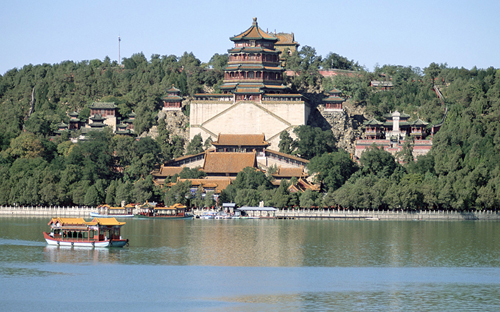
Longevity Hill
At
around the half-way point of the Long Corridor a series of buildings
ascends the slopes of artificially created Longevity Hill. The start of
the sequence is marked at the lakeside by a very fine decorative gate,
or pailou.

Tower of the Fragrance of the Buddha
Toward
the peak of Longevity Hill rises this prominent octagonal tower. The
stiff climb is rewarded with views from the balcony over the yellow
roofs of the halls and pavilions to the lake below.
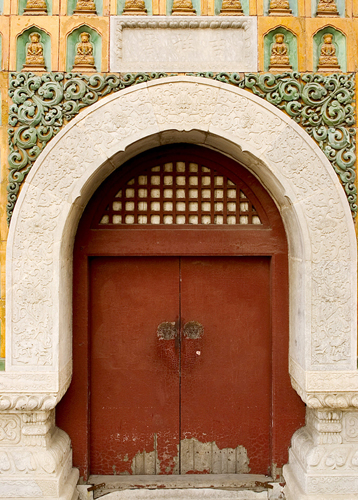
Temple of the Sea of Wisdom
North
of the Fragrance of the Buddha tower is a green- and yellow-tiled
temple decorated with glazed Buddhist effigies, many of which have sadly
been vandalized.

Sea of Wisdom temple
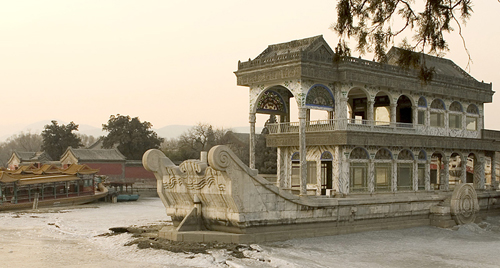
Marble Boat
Cixi
paid for this extravagant folly with funds meant for the modernization
of the Imperial Navy. The super-structure of the boat is made of wood
painted white to look like marble. Boat trips to South Lake Island
depart from a neighboring jetty.

Suzhou Street
At
the foot of Longevity Hill on its north side is Suzhou Street, a
shopping street built for the amusement of the Qianlong emperor, his
concubines and eunuchs, who would play at being shoppers, shopkeepers,
and pickpockets.
South Lake Island
Crowning
this small island on the south side of Kunming Lake is the Dragon King
Temple (Longwang Miao), which is dedicated to the god of rivers, seas,
and rain.
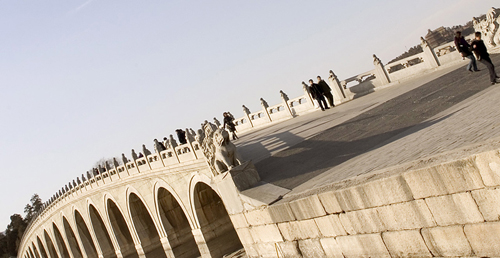
Seventeen-arch Bridge
South
Lake Island is connected to the eastern shore by an elegant bridge with
a marble lion crowning each of the 544 balusters along its length, all
supposedly individual. A large bronze ox, dating back to 1755 but
looking entirely modern, reposes on the eastern shore.