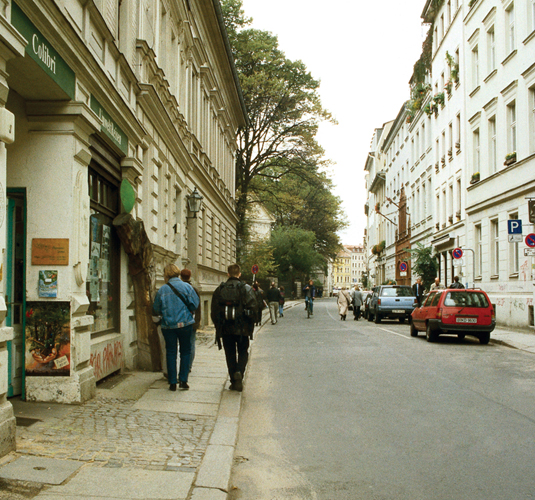
The Scheunenviertel,
literally the “barn quarter”, Berlin’s former Jewish quarter, has
experienced a unique revival in recent years. Originally, the thriving
Jewish community lived in neighbouring Spandauer Vorstadt, beyond the
city limits, while the Scheunenviertel was better known as a red-light
district. The Nazis, however, applied the name of “Scheunenviertel” to
both areas, in order to tarnish the Jews. After World War II the
district was much neglected and gradually fell into decay. Today, many
of the historic merchants’ yards and narrow side streets have been
restored, reviving the Scheunenviertel’s unique and lively character.
Many pubs and restaurants, galleries and shops are now based here and
the area has become very fashionable with locals and visitors alike,
especially at night. The tragic history of its former inhabitants,
however, remains unforgotten.
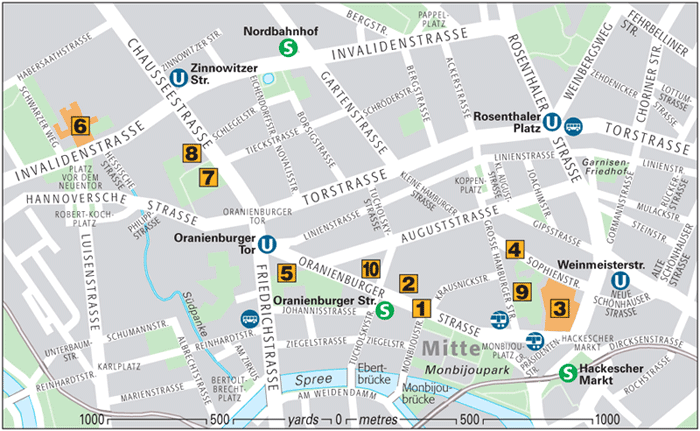
Top 10 Sights
Oranienburger Straße
Like
no other street, Oranienburger Straße, in the centre of the old
Scheunenviertel, symbolizes the rise and fall of Jewish culture in
Berlin. Traces of its Jewish past are visible all along the street, such
as the Neue Synagoge and several Jewish cafés and restaurants. Some 18th- and 19th-century buildings bear witness to the street’s former splendour – the Postfuhramt,
for example, or the house at No. 71–72, built in 1789 by Christian
Friedrich Becherer for the Grand Lodge of the Freemasons of Germany.Mitte, between Friedrichstr. and Rosenthaler Str.

Tacheles, Oranienburger Straße
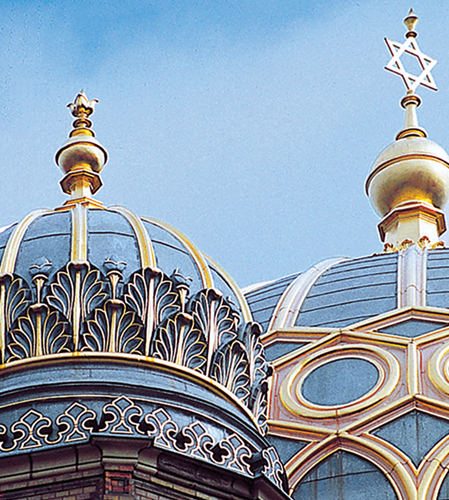
Neue Synagoge
The
New Synagogue, built in 1859–66, was once the largest in Europe. In
1938, it managed to survive “Reichskristallnacht” thanks to the
vigilance of a brave guard, but it was damaged by bombs during World War
II. Behind the Moorish façades are a prayer room and the Centrum
Judaicum.Oranienburger Str. 28–30
10am–6pm Sun–Thu, 10am–2pm Fri
030 8802 8300 00
Free admission

Neue Synagoge
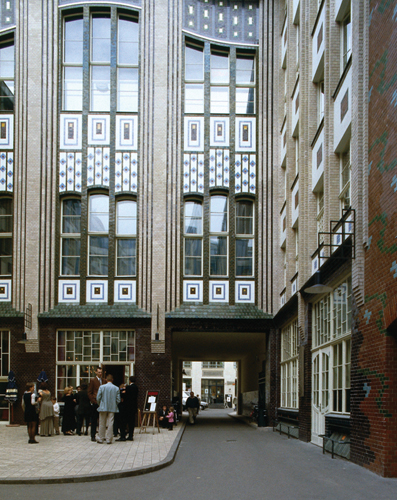
Hackesche Höfe
Berlin’s
largest and most attractive group of restored commercial buildings,
Hackesche Höfe extends between Oranienburger and Rosenthaler Straße and
up to Sophienstraße in the east. The complex of buildings, comprised of
nine interconnecting courtyards, was designed around the turn of the
20th century by Kurt Berndt and August Endell, two leading exponents of
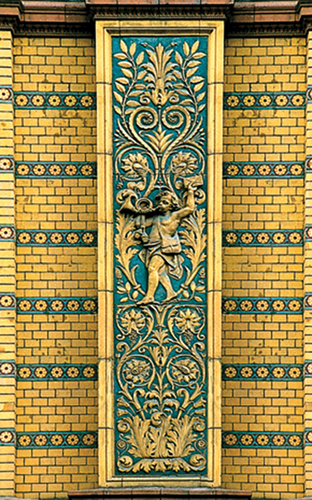
Art Nouveau. The first courtyard especially features elements that are
typical of this style: geometric patterns are laid out in vibrant
colours on glazed tiles, covering the entire building from the
foundations to the guttering. What had lain in ruin after 1945 has now
been carefully restored, and forms today one of the most popular
nightlife centres in the city. Restaurants and cafés, the Varieté Chamäleon, galleries and small shops have all settled in this area.Rosenthaler Str. 40–41

Hackesche Höfe
Sophienstraße
Narrow
Sophienstraße has been beautifully restored and now looks exactly as it
did in the late 18th century. A number of shops and arts and crafts
workshops are now based in the modest buildings and courtyards. Close by
stands Sophienkirche, the first Protestant parish church, founded by
Queen Sophie Luise in 1712. Next to the Baroque church is a small
cemetery with some 18th-century tombs.

Sophienstraße
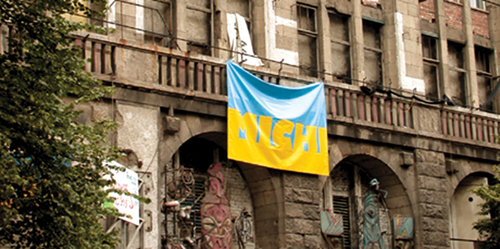
Tacheles
The
ruins of the former Wilhelm-Einkaufspassagen, one of Berlin’s most
elegant shopping centres dating back to the turn of the 20th century,
have been transformed by artists into an alternative arts centre. It now
houses workshops and cafés and offers a regular programme of events.Oranienburger Str. 54–56a
030 282 61 85
Museum für Naturkunde
The
Museum of Natural History – one of the largest of its kind – has the
world’s largest dinosaur skeleton: a brachiosaurus found in Tanzania.
Also displayed are fossils, meteorites and minerals .Invalidenstr. 43
9:30am–5pm Tue–Fri; 10am–6pm Sat–Sun
030 20 93 85 91
Admission charge
Dorotheenstädtischer Friedhof
Many
celebrities have found their final resting place in this charming
cemetery, dating back to 1762. To the left of the entrance are the
graves of Heinrich Mann (1871–1950) and Bertolt Brecht (1898–1956);
further along stand the pillar-like tombstones of the philosophers
Johann Gottlieb Fichte (1762–1814) and Georg Wilhelm Friedrich Hegel
(1770–1831). On Birkenallee (left off the main path) you can see the
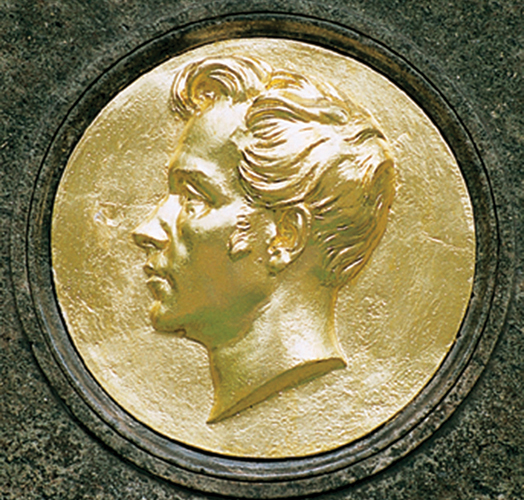
graves of master builder Karl Friedrich Schinkel (1781–1841) and the
architects Friedrich August Stüler (1800–65) and Johann Gottfried
Schadow (1764–1850).Chausseestr. 126
summer: 8am–8pm daily; winter: 8am–4pm daily

Schinkel, Dorotheenstädtischer Friedhof
Brecht-Weigel-Gedenkstätte
Bertolt
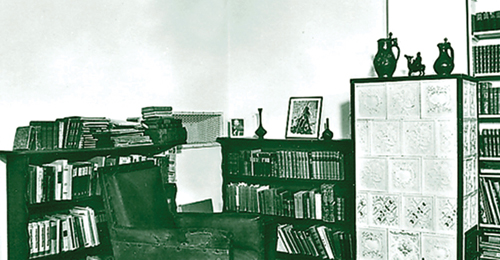
Brecht, one of the 20th century’s greatest playwrights, lived here with
his wife, Helene Weigel, from 1953–6. Original furnishings are on
display alongside documents and photographs.Chausseestr. 125
10–11:30am Tue–Sat exc Thu; 10–noon & 5–6:30pm Thu; 9:30am–1:30pm Sat; 11am–6pm Sun
030 2005 718 44
Admission charge

Bertolt Brecht’s study
Gedenkstätte Große Hamburger Straße
Before
1939, this was one of the most important Jewish streets, with several
Jewish schools, the oldest Jewish cemetery in Berlin and an old people’s
home. The latter achieved tragic fame during the Nazi period – the SS
used it as a detention centre for Berlin Jews before transporting them
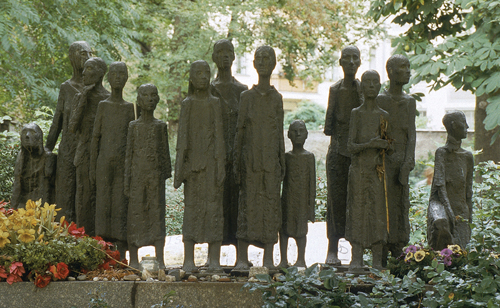
to the concentration camps. A simple monument commemorates thousands of
Jews who were sent to their death from here. To the left of the home is a
Jewish school, on the site of an earlier school founded in 1778 by the
Enlightenment philosopher Moses Mendelssohn (1729–86). To the right of
the monument is the Jewish cemetery, where some 12,000 Berlin Jews were
buried between 1672 and 1827. In 1943, the Nazis almost completely
destroyed the cemetery. Only a few Baroque tombs, or masebas,
survived; these are now embedded into the small original cemetery wall.
The place presumed to be Moses Mendelssohn’s tomb is marked by a new
monument.Große Hamburger Str.

Memorial on Große Hamburger Straße