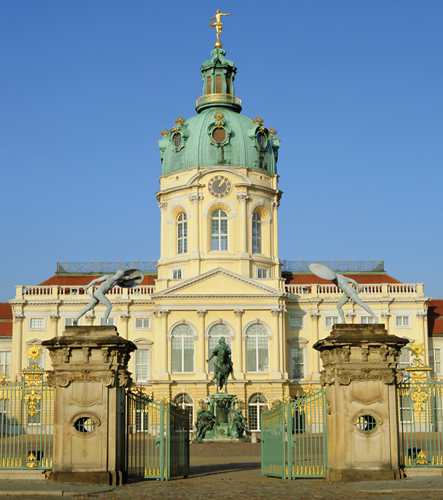
Sophisticated Charlottenburg is a haute bourgeoisie
enclave and was the only district of Berlin that did not rub shoulders
with the Wall. The historical streets off Ku’damm feature small cafés,
restaurants, art galleries and boutiques, based in stout residential
houses from the beginning of the 20th century. These streets and
Charlottenburg’s proud town hall remind us that this district was once
the richest town in Prussia, which was only incorporated into the city
of Berlin in 1920. Spandau, on the other hand, is rural in comparison, a
part of Berlin with a special feel. Spandau’s Late Medieval old town
and the citadel make this district on the other side of the Spree and
Havel seem like a small independent town.
Top 10 Sights
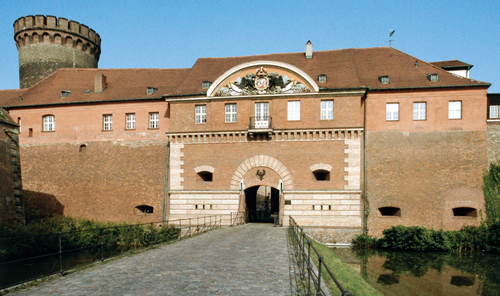
Zitadelle Spandau
The
only surviving fortress in Berlin, the citadel, at the confluence of
the Havel and Spree Rivers, is strategically well placed. The
star-shaped moated fortress, built in 1560 by Francesco Chiaramella da
Gandino, was modelled on similar buildings in Italy. Its four powerful
corner bastions, named Brandenburg, König (king), Königin (queen) and
Kronprinz (crown prince) are especially remarkable. A fortress stood on
the same site as early as the 12th century, of which the Juliusturm
survives – a keep that served as a prison in the 19th century. At the
time, Berliners used to say, “off to the Julio”, when they sent
criminals to prison. Later the imperial war treasures were kept here –
the reparations paid by France to the German Empire after its defeat in
the Franco-Prussian War of 1870–1. The Bastion Königin houses a museum
of municipal history.Am Juliusturm
10am–5pm daily
030 354 944 200
Admission charge

Zitadelle Spandau
Spandau
Old TownWhen walking
around Spandau Old Town, it is easy to forget that you are still in
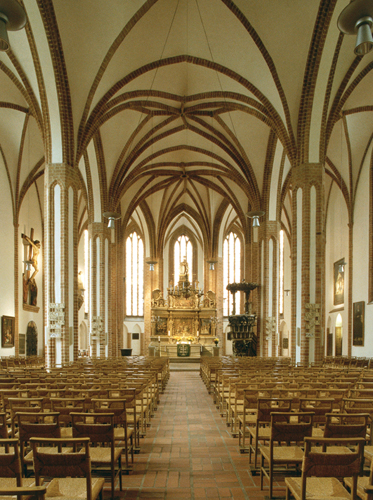
Berlin. Narrow alleyways and nooks and crannies around Nikolaikirche are
lined by Late Medieval houses, a sign that Spandau was founded in 1197
and is thus older than Berlin itself. Berlin’s oldest house, the Gothic
House, dating back to the early 16th century, stands here, in Breite
Straße 32.

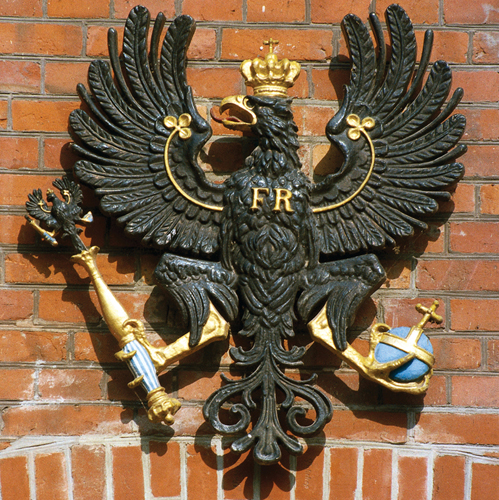
Prussian Eagle in Spandau

Inside Nikolaikirche, Spandau Old Town
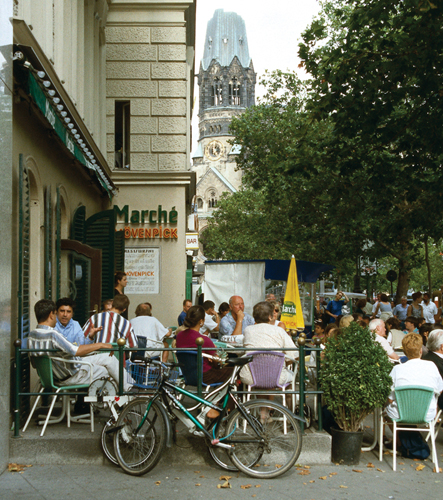
Savignyplatz
One
of Berlin’s most attractive squares is right in the heart of
Charlottenburg. Savignyplatz, named after a 19th-century German legal
scholar, is the focal point of Charlottenburg’s reputation as a district
for artists and intellectuals and as a trendy residential area for
dining out and entertainment. The square has two green spaces, either
side of Kantstraße. It was built in the 1920s as part of an effort to
create parks in the centre of town. Small paths, benches and pergolas
make it a pleasant place for a rest. Dotted all around Savignyplatz are
restaurants, street cafés and shops, especially in Grolman-, Knesebeck-,
and Carmerstraße, all three of which cross the square. Many a reveller
has lost his way here after a night’s celebrating, which is why the area
is jokingly known as the “Savignydreieck” (the Savigny Triangle). North
of Savignyplatz it is worth exploring some of the most attractive
streets in Charlottenburg – Knesebeck-, Schlüter- and Goethestraße. This
is still a thriving Charlottenburg community; the small shops, numerous
bookstores, cafés and specialist retailers are always busy, especially
on Saturdays. South of the square, the redtiled S-Bahn arches also lure
visitors with their shops, cafés and bars; most of all the
Savignypassage near Bleibtreustraße and the small passageway between
Grolman- and Uhlandstraße on the opposite side of the square.An der Kantstraße
Fasanenstraße
This
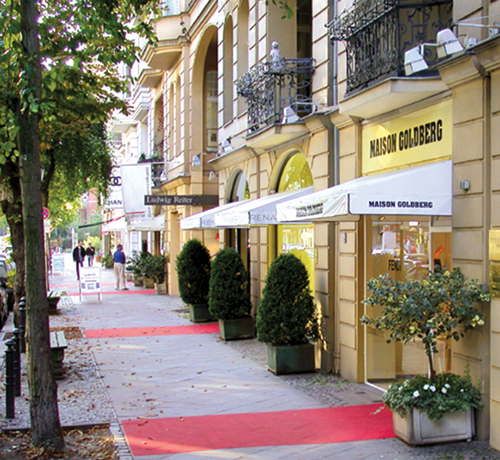
elegant street is the most attractive and trendiest street off Ku’damm.
Designer shops, galleries and restaurants are tucked away here, a
shoppers’ paradise for all those who regard Kurfürstendamm as a mere
retail strip catering for the masses. The junction of Fasanenstraße and
Ku’damm is one of the liveliest spots in Berlin. One of the best known
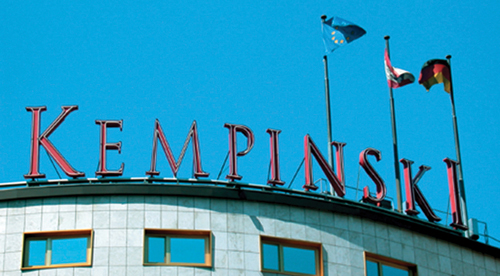
places is the “Bristol Berlin Kempinski” at the northern end of Fasanenstraße. The Lübbecke & Co bank
opposite cleverly combines a historic building with a new structure.
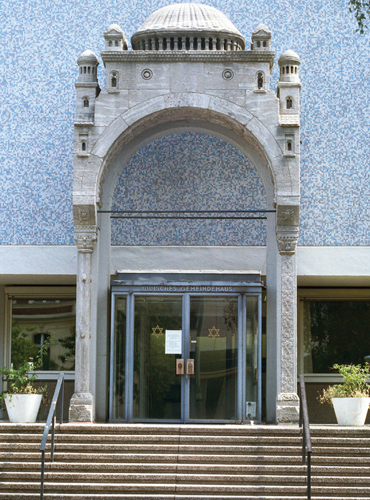
Next to it are the Jüdisches Gemeindehaus (Jewish Community House) and a little farther along, at the junction with Kantstraße, is the Kant-Dreieck. Berliner Börse (stock exchange), based in the ultra-modern Ludwig-Erhard-Haus,
is just above, at the corner of Hardenbergstraße. The southern end of
the street is dominated by residential villas, some of which may seem a
little pompous, as well as the Literaturhaus, Villa Grisebach, one of
the oldest art auction houses in Berlin, and the Käthe-Kollwitz-Museum.
There are also some very expensive fashion stores here, as well as a
few cosy restaurants. At its southern end, the street leads to
picturesque Fasanenplatz, where many artists lived before 1933.Charlottenburg

The Jewish House, in Fasanenstraße

Kempinski Hotel Bristol Berlin, Fasanenstraße

Shops in Fasanenstraße
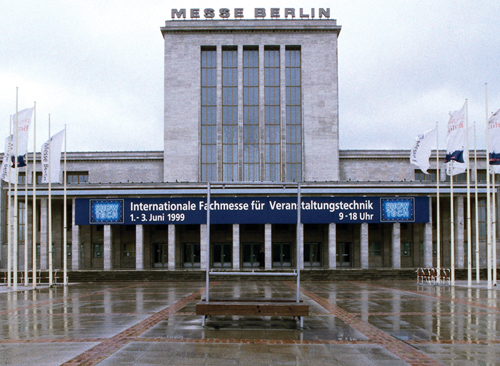
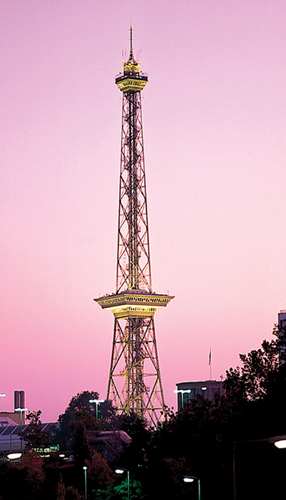
Funkturm and Messegelände
The
150-m (492-ft) high Funkturm (TV tower), reminiscent of the Eiffel
Tower in Paris, is one of the landmarks of Berlin that can be seen from
afar. Built in 1924 to plans by Heinrich Straumer, it served as an
aerial and as an air-traffic control tower. The viewing platform at 125 m
(410 ft) provides magnificent views, while the restaurant, situated at
55 m (180 ft), overlooks the oldest part of the complex, the exhibition
centre and the surrounding pavillions. The giant building in the east is
the Hall of Honour built to designs by Richard Ermisch in 1936, in the
colossal Fascist architectural style.On
the opposite side rises the shiny silver ICC, the International
Congress Centrum, built in 1975–9 by Ralf Schüler and Ursulina
Schüler-Witte. It is still considered one of the most advanced
conference centres in the world, with 80 rooms for more than 5,000
visitors. Berlin’s vast exhibition grounds are among the largest in the
world, covering an area of 160,000 sq m (40 acres). These play host to,
among others, Grüne Woche (green week, an agricultural fair),
Internationale Tourismusbörse (international tourism fair) and
Internationale Funkausstellung (international TV fair).Messedamm 22
11am–9pm Mon, 10am–11pm Tue–Sun (tower)
030 30 38 0
Admission charge

Ehrenhalle in the Messegelände

The Berliner Funkturm
Newton Sammlung
Helmut
Newton (1931–2004), the world famous photographer, has finally returned
to his home city. This museum presents his complete works and centres
on two shows called “Sex and Landscapes” and “Us and Them”, which show
his early fashion and nude photography as well as photos of the famous,
rich and beautiful since 1947.Käthe-Kollwitz-Museum
The
museum is dedicated to the work of the Berlin artist Käthe Kollwitz
(1897–1945), who documented the misery of workers’ lives in 1920s Berlin
in numerous prints, graphics and sketches. After losing a son and a
grandson in World War I, she concentrated on the themes of war and
motherhood. The museum holds some 200 of her works, including several
self-portraits.Fasanenstr. 24
11am–6pm daily
030 882 52 10
Admission charge