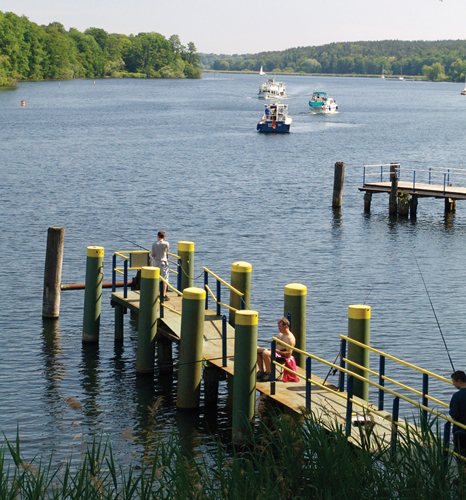
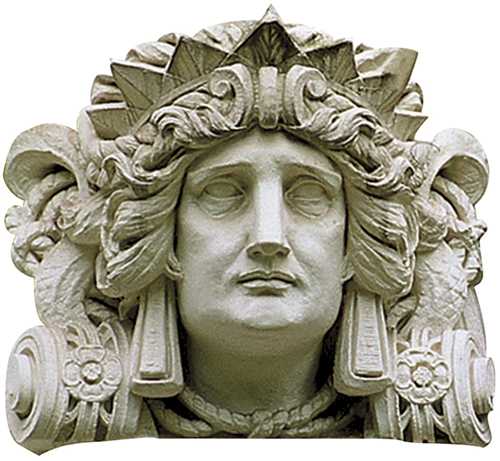
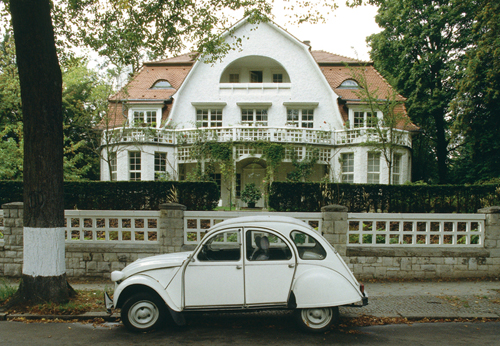
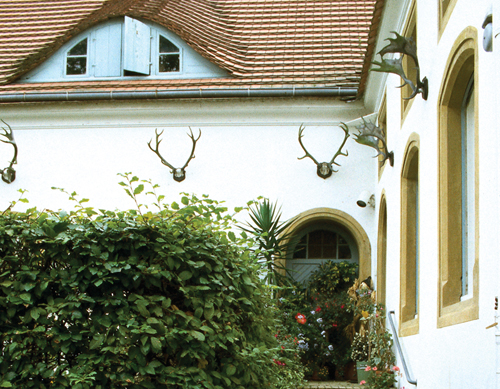
Berlin’s green south, which
includes the districts of Grunewald and Dahlem, is dotted with numerous
lakes, rivers, small castles, private estates and residential villas,
leafy roads and cafés for daytrippers. Grunewald and Dahlem have managed
to preserve their rural character, although affluent and famous
Berliners have always built their houses here. There are many
attractions in Berlin’s southwest: visitors can enjoy extensive walks in
the Grunewald forest, or ferry across the picturesque lake to
Pfaueninsel, an island with romantic castle ruins – and a favourite
destination for locals. The swimming baths at Wannsee, Europe’s largest
inland beach, welcomes up to 40,000 visitors a day for fun, games and a
dip in the water and on its beautiful white beaches. The museum complex
in Dahlem, too, with its outstanding ethnographic and art collections,
is worth visiting. Meanwhile, the Alliiertenmuseum and the Haus der
Wannsee Konferenz recall a more painful period in Berlin’s history.
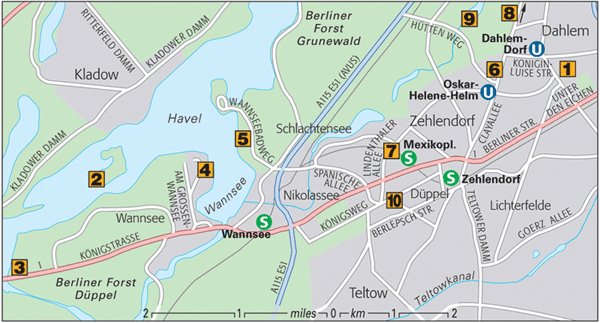
Top 10 Sights
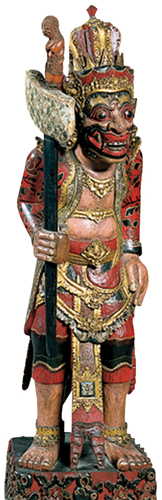
Dahlem Museums
These
three museums in south Berlin, dedicated to foreign cultures and
peoples, feature one of Germany’s best ethno-cultural collections. The
Ethnological Museum holds around one million items from around the
world, especially artistic and cult objects from Africa, as well as
exhibits from North-American Indians. Full-scale wooden huts and boats
from the island populations of the South Pacific as well as a large
collection of ceramic and stone sculptures from the Mayas, Aztecs and
Incas are particularly impressive. The Museum of Asian Art combines the
formerly separate East Asian and Indian collections. Highlights include
Japanese painting, Chinese porcelain, Buddhist cave paintings and early
Indian sculptures.
Lansstr. 8
(Museum Europäische Kulturen reopens Sep 2010)
10am–6pm Tue–Fri, 11am–6pm Sat, Sun
030 830 1438
Admission charge

Exhibit in a Dahlem Museum
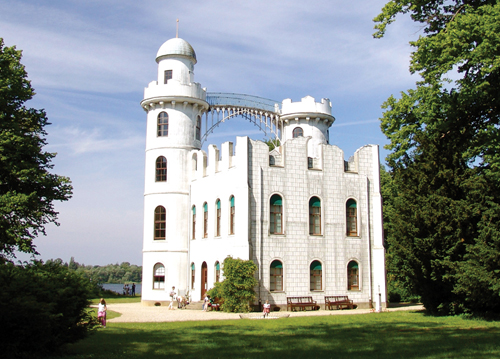
Pfaueninsel
Visitors
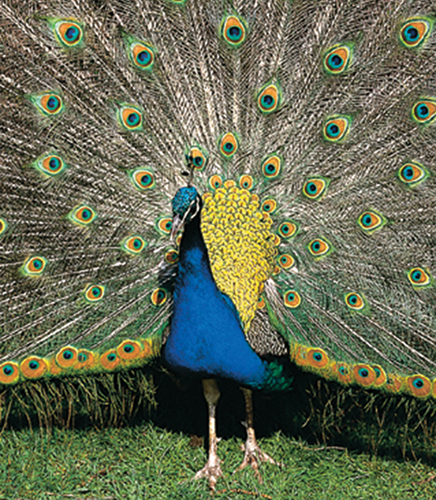
are enchanted by the romantic palace ruins and the eponymous peacocks
that run around here. The Wannsee island, which can only be reached by
ferry, is one of the most charming spots for a walk in Berlin .Pfaueninselchaussee
10am–sunset daily
030 80 58 68 30
Admission charge

Castle ruins on Pfaueninsel

A peacock on Pfaueninsel
Schloss Klein-Glienicke
One
of the most beautiful Hohenzollern palaces in Berlin, this romantic
castle with its extensive park was built by Schinkel in 1824–60 as a
summer residence for Prince Carl of Prussia. The landscape garden,
designed by Peter Joseph Lenné, hides many secrets – for example
pavilions called “Große” and “Kleine Neugierde” (large and small
curiosity), a garden house and a tea-house, a casino right on the water
(a former apartment for guests) as well as the Orangerie (a greenhouse).Königstr. 36
May–Oct: 10am–6pm Sat, Sun; Nov–Apr: 10am–5pm Sat–Sun (with tour only)
0331 96 94 200
Admission charge

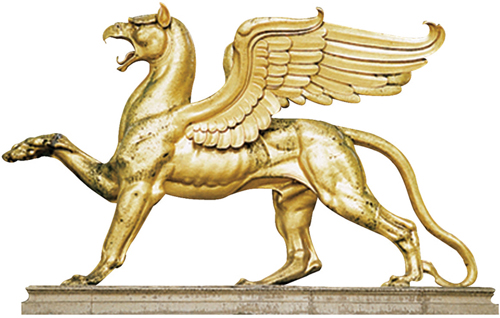
Gryffin at Schloss Klein-Glienicke
Gedenkstätte Haus der Wannsee-Konferenz
It
is hard to believe that something as abhorrent as the Holocaust could
have been planned at this elegant villa in a picturesque spot on
Wannsee. Built in 1914–15 by Paul Baumgarten in the style of a small
Neo-Baroque palace for the businessman Ernst Marlier, it was here that
the Nazi elite, among them the infamous Adolf Eichmann, met on 20
January 1942 to discuss the details of the mass extermination of Jews.
An exhibition at the memorial documents both the conference and its
consequences as well as the history of the villa.Am Großen Wannsee 56–58
10am–6pm daily
030 805 00 10
Free admission
Strandbad Wannsee
Europe’s
largest inland beach is a surprisingly picturesque spot in the middle
of the large city, attracting up to 40,000 visitors a day. The renovated
swimming baths were built in 1929–30 as a recreation area for workers
in the neighbouring districts .Wannseebadeweg 25
Apr–Sep: 10am–7pm Mon–Fri, 8am–8pm Sat, Sun
030 7071 38 33
Admission charge

Landing stage Wannsee
Alliiertenmuseum
Visitors
stroll around this museum reminiscing and recalling the 50 or so years
of partnership between Western Allies and West Berliners. The museum,
based in a former US-barracks, employs uniforms, documents, weapons and
military equipment to tell the story of Berlin’s post-war history,
though not only from the military point of view.Clayallee 135
10am–6pm daily exc Wed
030 818 19 90
Free admission
Mexikoplatz
Idyllic
Mexikoplatz in the southern district of Zehlendorf is one of the most
atmospheric and architecturally fascinating squares in Berlin. The two
round green spaces in the centre are flanked by elegant semi-circular
Art-Nouveau apartment blocks, and in front of these stands Berlin’s last
remaining Art-Deco-style S-Bahn station. The yellow buildings are
covered in green shingles and, in summer, the balconies are richly
decked with greenery and flowers. Some of Berlin’s most magnificent
mansion houses line both sides of Argentinische and Lindenthaler Allee.
Many celebrities live in the area around the square.Mexikoplatz
Dahlem Villas
Some
of Berlin’s most attractive villas, dating back to the 19th century,
are found in the streets surrounding the Grunewald S-Bahn station.
Especially worth seeing are Nos. 15 and 11 in Winklerstraße, the latter
of which was built by Hermann Muthesius in the style of an English
country mansion. Villa Maren, at No. 12 next door, is a beautiful
example of the Neo-Renaissance style. The villas on Toni-Lessler-Straße
and on Furtwänglerstraße are also worth a detour.

Villa at No. 23 Toni-Lessler-Straße

Villa at No. 11 Winklerstraße
Jagdschloss Grunewald
The
small gleaming white palace in Grunewald underwent major restoration in
2009. The oldest palace in the city area, it dates back to 1542 and
served as a hunting lodge for the Electors. The castle, built in the
Renaissance and Baroque styles, houses a small collection of German and
Dutch paintings.Hüttenweg 100, Grunewaldsee
030 813 35 97
Admission charge

Jagdschloss Grunewald
Museumsdorf Düppel
The
open-air museum at Düppel is a reminder of the fact that Berlin once
consisted of a series of villages, with one of the oldest settlements
dating back to the 13th century. The lively museum is animated by
actors, who are dressed and act out daily life as it would have been
during the Middle Ages. There are fascinating live demonstrations of
ancient crafts such as bread-baking, pottery and basket-weaving. Plants
are grown as in medieval times for their various uses.Clauertstr. 11
Apr–Oct: 10am–5pm Sun, 3–7pm Thu
030 802 66 71
Admission charge