Berlin’s Prenzlauer Berg
district attracts locals and tourists like virtually no other part of
town because it has undergone the most dramatic changes in recent years.
Today, the old tenement blocks in the former workers’ district of East
Berlin have been taken over by cafés, pubs and restaurants, and the
nightlife is exciting and vibrant. Even when Berlin was still a divided
city, Prenzlauer Berg was an area favoured by artists and an alternative
crowd – and it exerts a similar pull today. Many houses in the quiet
side streets have not yet been renovated and give a genuine impression
of what Berlin once used to be like. But Prenzlauer Berg is undergoing a
transformation. Since the reunification of the city, this quarter has
become one of the most popular residential areas. Many West Germans,
decried as “yuppies” by the locals, settle here, restore the buildings
and buy up the apartments. The standard of life in the district has
risen noticeably. Trendy bars, restaurants and cafés are clustered
mainly around Kollwitzplatz and Husemannstraße. And so a visit to
Prenzlauer Berg today is at the same time a journey back in time to the
days immediately following reunification.
Prenzlberg or Prenzlauer Berg?Snobs today simply say “Prenzlberg” when talking |
|
|
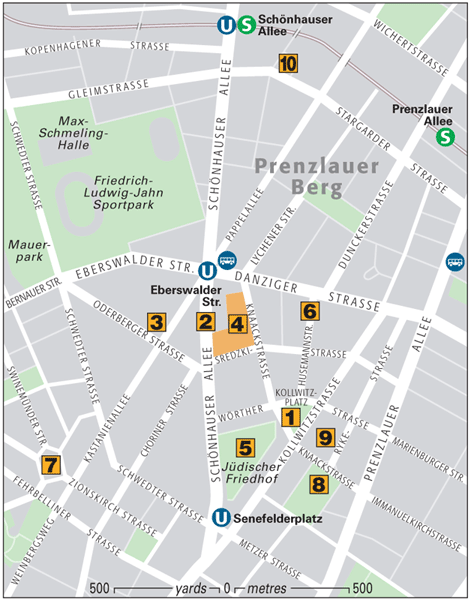
Top 10 Sights
Kollwitzplatz
Once
a quiet square, Kollwitzplatz is today the noisy and turbulent heart of
the district. All around the green square, locals congregate in
numerous cafés, pubs, bars and restaurants; in summer especially, the
fun carries on till late at night. From the appearance of the lavishly
restored façades it is hard to tell that Kollwitzplatz was once one of
Berlin’s poorest areas. The impoverished past of the district and its
19th-century tenement blocks is today only recalled by the name of the
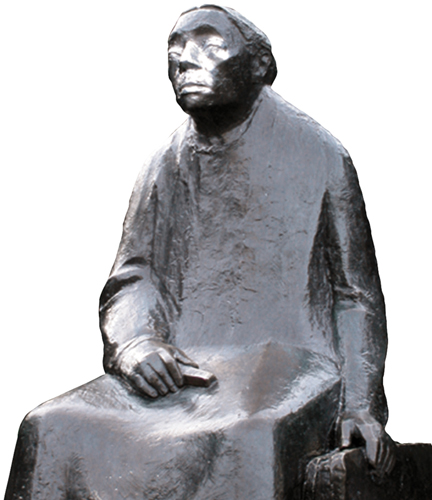
square. The artist Käthe Kollwitz
(1867–1945) once lived and worked at Kollwitzplatz 25 (now destroyed)
and spent much of her life in the district, where she highlighted the
poverty of the local workers in her sculptures, drawings and sketches.Prenzlauer Berg

Kollwitz monument in Kollwitzplatz
Schönhauser Allee
Schönhauser
Allee, 3 km (2 miles) long, is the main artery of the district. In the
centre of the dual carriageway is the high-level viaduct of U-Bahn line U
2, painted green. Schönhauser Allee, which runs northeast from
Rosa-Luxemburg-Platz to the edge of town, is lined with shops and a few
pubs. Many buildings have not yet been restored and give a good
impression of the “old” Prenzlauer Berg – especially the buildings
between Senefelderplatz and Danziger Straße.Prenzlauer Berg
Prater
The
Prater is one of the few remaining entertainment complexes that were
once common in Germany’s big cities. It was built in 1837 just outside
the original city gates, and was first jokingly called “Prater” by
Berliners after its world-famous counterpart in Vienna. A concert hall
was added in 1857 and by the turn of the century it had become so
popular that the nickname stuck. Today, you can enjoy beer and food at
the restaurant of the same name (see Prater).Kastanienallee 7–9
6pm–midnight Mon–Sat, noon–midnight Sun
030 448 56 88
Kulturbrauerei
The
giant building originally housed Berlin’s Schultheiss brewery, one of
the few remaining breweries that once made Prenzlauer Berg famous. The
complex of buildings, parts of which are more than 150 years old, was
designed by Franz Schwechten. It was completely restored in 1997–9, and
has become a lively and popular meeting point for locals. Restaurants,
cafés, pubs, a cinema, small shops and even a theatre have sprung up
within the complex of red and yellow brick buildings and now line its
numerous interior courtyards.Schönhauser Allee 36–39 (entrance: Knaackstr. 97)
030 44 31 50
Jewish Cemetery
The
small Jewish cemetery is one of the most charming cemeteries in the
city. The tombstones lie or stand here amid dense scrub and high trees.
The cemetery was set up in 1827, when the former Jewish cemetery in
Große Hamburger Straße was closed. Two of the famous personalities who
have found their final resting places here are the painter Max
Liebermann (1847–1935) and the composer Giacomo Meyerbeer (1791–1864).Schönhauser Allee 23–25
Husemannstraße
The
East German regime undertook a perfect restoration of this idyllic
street for Berlin’s 750th anniversary celebrations. A stroll through the
leafy roads lined with houses from the Gründerzeit (the years after the
founding of the German Empire in 1871) is one of the nicest ways to
experience Prenzlauer Berg. Ancient-looking street lamps and signs,
cobbled streets, antiquated shop signs and a few atmospheric pubs take
the visitor back to the late 19th century.Between Wörther and Danziger Str.
Zionskirche
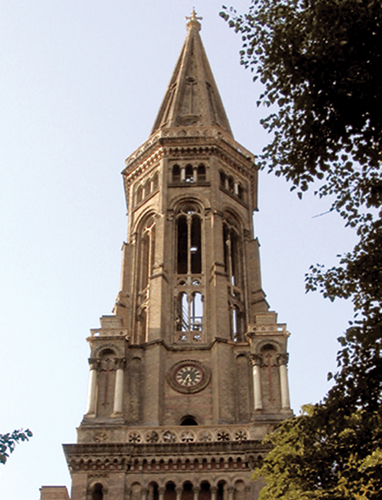
Zionskirche,
dating from 1866–73, and the square of the same name form a tranquil
oasis in the middle of the lively district. The Protestant church has
always been a political centre, too. During the Third Reich, resistance
groups against the Nazi regime congregated here and, during the East
German period, the alternative “environment library” (an information and
documentation centre) was established here. Church and other opposition
groups who were active here played a decisive role in the political
transformation of East Germany in 1989–90, which eventually led to
reunification.Zionskirchplatz
noon–6pm Sun, 8pm–10pm Mon, 11am–7pm Thu
030 449 21 91

Zionskirche
Wasserturm
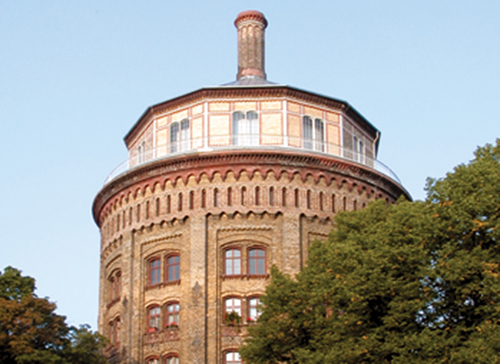
The
unofficial symbol of the district is the giant, 30-m (98-ft) high Water
Tower in Knaackstraße, built in 1877 as a water reservoir, but shut
down in 1914. The engine house in the tower was used as an unofficial
prison by the SA in 1933–45 – a period recalled by a commemorative
plaque. The tower stands on Windmühlenberg (windmill hill), where some
of the windmills that had made Prenzlauer Berg famous in the 19th
century once stood. Today the round brick building has been converted
into trendy apartments.

Wasserturm
Synagoge Rykestraße
The
synagogue, built in 1904, is one of the few Jewish places of worship to
have survived “Reichskristallnacht” on 9 November 1938, the violent
destruction of Jewish shop premises by the Nazis. The historic interior
of the synagogue was built from red bricks in the shape of a basilica.
Today it is part of an apartment block.Rykestr. 53
by prior arrangement
030 88 02 83 16
Gethsemanekirche
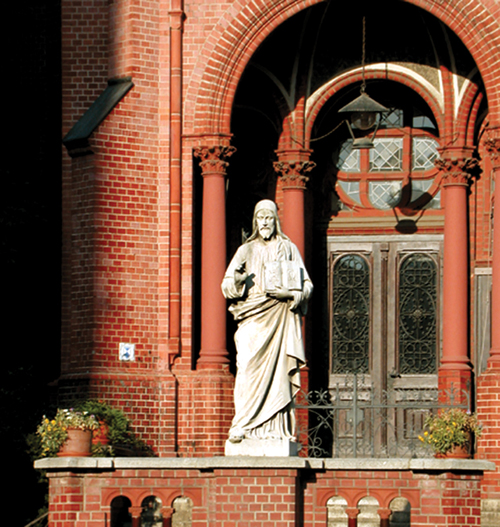
Outside
this red-brick church, dating back to 1891–3, East German secret police
beat up peaceful protesters. It was the starting point for the collapse
of the East German regime.Stargarder Str. 77
May–Oct: 5–7pm Wed, Thu (otherwise by prior arrangement)
030 445 77 45

Entrance to Gethsemanekirche