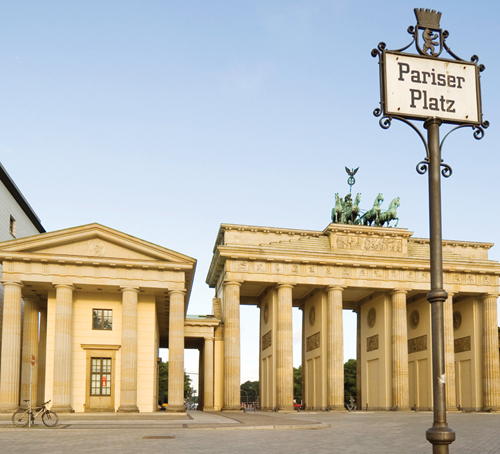
The best known of Berlin’s symbols, the Brandenburg
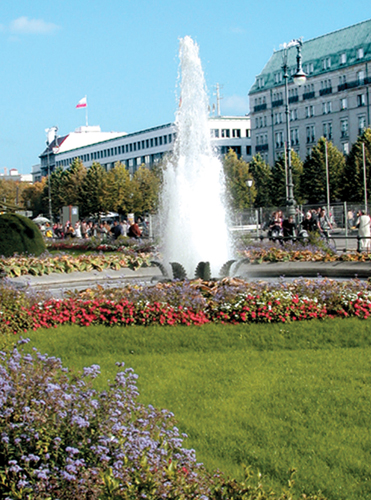
Gate stands proudly in the middle of Pariser Platz, asserting itself
against the hyper-modern embassy buildings that now surround it. Crowned
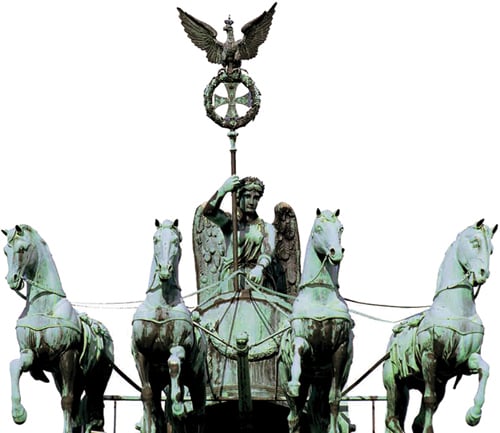
by its triumphant Quadriga sculpture, the famous Gate has long been a
focal point in Berlin’s history: rulers and statesmen, military parades
and demonstrations – all have felt compelled to march through the
Brandenburger Tor.
Tourist information
|
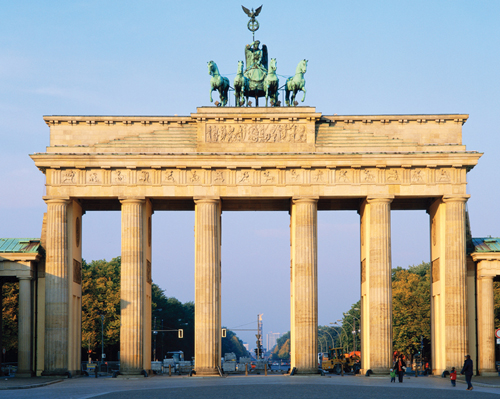
The Brandenburg Gate seen from the east
|
|
Top 10 Sights
Brandenburger Tor
Since
its restoration in 2002, Berlin’s symbol is now lit up more brightly
than ever before. Built by Carl G Langhans in 1789–91 and modelled on
the temple porticos of ancient Athens, the Gate has, since the 19th
century, been the backdrop for many events in the city’s turbulent
history.Palais am Pariser Platz
This
complex by Bernhard Winking, a successful modern interpretation of
Neo-Classical architecture, is slightly hidden to the north of the
Brandenburger Tor. It is worth venturing inside where you will find a
café, a restaurant and a souvenir shop around a pleasantly shaded
courtyard.

Eugen-Gutmann-Haus
With
its clean lines, the Dresdner Bank, built in the round by the Hamburg
architects’ team gmp in 1996–7, recalls the style of the New Sobriety
movement of the 1920s. In front of the building, which serves as the
Berlin headquarters of the Dresdner Bank, stands the famous original
street sign for the Pariser Platz.

Haus Liebermann
Josef
Paul Kleihues erected this building at the north end of the
Brandenburger Tor in 1996–8, faithfully recreating an earlier building
on the same site. The house is named after the artist Max Liebermann,
who lived here. In 1933, watching Nazi SA troops march through the Gate,
he famously said: “I cannot possibly eat as much as I would want to
puke out.”American Embassy
The
last gap in the line of buildings around Pariser Platz was finally
closed in 2008. A dispute between the embassy and the Berlin Senate
delayed building for several years: an entire street was to be moved to
satisfy the USA’s security requirements. But in the end, the historical
street stayed where it was.