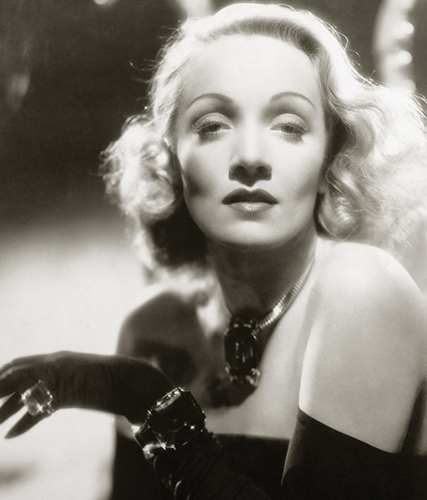
Marlene Dietrich
The famous filmstar (1901–92), born in Schöneberg, began her career in Berlin in the 1920s. Her breakthrough came with the film The Blue Angel
(1931). She lies buried in the Friedenau cemetery in Steglitz. Her
personal possessions are exhibited in the Filmmuseum Berlin in the Sony
Center on Potsdamer Platz.

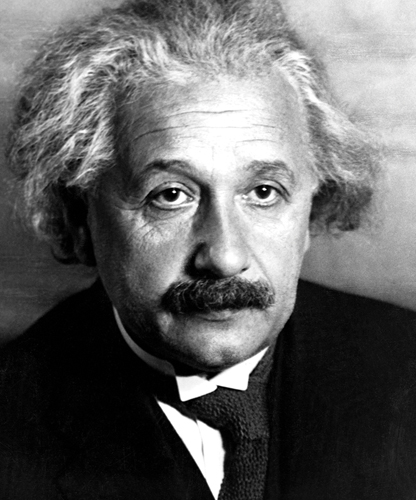
Albert Einstein
In
1914, the physicist Albert Einstein (1879–1955) became the director of
the Kaiser Wilhelm Institute for Physics. He was awarded the Nobel Prize
for Physics in 1921 for his Theory of Relativity, first developed in
1905. Einstein mostly lived and worked in Potsdam, but stayed closely
connected with Berlin through his lectures and teaching activity. In
1933 Einstein, who was Jewish, had to emigrate from Germany to the USA
where he stayed until his death.

Albert Einstein taught in Berlin
Bertolt Brecht
Born in Augsburg, Bavaria, Bertolt Brecht (1898–1956) wrote some of his greatest works, such as the Threepenny Opera,
in a small apartment in Charlottenburg. In the Third Reich, the
playwright emigrated to the US, but he returned to Germany after World
War II and founded the Berliner Ensemble in East Berlin in 1949. Until
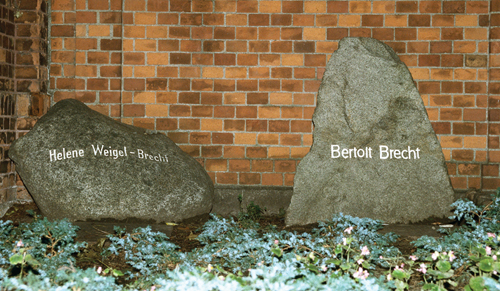
his death, Brecht lived in Chausseestraße in Berlin-Mitte, with his
wife, Helene Weigel. His renovated apartment has been turned into a
museum.

Brechts’ tombstone
Herbert von Karajan
This
famous Austrian conductor (1908–1989) was head of the Berlin
Philharmonic Orchestra from 1954 until 1989. During this time he helped
create the orchestra’s unique sound, which remains legendary until this
day. Herbert von Karajan was both revered and feared by his musicians
because of his genius and his fiery temperament. Berliners still refer
to the Philharmonie as “Circus Karajani”.Robert Koch
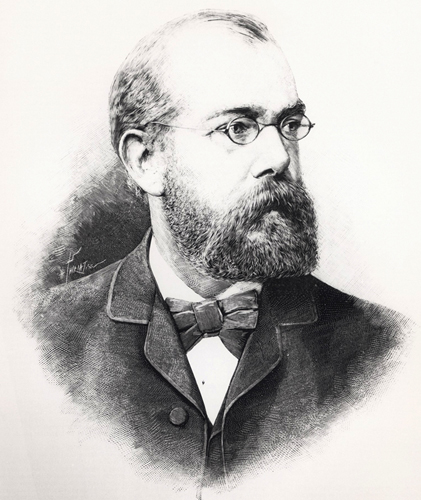
Like
few other physicians of his day, Robert Koch (1843–1910) laid the
foundations and shaped the face of modern medicine with his pioneering
discoveries. The Director of the Institute for Infectious Diseases, Koch
also taught and researched at the Charité Hospital. In 1905 he received
the Nobel Prize for Medicine for his discoveries in the field of
microbiology.

Robert Koch
Theodor Fontane
A
Huguenot, Fontane (1819–98) was one of the most important 19th-century
novelists in Germany. He also worked as a journalist for more than 20
years, penning many of his articles and essays in the Café Josty on
Potsdamer Platz. Fontane is particularly well known for his Walks in the Province of Brandenburg, in which he describes the mentality of the people, historic places and the Brandenburg landscapes.Käthe Kollwitz
The
sculptor and painter Käthe Kollwitz (1867–1945) portrayed the social
problems of the poor, and her work provides a powerful, haunting
commentary on human suffering. Kollwitz spent a large part of her life
in a modest abode in the square that is now named after her, in the
Prenzlauer Berg district. A monument recalls how she captured the lives
of poor Berlin families, burdened with large numbers of children, and of
social outcasts. Her Pieta now adorns the Neue Wache.Jacob and Wilhelm Grimm
The
brothers Jacob (1785–1863) and Wilhelm (1786–1859) Grimm are well known
around the world, thanks to their collection of classic fairy tales
including Little Red Riding Hood and Hansel and Gretel. Equally important, however, was their linguistic output, the German Grammar and German Dictionary which are standard reference works even today.