|
|
Ägyptisches Museum
The
star exhibit in the Egyptian Museum, part of the Neues Museum, is the
beautiful bust of Nefertiti, wife of Akhenaton. The long-necked
limestone bust, discovered in 1912, probably served as a model. Also
worth seeing is the “Berlin Green Head”, a small bust from the 4th
century BC. The museum also holds numerous mummies, sarcophagi, murals
and sculptures.Museumsinsel, Bodestr. 1–3
10am–6pm Mon–Sun, until 10pm Thu
030 266 36 60
Admission charge
Dahlem Museums
The
three museums based in southwest Berlin are a fantastic resource of
exotic and historic European cultures. The Museum of Ethnology is
devoted to the cultures of the Pacific, North and South America as well
as Africa. The Museum of Asian Art has exquisite collections from China,
Japan, India and Southeast Asia. The Museum of European Cultures
reopens in September 2010. Its collections will eventually move to the
new Humboldt-Forum.Jüdisches Museum
The
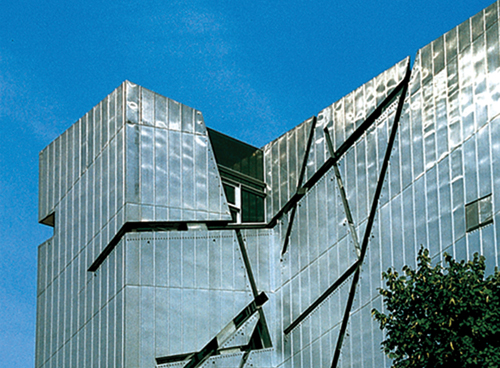
Jewish Museum, housed in a spectacular building designed by Daniel
Libeskind, documents the German–Jewish relationship through the
centuries. There are special exhibitions on the influence of Berlin Jews
on the town’s cultural life, and on the life of the Enlightenment
philosopher Moses Mendelssohn. An empty room commemorates the loss of
Jewish culture. There is also an exciting programme of special events .

The Jewish Museum
Kunstgewerbemuseum
European
crafts from over five centuries are on display at this museum. Its most
valuable exhibits are the treasure of the Guelphs from Braunschweig and
the silver treasure of the town council in Lüneburg. The museum also
holds valuable Italian tinglazed earthenware, Renaissance faïence and
German Baroque glass and ceramics. Popular displays show Neo-Classical
porcelain and furniture, Jugendstil art and Tiffany vases, as well as
20th-century Art-Deco and modern designs.Matthäikirchplatz
10am–6pm Tue-Fri, 11am–6pm Sat, Sun
030 266 2902
Admission charge
Museum für Naturkunde
With
over 60 million exhibits, the Natural History Museum is one of the
largest of its kind. One of the star features is the world’s largest
dinosaur skeleton, a brachiosaurus found in Tanzania in 1909. There are
six further dinosaur skeletons as well as many fossils of mussels, birds
and mammals. Together, they take the visitor back to prehistoric times.
It is also worth making a visit to the glittering exhibition of
meteorites and minerals.Invalidenstr. 43
9:30am–5pm Tue–Fri, 10am–6pm Sat & Sun
Admission charge
Musikinstrumenten-museum
Some
750 musical instruments can be heard in this museum, including such
famous ones as Frederick the Great’s harpsichord. Don’t miss the
silent-film organ which still works (first Sat in the month, noon).Ben-Gurion-Str. 1
9am–5pm Tue–Fri, until 10pm Thu, 10am–5pm Sat, Sun
Admission charge