“As long as the lime trees still blossom in Unter den
Linden, Berlin will always be Berlin,” Marlene Dietrich once sang about
this magnificent avenue. Today the lime trees blossom more beautifully
than ever in the historical centre of Berlin, because the old buildings
along the street have been extensively restored and modern architecture
has created new highlights. The “Linden” – originally a royal
bridle-path linking the Stadtschloss (the king’s town residence) and
Tiergarten – became Berlin’s most fashionable street in the 18th
century, and was synonymous with the city that was then the capital of
Prussia.
Deutsches Historisches Museum
-
Unter den Linden 2
-
10am–6pm daily
-
030 20 30 40
-
www.dhm.de
-
Admission charge
-
Staatsoper, Unter den Linden 7
-
Box Office 10am–8pm Mon–Fri, 2–8pm Sun
-
030 20 35 45 55
-
www.staatsoper-berlin.de
-
Admission charge
|
|
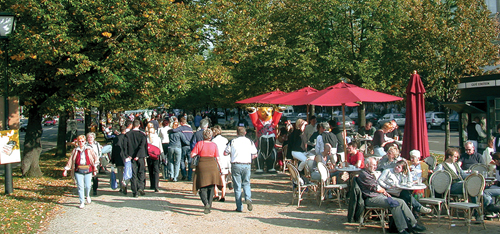
The largest selection of cakes in Berlin tempts visitors in the Café im Opernpalais. In summer, you can enjoy them outside.
|
|
|
Buses No. 100 and No. 200 run along the entire length of Unter den Linden, with bus stops at nearly all the famous sights.
|
|
Top 10 Sights
-
Deutsches Historisches Museum
Germany’s
largest history museum, reopened in 2003, provides an overview of more
than 1,000 years of German history. Housed in the Zeughaus – the royal
arsenal built in 1706 – it is the oldest and, architecturally, the most
interesting building in the avenue Unter den Linden (see Deutsches Historisches Museum).
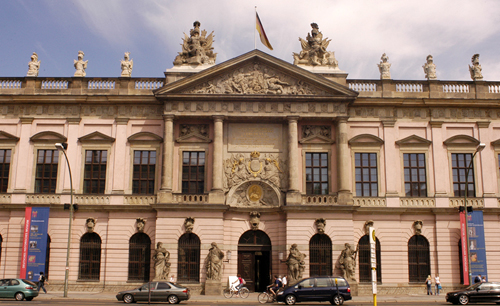
Deutsches Historisches Museum in the Zeughaus
-
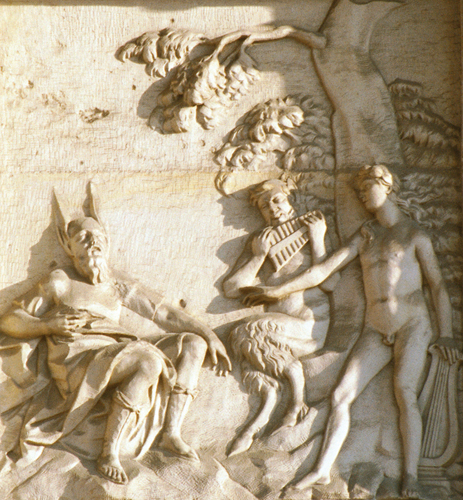
Staatsoper Unter den Linden
The
richly ornamented State Opera House is one of Germany’s most
attractive. Neo-Classical in style, it was built by von Knobelsdorff in
1741–3 as Europe’s first free-standing opera house, to plans devised by
Frederick the Great himself .
-
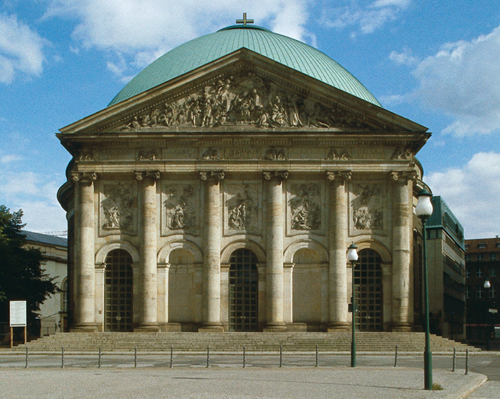
St Hedwigskathedrale
Designed
by Georg W von Knobelsdorff in 1740–2 and modelled on the Pantheon in
Rome, this is the seat of the Catholic archdiocese in Berlin. Frederick
the Great commissioned the cathedral to appease Catholics in Berlin
after conquering Silesia .
-
Humboldt-Universität
Berlin’s
oldest and most highly regarded university was founded in 1890, on the
initiative of Wilhelm von Humboldt. Twenty-nine Nobel Prize winners were
educated here, including Albert Einstein.
-
Neue Wache
The
central German memorial for all victims of war was created in the years
1816–8 and designed by Karl Friedrich Schinkel. An enlarged
reproduction of the moving Pietà sculpture by Käthe Kollwitz stands in the centre of the room.
-
Kronprinzenpalais
The
Neo-Classical Palais, built in 1732–3 by Philipp Gerlach, was
originally a residence for the heirs to the Hohenzollern throne. After
World War I it became an art museum, and after 1948 the East German
government housed state visitors there. Until 2003 it was used for
exhibitions of the Deutsches Historisches Museum opposite.
-
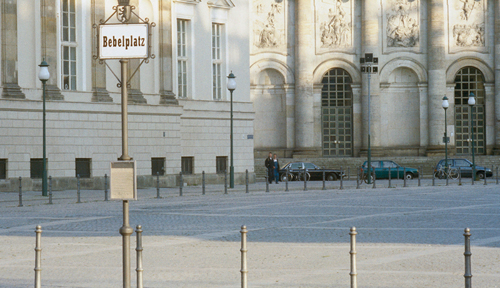
Bebelplatz
Originally
named Opernplatz, this wide, open space was designed by Georg W von
Knobelsdorff as the focal point of his Forum Fridericianum. The elegant
square was meant to introduce some of the splendour and glory of ancient
Rome to the Prussian capital. In May 1933, it became the scene of the
infamous Nazi book burning.
-
Opernpalais
The charming building next to the Staatsoper, built in 1733–7, served as a palace for the princesses.
-
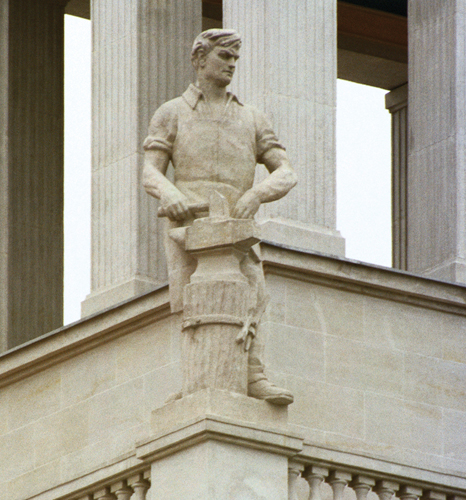
Russische Botschaft
The
gigantic Russian Embassy, built in Stalinist “wedding-cake style”, was
the first building to be constructed in Unter den Linden after World War
II .
-
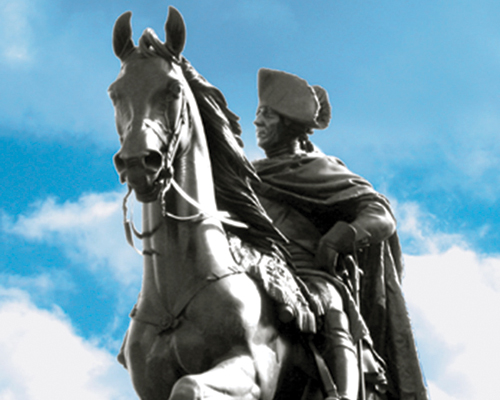
Frederick the Great’s Statue
One
of Christian Daniel Rauch’s grandest sculptures, this statue shows the
“Old Fritz” (13.5 m/ 45 ft high) on horseback, wearing a uniform and
tricorn hat .
Deutsches Historisches Museum
-
The Dying Warriors
The
22 reliefs by Andreas Schlüter, displayed on the walls of the courtyard
rather than in one of the museum’s exhibitions, portray the horrors of
war in an unusually immediate way.
-
Martin Luther
Luther’s
portrait, by Lucas Cranach the Elder, is the focal point of exhibition
rooms devoted to Martin Luther and the Reformation.
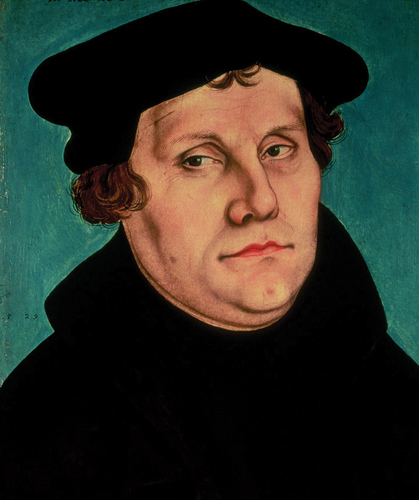
Portrait of Martin Luther in the Zeughaus
-
Europe and Asia
This group of Meissen porcelain figures reflects the fascinating relationship between the two continents.
-
Steam Engine
A full-sized steam engine from the year 1847 marks the entrance to the exhibition on the Industrial Revolution.
-
Clothes from the Camps
Among
the many exhibits illustrating the years under Nazi rule is the jacket
of a concentration camp inmate –a chilling reminder of the Third Reich.
-
Gloria Victis
The
moving allegorical figure of Gloria Victis, created by the French
sculptor Antonin Mercié, bears witness to the death of a friend during
the final days of the Franco-Prussian War of 1870–1.
-
Soldiers Plundering a House
This
painting by Sebastian Vrancx, dating from around 1600, depicts a scene
from the wars of religion that tore the Netherlands apart during the
16th century.
-
Saddle
A valuable saddle, dating from the middle of the 15th century, is decorated with elaborately carved plaques made of ivory.
-
The Berlin Wall
An
original section of the Wall, together with the banners of a peaceful
pro-unification demonstration in 1989, commemorates the fall of the
Berlin Wall.
-
V2 Rocket
In the section on Nazi Germany is a V2 rocket engine – next to an 88-mm flak gun. The V2 was one of the Wunderwaffen (“wonder weapons”) used at the end of World War II.
Zeughaus Unter den Linden
Originally the royal
arsenal, the Zeughaus was built in 1706 in the Baroque style according
to plans by Johann Arnold Nering. It is an impressive structure, with
its main and side wings surrounding an historical central courtyard that
is protected by a modern glass cupola roof. Especially memorable are
Andreas Schlüter’s figures of 22 dying warriors, lined up along the
arcades in the courtyard. They portray vividly the horrors of war.
A cone-shaped glass
annex, erected by the Chinese-born architect Ieoh Ming Pei in 2001 for
special exhibitions and temporary shows, stands behind the museum.
The permanent exhibition in
the main historical building includes a collection entitled “Images and
Testimonials of German History”. Highlighting the most important
periods and events in the history of the country, the displays include a
surprising variety of exhibits dating back to the days of the early
Medieval German Empire through the period of the Reformation and the
Thirty Years’ War as well as the wars of Liberation and the failed
Revolution of 1848, right up to the two World Wars and more recent
events of the 20th century up to 1994.
Top 10 Events
-
1573 Elector Johann Georg has a bridle path built, linking the Stadtschloss and Tiergarten
-
1647 During the Great Elector’s reign, the road is planted with “Linden” (lime trees)
-
From 1740 Frederick the Great has grand buildings erected
-
1806 Napoleon marches along Unter den Linden
-
1820 The road becomes a grand boulevard
-
1928 Unter den Linden and Friedrichstraße epitomize the world city
-
1933 Troops celebrate Hitler’s victory
-
1945 The avenue is razed to the ground
-
1948–53 Revival of the street
-
October 1989 Demonstrations lead to the fall of East German regime