With its elegant 200 year-old row houses, quaint
grocers, pricey antique shops, and hidden gardens, Beacon Hill screams
“old money” like no other area in Boston. That some of the city’s most
exorbitant apartment rentals can still be found here suggests it will
remain an enclave of exclusivity for years to come. Yet throughout the
19th century and well into the 20th, this inimitably charming
neighborhood was a veritable checkerboard of ethnicities and earning
groups – segregated though they were. Little of Beacon Hill’s diversity
has survived its relatively recent gentrification, but visitors can
still experience the neighborhood’s myriad pasts inside its opulent
mansions and humble schoolhouses, and along its enchanting cobblestone
streets.
Black Heritage TrailBy and large the Paul |
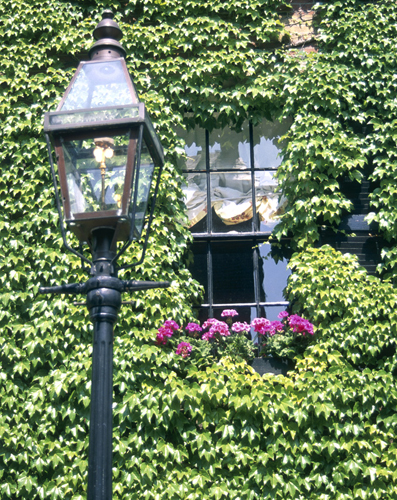
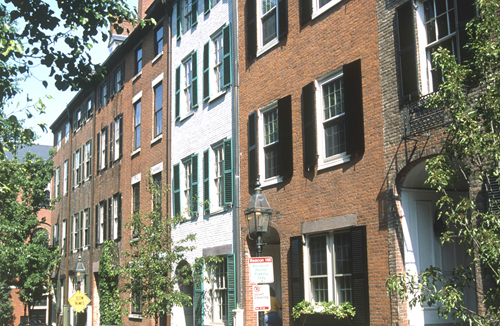
Ivy-clad façade, Beacon Hill
Attractions
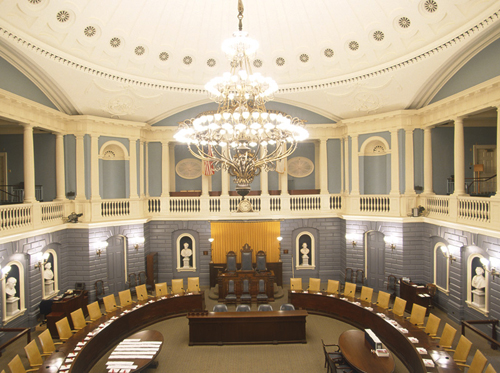
Massachusetts State House
A
200-year-old codfish, a stained-glass image of a Native American in a
grass skirt, and a 23-carat gold dome crowned with a pine cone – such
are the curious eccentricities that distinguish Beacon Hill’s most
prestigious address .24 Beacon St
617 722 2000
Tours 10am–3:30pm Mon–Fri
Free (reservations recommended)

Senate Chamber, Massachusetts State House
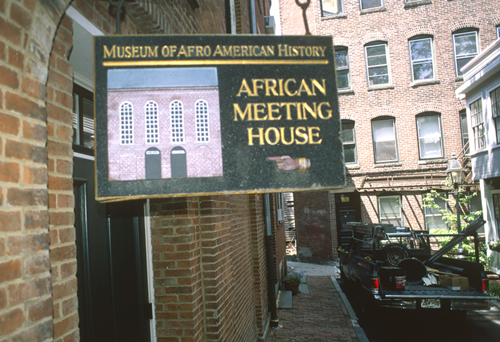
Museum of African American History
Based
in the African Meeting House (the oldest extant black church in the US)
and the adjoining Abiel Smith School (the nation’s first publicly
funded grammar school for African-American children) – the MAAH offers a
look into the daily life of free, pre-Civil War African-Americans. The
meeting house was a political and religious center for Boston’s
African-American community and it was here that abolitionists such as
Frederick Douglass and William Lloyd Garrison delivered anti-slavery
addresses in the mid-19th century. The museum has successfully preserved
their legacy and that of countless others through workshops,
exhibitions, and special events.46 Joy St
617 725 0022
open 10am–4pm Mon–Sat
Donation

Sign, African Meeting House
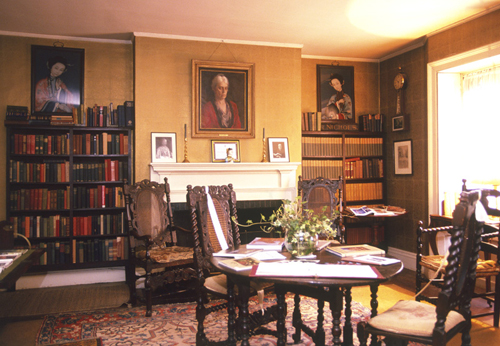
Nichols House Museum
An
1804 Charles Bulfinch design, 55 Mount Vernon is one of the earliest
examples of residential architecture on Beacon Hill. Rose Nichols, the
house’s principal occupant for 75 years, bequeathed her home to the city
as a museum, providing a glimpse of late-19th and early 20th-century
life on the Hill. A pioneering force for women in the arts and sciences,
Nichols gained fame through her authoritative writings on landscape
architecture and philanthropic projects.55 Mount Vernon St
617 227 6993
Open Apr–Oct: noon–4pm Tue–Sat; Nov– Mar: noon–4pm Thu–Sat
Adm

Drawing Room, Nichols House Museum
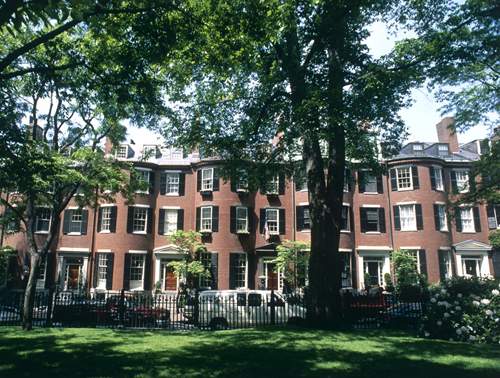
Louisburg Square
Cobblestone
streets, a genteel little gated park, and a hefty dose of Boston
Brahmin cachet make this tight block of townhouses the city’s most
exclusive patch of real estate. Modeled after the traditional
residential squares of London in 1826, the square was named in
remembrance of the 1745 Battle of Louisburg in modern-day Quebec.

Louisburg Square
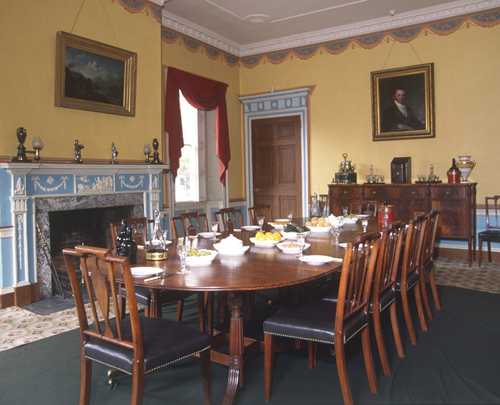
Harrison Gray Otis House
One of the principal developers of Beacon Hill, Harrison Gray Otis
served in the Massachusetts legislature and gained a reputation for
living la dolce vita in this 1796 Bulfinch-designed manse. Like a
post-Revolutionary Gatsby, Otis ensured his parties were the social
events of the year. After falling into disrepair, the property was
acquired in 1916 by the historical preservation society and restored to
its original grandeur.617 227 3956
Open 11am–4:30pm Wed–Sun
Adm

Dining Room, Harrison Gray Otis House
Appalachian Mountain Club Headquarters
The
Appalachian Trail, or the A.T. as it is known to hiking cognoscenti, is
America’s premier walking path. Snaking through 2,168 miles (3,492 km)
of pristine eastern wilderness – including 90 miles (145 km) in
Massachusetts – the trail is maintained by members of the club. With a
scale model of the trail, informative plaques on the walls, maps,
guidebooks, and a knowledgeable staff, this is an essential stop for
those planning a hike.5 Joy St
617 523 0636
Open 9 am–5pm Mon–Fri
Free
Beacon Street
Although
it extends well beyond the Fenway, Beacon Street finds its true essence
in the blocks between Park and Charles streets. Here it passes such
highlights as the Boston Athenaeum, one of the oldest independent
libraries in the country, the Massachusetts State House, and the Bull and Finch Pub of Cheers TV fame.Boston Center for Jewish Heritage
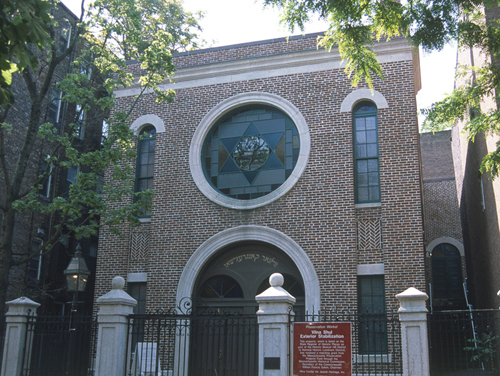
The
Vilna Shul testifies to the area’s former vibrancy as Boston’s first
predominantly Jewish quarter. The congregation was founded in 1903 by
immigrants who came from Vilna, Lithuania. The synagogue has become a
center of Jewish culture with programs and exhibits.13–18 Philips St
617 523 2324
Call for hours

Boston Center for Jewish Heritage
George Middleton House
The
oldest remaining private residence on Beacon Hill built by
African-Americans is a highlight of the Black Heritage Trail. George
Middleton, a revolutionary war veteran, commissioned the house’s
construction shortly after the war. Legend has it that Middleton
commanded an all-black company dubbed the “Bucks of America.”5–7 Pinckney St
Closed to the public

George Middleton House
Parkman House
George
Parkman – once a prominent physician at Harvard Medical School – lived
in this house during the mid-19th-century. In 1849, in one of the most
sensationalized murder cases in US history, Parkman was killed by a
faculty member over a financial dispute. Both the crime and its
aftermath were grisly – in the ensuing trial dental records were entered
as evidence for the first time.33 Beacon St
Closed to the public