On days when the Red Sox are
playing a home baseball game at Fenway Park, Kenmore Square is packed
with fans. By night, Kenmore becomes the jump-off point for a night of
dancing, drinking, and socializing at clubs on or near Lansdowne Street.
Yet for all of Kenmore’s genial rowdiness, it is also the gateway into
the sedate parkland of the Back Bay Fens and the stately late-19th- and
early-20th-century buildings along The Fenway. The Fenway neighborhood
extends all the way southeast to Huntington Avenue, aka the “Avenue of
the Arts,” which links key cultural centers such as Symphony Hall,
Huntington Theatre, Museum of Fine Arts, Massachusetts College of Art,
and the not-to-be-missed Isabella Stewart Gardner Museum along a
tree-lined boulevard.
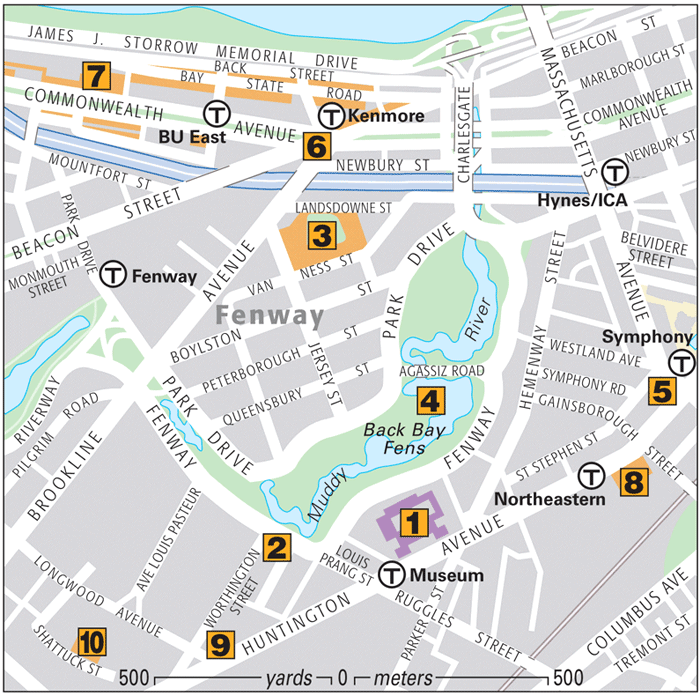
Attractions
Museum of Fine Arts
One
of the most comprehensive fine arts museums in the country, the MFA is
especially renowned for its collections of French Impressionism and of
ancient Egyptian and Nubian art and artifacts. Its Asian art holdings
are said to be the largest in the US .Isabella Stewart Gardner Museum
This
Fenway museum, in a faux Venetian palace, represents the exquisite
personal tastes of its founder, Isabella Stewart Gardner, who was one of
the country’s premier art collectors at the end of the 19th century.Fenway Park
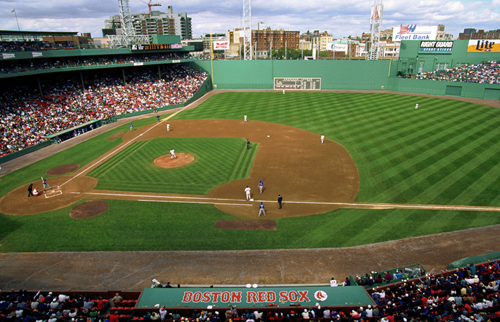
Built
in 1912, the home field of the Boston Red Sox is the oldest surviving
park in major league baseball, and aficionados insist that it’s also the
finest. An odd-shaped parcel of land gives the intimate park quirky
features, such as the high, green-painted wall in left field,
affectionately known as “the Green Monster.” Although previous owners
threatened to abandon Fenway, the current ones have enlarged the park to
accommodate the many loyal Sox fans. Behind-the-scenes tours of the
park include areas normally closed to the public, like the dugouts and
private boxes.4 Yawkey Way
617 267 1700 for tickets, 617 236 6666 for tours
Tours year-round: 9am–3pm daily (last tour 3½ hours before game time)
Adm

Fenway Park
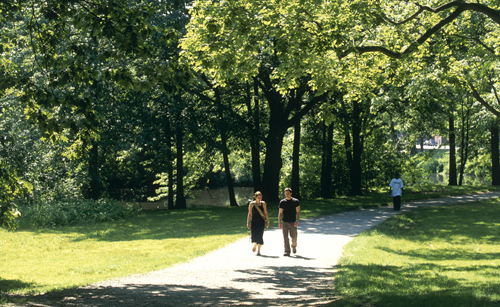
Back Bay Fens
This lush ribbon of grassland, marshes, and stream banks follows Muddy River and forms one link in the Emerald Necklace
of parks. The enclosed James P. Kelleher Rose Garden in the center of
the Fens provides a perfect spot for quiet contemplation. A path runs
from Kenmore Square to the museums and galleries on Huntington Avenue,
which makes a pleasant short cut through the Fens.Bounded by Park Dr & The Fenway

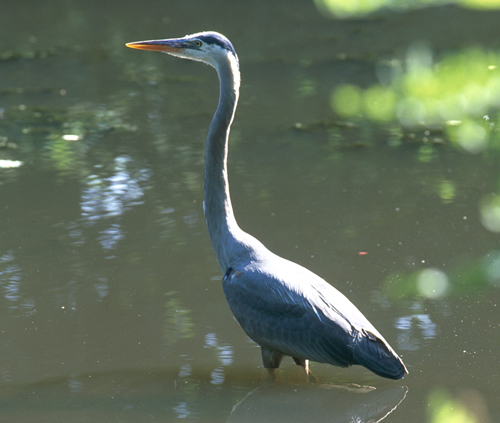
Heron, Back Bay Fens

Back Bay Fens
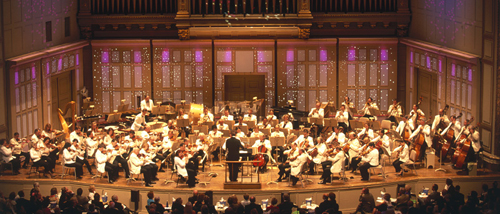
Symphony Hall
The
restrained, elegant Italian Renaissance exterior of this 1900 concert
hall barely hints at what is considered to be the acoustic perfection of
the interior hall as designed by Harvard physics professor Walter
Clement Sabine. Home of the Boston Symphony Orchestra, the hall’s 2,361
seats are usually sold out for their classical concerts, as well as for
the lighter Boston Pops .

Symphony Hall
Kenmore Square
Largely
dominated by Boston University, Kenmore Square is now being transformed
from a student ghetto into an extension of upmarket Back Bay, losing
some of its funky character but gaining élan in the process. As the
public transportation gateway to Fenway Park, the square swarms with
baseball fans and sidewalk vendors, rather than students, on game days.
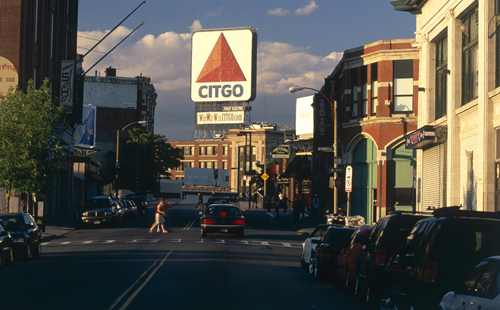
The most prominent landmark of the square is the CITGO sign, its 5,878
glass tubes pulsing with red, white, and blue neon from dusk until
midnight. Time magazine designated this
sign an “objet d’heart” because it was so beloved by Bostonians that
they prevented its dismantling in 1983.

Kenmore Square
Boston University
Founded
as a Methodist Seminary in 1839, Boston University was chartered as a
university in 1869. Today it enrolls approximately 28,000 students from
all 50 states and some 125 countries. The scattered colleges and schools
were consolidated at the Charles River Campus in 1966. Both sides of
Commonwealth Avenue are lined with distinctive university buildings and
sculptures. The Howard Gotlieb Archival Research Center is big on the
memorabilia of show biz figures, displayed on a rotating basis.
Artifacts include Gene Kelly’s Oscar and a number of Bette Davis’s film
scripts. It also exhibits selections from its holdings of rare
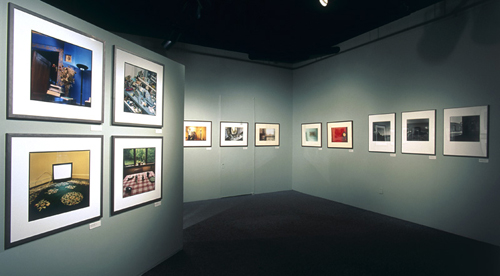
manuscripts and books. The Photographic Resource Center, a focus for
Boston’s considerable photographic community, frequently mounts
challenging exhibitions of local and international photographers.Howard Gotlieb Archival Research Center
771 Commonwealth Ave
617 353 3696
Exhibit rooms Open 9am–4:30pm Mon–Fri
Free
Photographic Resource Center
832 Commonwealth Ave
617 975 0600
Open 10am–6pm Tue–Fri (to 8pm Thu), noon–5pm Sat–Sun
Adm

Photographic Resource Center, Boston University

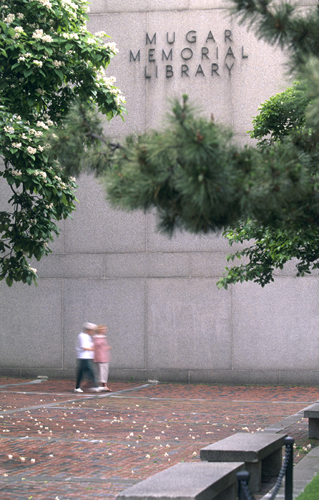
Mugar Memorial Library, Boston University
Jordan Hall
The
New England Conservatory of Music’s 1,013-seat concert hall opened in
1903 and underwent an $8.2 million restoration in 1995. Musicians
frequently praise its acoustics, heralding Jordan “the Stradivarius of
concert halls.” Hundreds of free classical concerts are performed at
this National Historic Landmark hall every year .Massachusetts College of Art and Design Galleries
The
Paine and Bakalar galleries in the South Building of the Massachusetts
College of Art mount some of Boston’s most dynamic exhibitions of
contemporary visual art. It is the only independent state-supported art
college in the US and exhibitions tend to emphasize avant-garde
experimentation as well as social commentary and documentary.621 Huntington Ave
617 879 7333
Open 10am–6pm Mon–Fri, 11am–5pm Sat
Free
Warren Anatomical Museum
Established
in 1847 from the private holdings of Dr. John Collins Warren, this
museum contains the former anatomical teaching collections of the
Harvard Medical School, including clinical examples of rare deformities
and diseases. Among the displays are several delicate skeletons of
stillborn conjoined twins.10 Shattuck St
617 432 6196
Open 9am–5pm Mon–Fri
Free