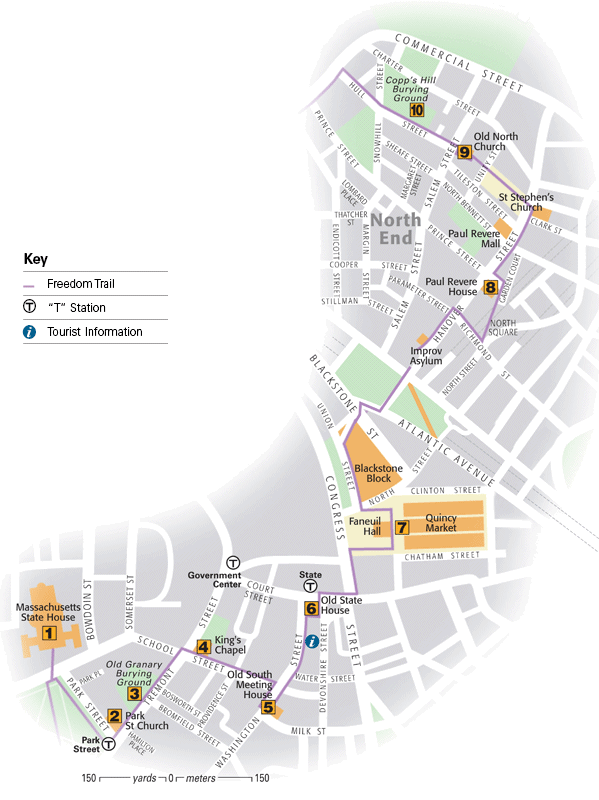
Snaking through 2.5 miles (4 km) of city streets, the
Freedom Trail creates a living link to Boston’s key revolutionary and
colonial-era sites. Stroll from highlight to highlight and you’ll see
history adopt a vibrancy, palpability, and relevance unparalleled among
US cities. Some of Boston’s most unique shops, restaurants, and
attractions are also located along the trail.
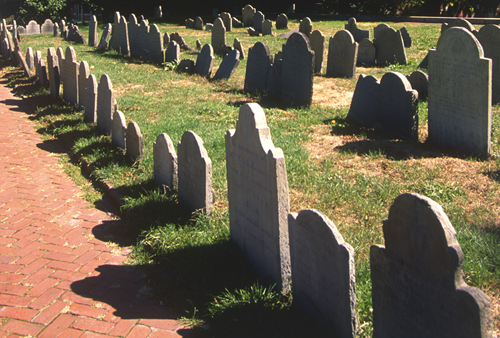
Copp’s Hill Burying GroundSnow Hill St 617 635 4505 Open 9am–5pm daily free
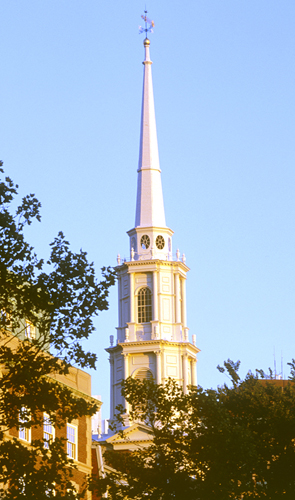
Park Street Church |
For visitors tight on time,
consider this condensed trail. Head up Tremont Street from Park Street
“T” station, stopping in the Old Granary Burying Ground. At the corner
of Tremont and School streets – site of King’s Chapel – turn right onto
School and continue to Washington Street and the Old South Meeting
House. Turn left on Washington to the Old State House then finish up at
Faneuil Hall nearby on Congress Street. |


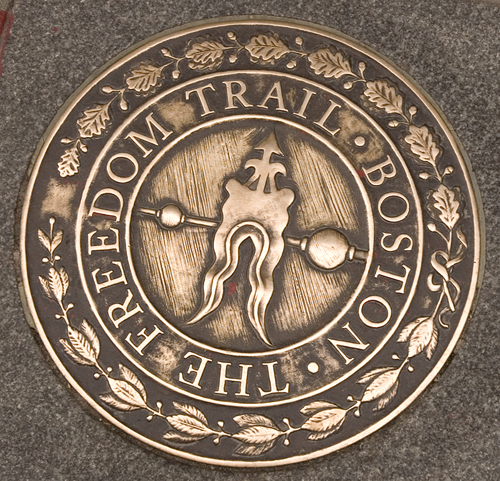
Freedom Trail plaque
Give your sweet tooth a workout at Mike’s Pastry. |
|
Maps of the trail are available at the Boston Common Visitors’ Center. Two-hour MP3 tours cost $15. |
|
Most of the trail is indicated in red paint with a few sections in red brick. |
|
From Copp’s Hill Burying Ground, the Freedom Trail continues across Charlestown Bridge to Charlestown Navy Yard |
|
Top 10 Features
Massachusetts State House
Arguably Charles Bulfinch’s pièce de résistance, the “new” State House (completed in 1798 ) is one of the city’s most distinctive buildings.

Park Street Church
Founded
by a small group of Christians disenchanted with their
Unitarian-leaning congregation, Park Street Church was constructed in
1809.

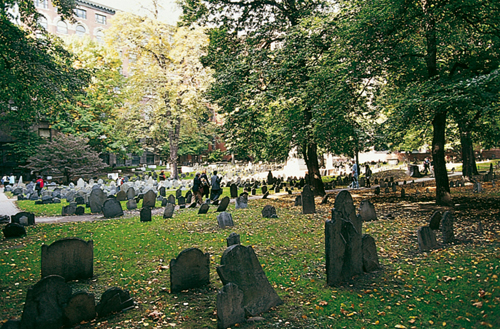
Old Granary Burying Ground
A
veritable who’s-who of revolutionary history fertilizes this plot next
to Park Street Church. One of its most venerable residents is
revolutionary Samuel Adams.

King’s Chapel
The
current granite building was erected in 1749, although the chapel was
originally founded in 1686 by King James II as an outpost of the
Anglican Church. Don’t miss the atmospheric burying ground next door,
which shelters colonial Governor John Winthrop .
Old South Meeting House
What
Berkeley’s University of California was to the 1960s, Boston’s Old
South Meeting House was to the colonial era: a crucible for free-speech
debates and taxation protests .
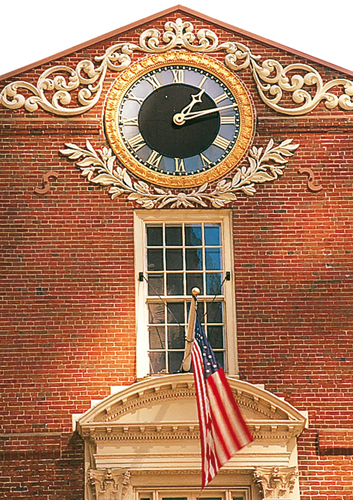
Old State House
Built
in 1713, this exquisite example of colonial architecture served as the
HQ of the colonial legislature and the royal governor .

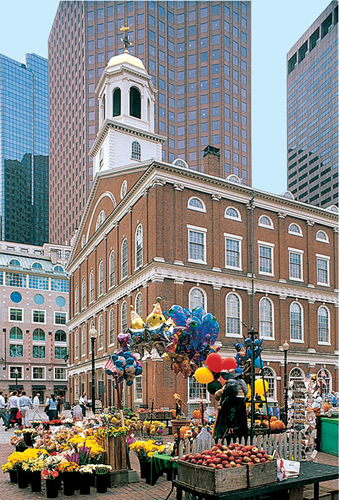
Faneuil Hall & Quincy Market
Known
as the “Cradle of Liberty”, Faneuil Hal has hosted many revolutionary
meetings in its time. Neighboring Quincy Market, built in the early
1800s, once housed Boston’s wholesale food distribution .

Paul Revere House
Nestled
in North Square, the Paul Revere House is Boston’s oldest private
residence. Its principal owner was well regarded locally as a metalsmith
prior to his fateful ride .
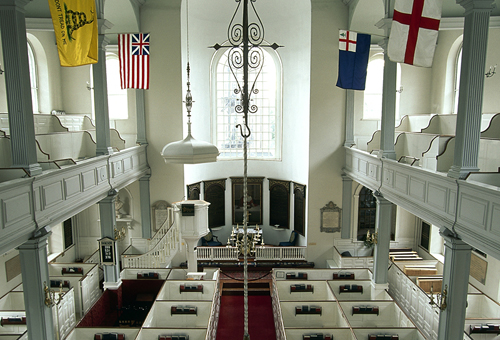
Old North Church
This church occupies a pivotal place in revolutionary history. Prior to his midnight ride, Revere
ordered sexton Robert Newman to hang lanterns in the belfry, to
indicate whether the British were approaching via the Charles River or
by land.

Copp’s Hill Burying Ground
With
headstones dating from the 17th century, Copp’s Hill is a must for
history buffs. It was named after William Copp, a farmer who sold the
land to the church .