NOTE
Pilsen
Named
after a city in the former Czech Republic, whose immigrants settled
here in the mid-1800s, this neighborhood now claims the Midwest’s
largest Mexican community. It’s anchored by the Mexican Fine Arts Center
Museum
and animated by street vendors, mariachi music, and Mexican
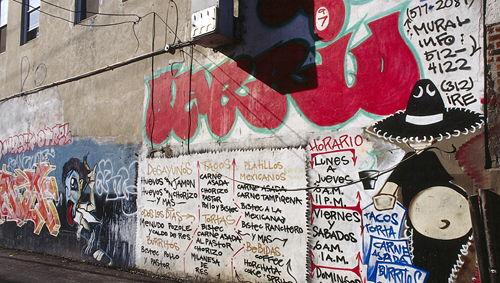
restaurants. Vibrant outdoor murals and mosaics portray Mexican culture
and history.

Mi Barrio Taqueria, Pilsen
Avondale
In
the early 20th century, menial jobs at Avondale’s local factories and
brickyards attracted many hard-working Polish immigrants. Today, the
area also has many Hispanics, but it’s still known as Little Warsaw
because Chicago holds the largest concentration of Poles outside the
Polish capital. Milwaukee Avenue and the neighboring streets also abound
with bakeries, bookstores, delis, and a Polish Museum.Devon Avenue
Chicagoans
who crave cheap, authentic Indian food head north to Devon Avenue in
Rogers Park. Nineteenth-century English settlers named it after
Devonshire, but since the 1960s, it’s been a thriving Indian community,
mingled with Russian, Greek, Syrian, and Jewish enclaves. From colorful
saris to Indian videos to savory curried meats, it’s almost like being
in Delhi.Andersonville
Amid
a mix of Middle-Eastern and Asian cultures, the late-19th-century
Swedish heritage here still makes its presence felt with billowing
yellow and blue flags, Swedish bakeries and shops, and the Swedish–American Museum. Adding to the minority mix is an increasing gay population – more laid-back than Boys Town – evident in a number of trendy, gay-owned restaurants.Little Italy, Taylor Street
The
rich smells of garlic, basil, and baking bread waft from restaurants
that line one of Chicago’s oldest southern Italian neighborhoods. Though
the streets have fewer Italians than when immigrants arrived in the
late 19th century, you’ll still see Italians chatting on street corners
and toting groceries from Italian markets.Chinatown
An
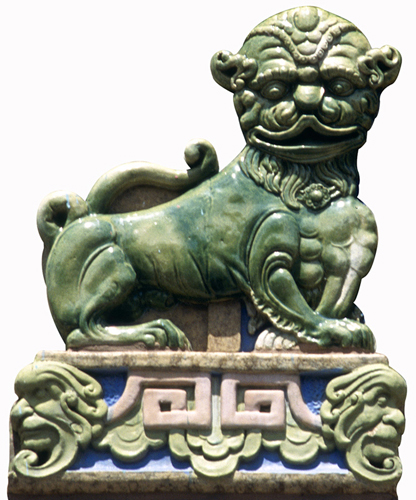
ornate arched gateway at Wentworth Avenue signals your entrance to this
distinctly Chinese neighborhood. Asians and non-Asians alike flock to
aroma-filled dim-sum restaurants that serve a mouthwatering selection of
dumplings, duck, egg rolls, and other delicacies. Shops sell everything
from lanterns to delicate tea sets and mysterious Chinese herbs .

Building detail in Chinatown
Uptown
The
eclectic Uptown neighborhood is nicknamed the United Nations for its
ethnic diversity. Along Argyle Street, it’s called Little Saigon for its
predominantly Vietnamese flavor. Inexpensive restaurants serve thinly
sliced beef, tangy soups, and shrimp crêpes. Though the area is
absolutely fascinating to explore, it’s really not advisable to walk
through Uptown late at night.Lincoln Square
Beer,
bratwursts, and grainy rye breads are order of the day in this bustling
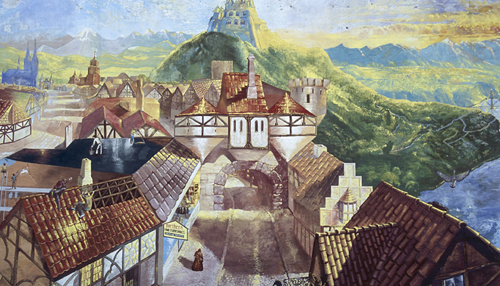
German enclave, where a 96-ft (29-m) outdoor mural depicts a rural
German village. The hub of activity is a relatively small strip of
Lincoln Avenue, between Lawrence and Western Avenues. The area maintains
Old World charm with its German shops, delicatessens, bakeries, and an
old-fashioned apothecary.

Mural, Lincoln Square
Bridgeport
First
called Hardscrabble, this South Side neighborhood is one of the city’s
oldest, being settled in the 1830s by Irish laborers who came to help
build the Illinois-Michigan Canal. Bridgeport still has a mostly Irish
population, and has bred five Chicago mayors, including Richard J. Daley and his son, Richard M. Daley. The area centerpiece is US Cellular Field (formerly Comiskey Park), home ground of the Chicago White Sox.