Guarded by iconic lions, and up a flight of grand
stone steps (a favorite local meeting place) is the Midwest’s largest,
and one of the USA’s best art museums. Housed in a massive Beaux Arts
edifice (currently being renovated and expanded), the Institute has some
260,000 works from around the globe, and is famous for its
Impressionist and Post-Impressionist works and touring shows.
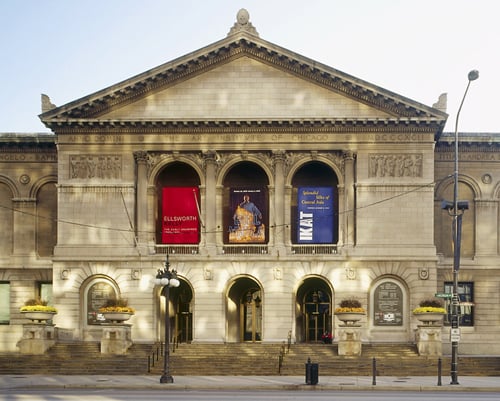
Main museum entrance
|
|
|
|
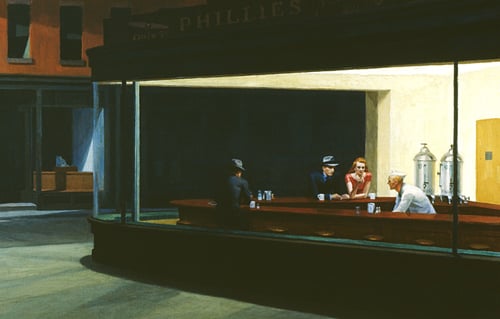
Top 10 Paintings
Collections
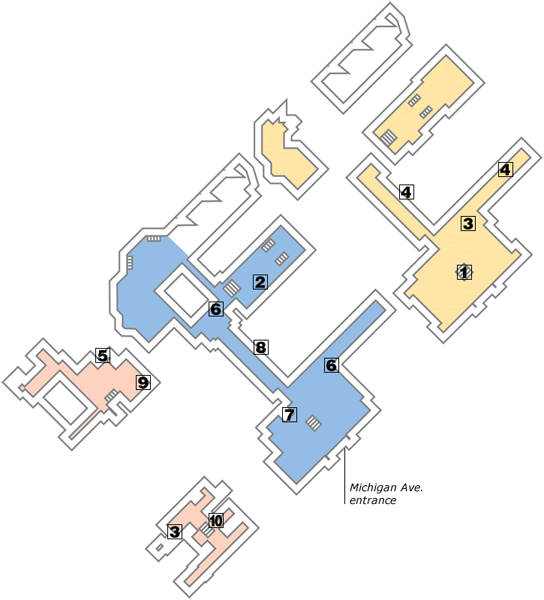
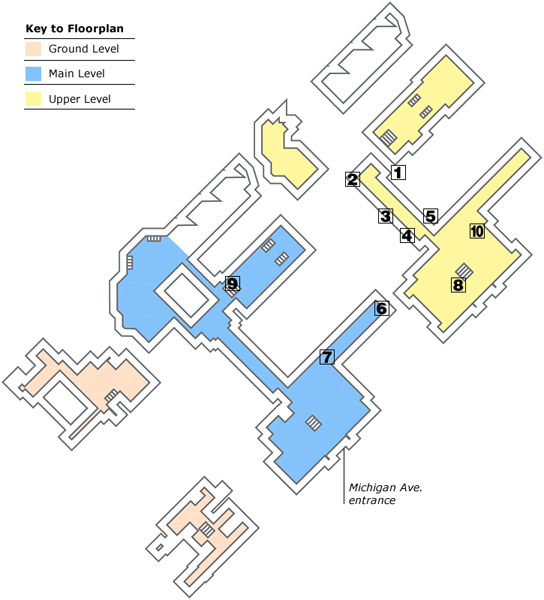
Floorplan
-
European Paintings
Arranged
chronologically, and spanning the Middle Age through 1950, this
prodigious collection includes a significant array of Renaissance and
Baroque art. However, its main draw is a body of nearly 400
Impressionist and Post-Impressionist paintings. Instrumental in its
creation was Bertha Honoré Palmer who acquired over 40 Impressionist
works (largely ignored in France at the time) for the 1893 World’s
Columbian Exposition.
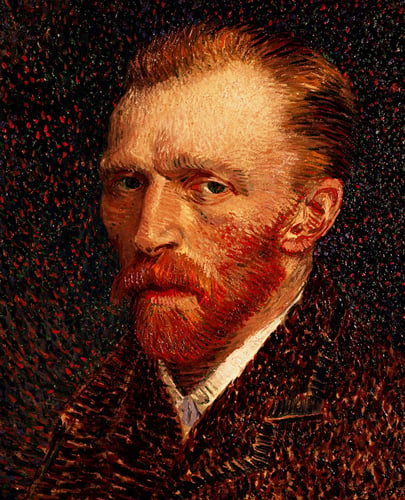
Vincent Van Gogh, Self-portrait (1886–7), European Paintings
-
American Arts
This
impressive holding contains some 5,500 paintings and sculptures dating
from the colonial period to 1950. In addition, paintings and works on
paper are on loan from the Terra collection and there is a range of
decorative arts, including furniture, glass, and ceramics from the 18th
century through to the present. The silver collection is especially
noteworthy. -
Architecture
Given
the city’s strong architectural heritage and focus, it is not
surprising that Chicago’s Art Institute boasts an architecture and
design department, one of only a few in the US. Sketches and drawings
are accessible by appointment, and changing public displays feature
models, drawings, and architectural pieces, such as a stained-glass
window by Frank Lloyd Wright. -
Modern & Contemporary Art
This
important collection represents the significant arts movements in
Europe and the US from 1950 to the present day, including a strong body
of Surrealist works, and notable paintings by Picasso, Matisse, and
Kandinsky, as well as showing how American artists, such as Georgia
O’Keeffe, interpreted European Modernism. A limited number of artworks
will be on view until 2009 while the galleries are being renovated. -
Photography
Spanning
the history of the medium, from its origins in 1839 to the present,
this eminent collection was started by Georgia O’Keeffe in 1949 with the
donation of works by Alfred Stieglitz. Many modern masters, including,
Julien Levy, Edward Weston, Paul Strand, and Eugène Atget, are
represented. -
This
sizeable collection covers 5,000 years and features Chinese ceramics
and jades, Japanese screens, and Southeast Asian sculpture. The museum’s
assemblage of Japanese woodblock prints, such as Courtesan
(c. 1710) by Kaigetsudo Anchi, is one of the finest outside Japan. Look
out, too, for the rare early 14th-century scroll painting, Legends of the Yuzu Nembutsu. -
African & Amerindian Art
A
variety of artifacts, including sculptures, masks, ceramics, furniture,
textiles, bead-, gold-, and metalwork, make up this relatively small,
but interesting collection. Exhibits from both continents are arranged
by region and culture: ceremonial and ritual objects are particularly
intriguing. -
Arms & Armor
The
Harding Collection of Arms and Armor is one of the largest in America.
On permanent display are over 200 items related to the art of war
including weapons, and complete and partial suits of armor for men – as
well as horses. The items displayed originate from Europe, the United
States, and the Middle East, and date from the 15th through the 19th
centuries. -
Arthur Rubloff Paperweight Collection
This
fabulous and unusual assemblage numbers in excess of 1,400
paperweights, making it one of the largest of its kind in the world. It
showcases colorful and exquisite examples from all periods, designs, and
techniques. The paperweights mostly originate from 19th-century France,
though some were made in America and the United Kingdom. Displays also
reveal the secrets of how paperweights are made. -
Thorne Miniature Rooms
Narcissa
Ward Thorne, a Chicago art patron, combined her love of miniatures with
her interest in interiors and decorative arts to create the 68 rooms in
this unique Lilliputian installation. Some of the 1 inch:1 foot scale
rooms are replicas of specific historic interiors, while others are
period recreations, combining features copied from a variety of sites or
based on illustrations and other records of period furniture.