Following Through After the Activity or Event
The last component of any
activity—the wrapping up, cleaning up, putting things away, enjoying the
accomplishment part—is the one most overlooked and neglected by people
who tend to be disorganized. These people’s creative tendencies find the
last step boring or superfluous. They want to get on to exciting new
projects.
But this last step is
critical to a smooth-running schedule and a less frazzled life.
Suitcases need to be unpacked; paint brushes must be cleaned; library
books (and especially rented videos) must be returned. And nothing will
destroy the benefit of a restful vacation quicker than having to head
back to work the next day and face a full schedule of meetings and
report deadlines along with the post-vacation pile-up of mail, phone
messages, and email.
If you’re pressed for
time, you certainly won’t see as much urgency in cleaning up as you
will in moving on. But if you take the time to wrap things up, you’ll
find you can live in the present with a good outlook to the future
instead of feeling as though nothing is ever quite accomplished. Don’t
lose sight of your reason for wanting to organize your family’s
schedule: to reduce your stress and increase your enjoyment of life. If
you won’t go the final step without a reminder, then schedule the
wrap-up as a separate item on your to do list.
In general,
asking yourself the following questions will go a long way toward making
sure that you schedule all the follow-up steps to wrap up an activity
so that you feel satisfied and don’t have a nagging feeling of
incompleteness:
- Is there anything to clean up?
- If yes, when will you clean it, and how long will this task take?
- Is there anything to put away?
- If yes, when will you put it away, and how long will this task take?
- Are there any follow-up activities, such as having photos developed or writing thank-you notes?
- If yes, when will you do them, and how long will they take?
- Do any other people need to be involved in the wrap-up of this activity?
- If yes, when will they be available?
- Is there anything else you can do to make this activity more complete?
Creating and Using To Do Lists
You probably make
lists of things to do all the time. But do they serve their purpose, or
are you often left at the end of the day with a list of things you
didn’t do? To create an effective to do list, you need to have an
understanding of everything you want to accomplish within a certain time
frame. Then, for each item on that list, you need to make a
separate list of all of the component tasks involved in completing that
item. You can make that list by following these steps:
1. | State the main activity. |
2. | List everything that needs to be done to prepare for the task. |
3. | List everything that needs to be done to complete the task. Use the questions listed in the last section to help you. |
Your list doesn’t have to be a
numbered series of items going down a page. As an alternative to
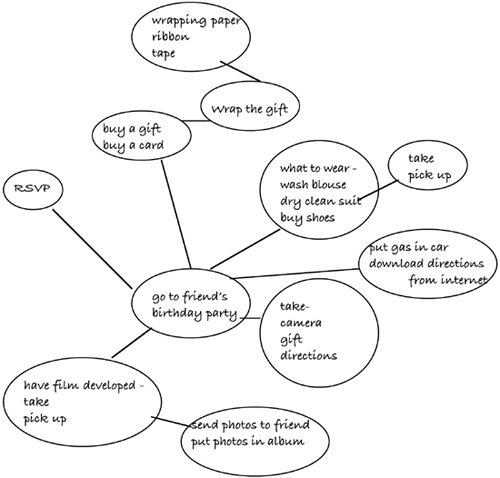
writing a list, you can draw an activity map, such as the one shown in Figure 1.
Figure 1. You can substitute an activity map for a list. Here, all of the
preparatory items are on spokes above the main event, and all of the
follow-up items are below it.
Just breaking down
the activity into its components isn’t enough, though. Each component
has to be completed in its correct order, so the next step in using your
list is to put the steps in sequence. If you’ve made a list, you can
assign each line a number or numbers indicating your planned chronology,
as shown in Figure 2.
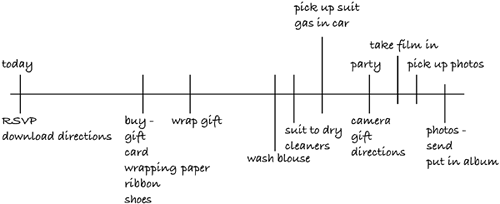
If you prefer more visual tools, such as the activity map, then you may
also prefer sequencing the steps by using a timeline, as shown in Figure 3.
Figure 2. After you’ve listed everything you need to do, number the items in
the order you’ll do them. If you plan to do two items at the same time,
they both get the same number. If an item requires two steps, then it
gets two numbers.
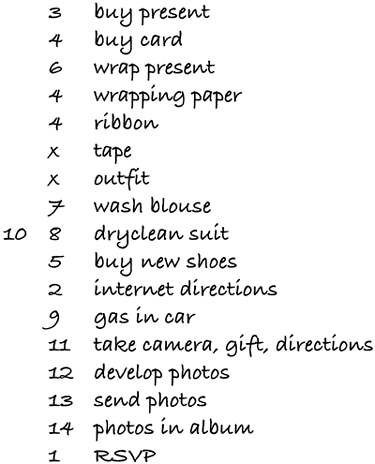
Figure 3. Placing all of the items from your activity map onto a timeline
allows you to see the sequence in which you need to do them.
After you’ve put the steps
in order, you still have one more phase to go in the planning process.
That’s to schedule the steps into your planner. Only after each step has
been assigned a time slot during which it will be performed have you
succeeded in establishing a plan that, if carried out, will get the job
done in an orderly and unharried way.
DEFRAGMENTING YOUR TIMEIn Sometimes Sometimes Why,
Organizing | ||||||||||||||||||||||||||||||||||||||||||||||||||||||||||||||||||||||||||||||||||||||||||||||||||||||