Caring for the People in Your Family
When we work on putting together a family schedule, we
completely forget about the essentials needed to take care of the people
in our family. As we mentioned before, we get so caught up in the
extra, special activities that we overlook the basics that are crucial
to health and happiness. We’ll get to the extras later, but for now
let’s make sure we cover the basics.
Every person needs time in his schedule for the following:
Now is a good time to take
out your spiral notebook and start making some lists. Each family
member should have a personalized list of needs because needs vary based
on age, gender, personal preference, and personal circumstance. For
example, someone who plays soccer as an enrichment activity
will need to schedule less exercise time than someone who chooses chess
club for enrichment. For each list, you should also indicate how much
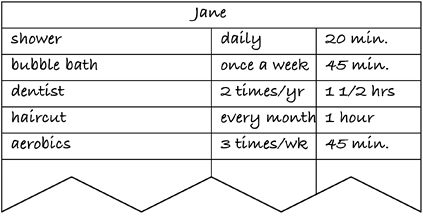
time each item will take and how often each item needs to be done. Figure 1 shows an example of the beginning of a personal needs list.
Figure 1. You’ll need a list of each person’s personal needs, along with frequencies and time estimates.
Just as when you have a
paid job you must block out from your schedule the chunk of time you
must be at work, you also must block out a huge chunk of your time for
sleep. Individual sleep needs vary, but Table 2 will give you an idea of how much time to allow each person in your family for sleep.
| Age | Hours |
|---|---|
| Newborns | 10–19 |
| 2–12 months | 14–15 |
| 12–18 months | 13–15 |
| 18 months–3 years | 12–14 |
| 3–5 years | 11–13 |
| 5–12 years | 9–11 |
| 12–20 years | 8–10 |
| Adults | 7–9 |
| Source: The National Sleep Foundation; www.sleepfoundation.org | |
Many people shave more
and more time off their sleep block because they think this is the only
part of their schedule in which they can get time to do the things they
don’t get around to doing otherwise. But by depriving yourself of sleep,
you actually reduce the amount of productive time you have while you’re
awake because insufficient sleep
note
It doesn’t take much sleep to make a huge impact.
Consider these facts:
Sleeping one hour longer at night generally boosts your alertness by 25%.
One night’s sleep debt reduces the time to reach total exhaustion by 11%.
In
the four days after we lose an hour to switch to daylight savings time,
there is a 7% increase in accidental deaths compared to the one-week
periods before and after that time!
Reduces your ability to concentrate
Impairs your memory
Depletes your immune system
Reduces your motivation
Makes you indecisive
Causes you to lose your sense of humor
caution
Don’t wake up early to work out. The stress from the sleep loss cancels the benefits of the exercise!
In other words, what you lose in time by getting the sleep you need, you make up in increased productivity when you’re awake.