You’ll have an easier time
seasoning dishes if you understand the five primary tastes the tongue can detect, as well as
how it responds to “other” things (for example, the chemicals that give hot peppers their
kick, carbonated drinks their effervescence, and peppermint candies their cooling
sensation).
When cooking, regardless of the recipe and technique, you always
want to adjust and correct the primary tastes in a dish. There is just too much variability
in any given product for a recipe to accurately prescribe how much of a taste modifier is
necessary to achieve a balanced taste for most dishes: one apple might be sweeter than
another, in which case you’ll need to adjust the amount of sugar in your applesauce, and
today’s batch of fish might be slightly fresher than last week’s, changing the amount of
lemon juice you’ll want. Because taste preferences vary among individuals, you can sometimes
solve the balance problems by letting the diners adjust the taste themselves. This is why
fish is so often served with a slice of lemon, why we have salt on the table (don’t take
offense at someone “disagreeing” with your “perfectly seasoned” entrée), and why tea and
coffee are served with sugar on the side. Still, you can’t serve a dish with every possible
taste modifier, and you should adjust the seasonings so that it’s generally pleasing.
1. Bitter
Bitter is the only taste that takes some learning to like. Some primitive part of our
brain seems to reject bitter tastes by default, probably because many toxic plants taste
bitter. This same primitive mechanism is why bitter foods are unappealing to kids: they
haven’t learned to tolerate, let alone enjoy, the sensation of bitterness. Dandelion
greens, rhubarb, and uncooked artichoke leaves all contain bitter oils that cause them to
taste bitter; not surprisingly, I couldn’t stand those things as a kid.
Adding salt can neutralize bitterness, which is why a pinch of salt in a salad that
contains bitter items such as dandelion greens helps balance the flavor. Sugar can also be
used to mask bitterness. Try grilling or broiling Belgian endive lightly sprinkled with
sugar. Quarter the endive down the center to get four identical wedges and place them on a
baking sheet or oven-safe pan. Sprinkle with a small amount of sugar. You can also drizzle
a small amount of melted butter or olive oil on top. Transfer the tray to a grill or place
it under a broiler for a minute or two, until the endive becomes slightly soft and the
edges of the leaves begin to turn brown. Serve with blue cheese or use the endive as a
vegetable accompaniment to stronger-flavored fish.
Note:
Try this simple “bitter
taste test” to demonstrate how salt interacts with bitter tastes. Modern tonic water (a
much weaker version of the traditional medicinal drink of quinine and carbonated water
that was then spiked with gin to make it palatable) uses quinine as a bittering agent
and is easy to get at the grocery store. Pour tonic water into two drinking glasses. In
one, add enough salt to neutralize the taste. Compare the taste of the tonic water in
the two cups.
Bitterness seems to lend itself exceedingly well to drinks: unsweetened chocolate, raw
coffee, tea, hops (used in making beer), and kola nuts (kola as in cola as in soft drinks)
are all bitter. And many before-meal aperitifs are bitter, from the classic Campari to the
simple parsley-dipped-in-salt-water customary during Passover. Conventional wisdom states
that bitter foods increase the body’s production of bile and digestive enzymes, helping in
digestion. The food science literature doesn’t seem to support the conventional wisdom,
though.
2. Salty
Salt (sodium chloride) makes foods taste better by selectively filtering out the taste
of bitterness, resulting in the other primary tastes and flavors coming through more
strongly. The addition of a small quantity of salt (not too much!) enhances other foods,
bringing a “fullness” to foods that might otherwise have what is described as a “flat”
flavor. This is why so many sweet dishes—cookies, chocolate cake, even hot chocolate—call
for a pinch of salt. How much salt is in a pinch? Enough that it amps up the food’s
flavor, but not so much that the salt becomes a distinct flavor in itself. A “pinch” isn’t
an exact measurement—traditionally, it’s literally the amount of salt you can pinch
between your thumb and index finger—but if you need to start somewhere, try using ¼
teaspoon or 1.5 grams.
In larger quantities, salt acts as an ingredient as much as a flavor enhancer. Mussels
liberally sprinkled with salt, bagels topped with coarse salt, salty lassi (an Indian
yogurt drink), even chocolate ice cream or brownies with sea salt sprinkled on top all
taste inherently different without the salt. When using salt as a topping, use a coarse,
flaky variety, not rock/kosher salt or table salt. (I happen to use Maldon sea salt
flakes.)
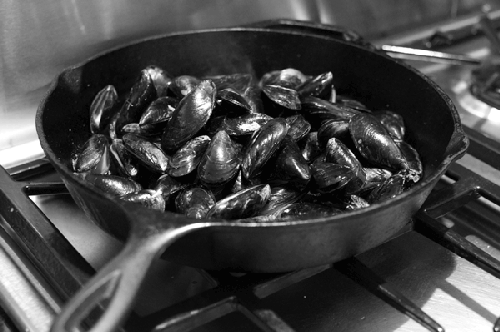
In larger quantities, salt brings a distinct taste to a dish. Try
cooking mussels sprinkled with copious amounts of sea salt. Place a cast iron pan
over high heat until the pan is screaming hot, and drop in the mussels. After two to
three minutes, they’ll have opened up and cooked; sprinkle with salt. You can
optionally add in diced shallots or crushed garlic, cooking another minute or so
until done. Serve with forks and a small bowl of melted butter for dipping the
mussels. You should rinse the mussels before cooking, discarding any that have
broken shells or that aren’t closed tightly.
In some recipes, salt is used
for its chemical properties, such as the osmosis of cellular fluids for food preservation.
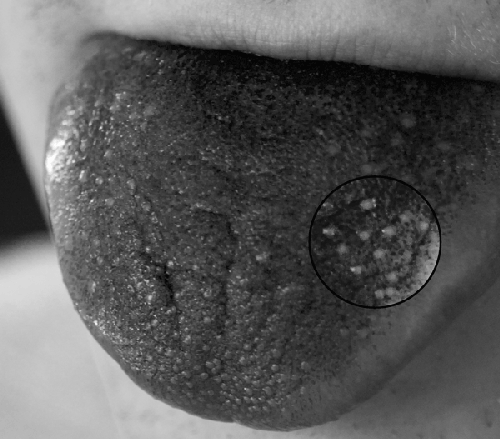
As described in the sidebar Differences in Taste and Supertasting,
there are known genetic differences in the way people taste some bitter compounds. Because
salt masks bitterness, those of us who taste things like broccoli, Brussels sprouts, and
kale as being bitter tend to add more salt to compensate.