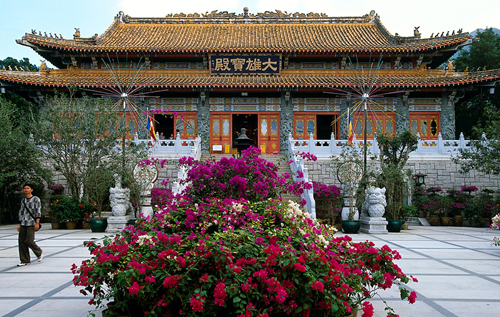
Once a humble house built by three monks to worship
Buddha, Po Lin Monastery on Lantau Island is now a large and important
temple. Its crowning glory, the giant Buddha statue facing the
monastery, is an object of veneration for devotees and one of Hong
Kong’s most popular tourist sights. The statue dominates the area from a
plinth reached by more than 260 steps. On a clear day, the view across
the valleys, reservoirs and peaks of Lantau makes the climb worthwhile.
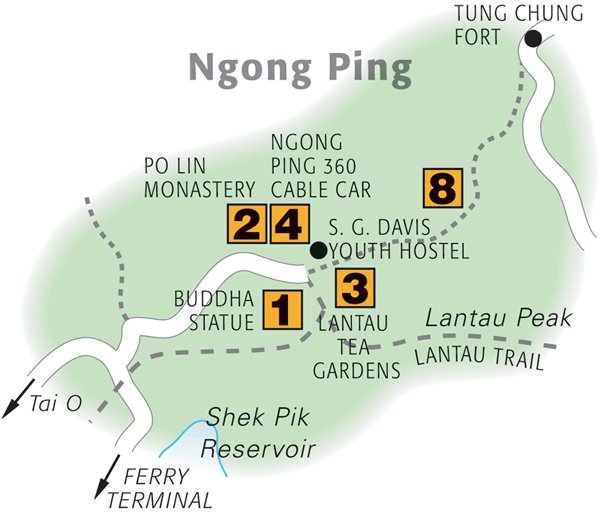
MTR to Tung Chung, then No. 23 bus, or No. 2 bus from Lantau Island’s Mui Wo ferry terminal MTR to Tung Chung, then Ngong Ping 360 Cable Car to village.
Cable CarMonasteryBig Buddha |
In 2000, during an
official meeting on the mainland, Po Lin’s abbot spoke out against the
Falun Gong, the semi-religious sect that’s outlawed and repressed in
China. As a result, local members of the so-called “evil cult” held a
big demonstration near the Big Buddha, protesting that their promotion
of physical and spiritual health through tai-chi style exercises is not
evil. |


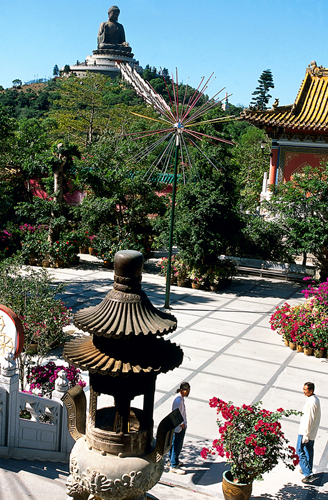
Main courtyard
If you can face an early
start, stay overnight at the Hong Kong Bank Foundation S G Davis Hostel
(2985 5610) close to the Tea Gardens and rise before dawn to see the
sunrise from the summit of nearby Lantau Peak. |
|
If you don’t fancy
the cheap vegetarian food available inside the temple, take a picnic and
wander the nearby footpaths for a good spot. |
|
Top 10 Sights
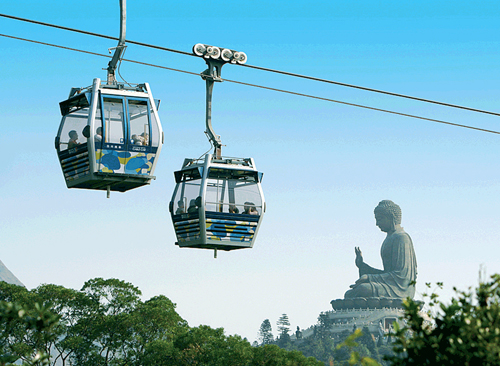
The Big Buddha
Standing
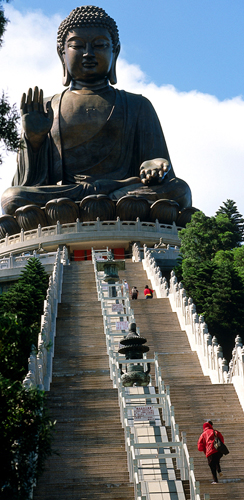
a lofty 26 m (85 ft) high, this mighty bronze statue is among the
largest seated Buddha images in the world. The statue, which was cast in
more than 220 pieces, sits on a throne of lotus – the Buddhist symbol
of purity.


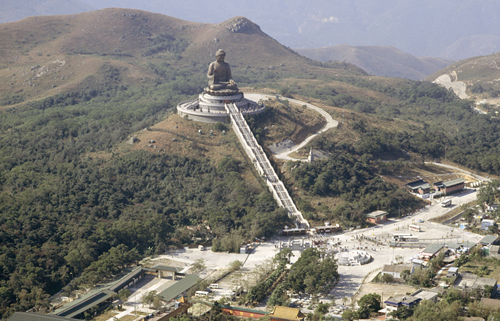
View of the Big Buddha
Monastery
Attracted
by its seclusion, Buddhist monks began arriving on Lantau in the early
20th century. The Po Lin or “precious lotus” monastery really developed
as a place for pilgrimage in the 1920s when the Great Hall was built and
the first abbot appointed.

Tea Gardens
The
Tea Gardens just west of the Buddha statue boast their own modest tea
plantation. The café sells tea leaves from the bushes and makes a
pleasant shaded place to enjoy a drink or cheap Chinese meal away from
the crowds.
Ngong Ping 360Cable Car
The
cable car ride from Tung Chung to Po Lin is an attraction in itself.
The 5.7km (4 mile), 25-minute journey provides sweeping views across the
North Lantau Country Park and to the distant South China Sea .

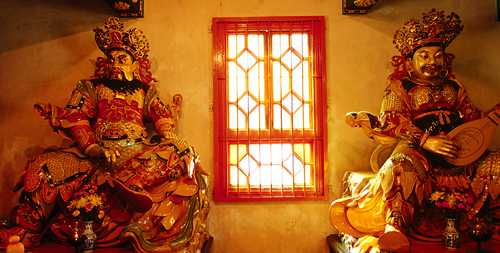
Great Hall
The
main temple houses three large golden Buddha images. Don’t miss the
ceiling paintings, the elaborate friezes around the exterior and the
elegant lotus-shaped floor tiles.

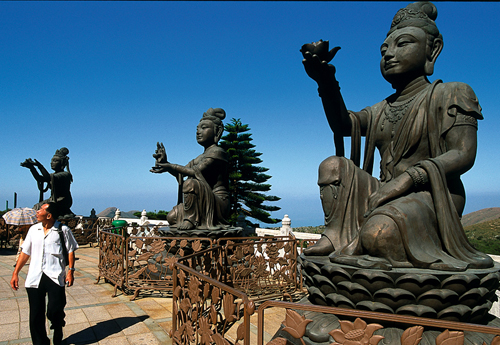
Bodhisattvas
On
each side of the staircase are statues of Buddhist saints. They are
venerated for deferring heaven in order to help mortals reach
enlightenment. Throw a coin into their cupped hands for luck.

Relic Inside the Buddha
A
sacred relic of the real Buddha (a tooth in a crystal container) is
enshrined within the Buddha image, but is difficult to make out. Below
the statue is a display about the life of the Buddha and his path to
enlightenment.
Footpath Down to Tung Chung
Walk
back down to Tung Chung MTR via the lovely 4-mile (7-km) wooded path
through the Tung Chung Valley. You will pass some small monasteries
including Lo Hon, which serves cheap vegetarian lunches.
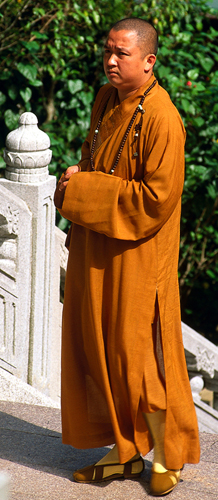
Monks and Nuns
You
may glimpse the grey-robed, shaven-headed nuns and monks at prayers in
the old temple behind the main one. Entry is forbidden to tourists
during the 3pm prayers.

Temple Gateway
Guarded
by twin lions, the temple gateway is said to replicate the southern
gate to Buddhist heaven. As found elsewhere in the temple, the gateway
is decorated with reverse swastikas, which is the holy sign of Buddhism.
The three Chinese characters at the top read “Po Lin Monastery”.