4000 BC: Early Peoples
For
many years, the popular version of history was that Hong Kong was a
“barren rock” devoid of people when the British arrived. In fact,
archaeology now shows that scattered primitive clans had settled by the
seaside on Hong Kong Island and the New Territories six millennia ago.
Their diet was not politically correct by today’s standards: bone
fragments show they liked to eat dolphin.1841: The British Take Hong Kong Island
In
a decisive move during the First Opium War between China and Britain,
Captain Charles Elliot of the British Royal Navy lands on Hong Kong
Island and plants the Union Jack on January 25. The 8,000-odd locals
seem to take it in their stride, but China and Britain continue to fight
over other Chinese trading cities. The 1842 Treaty of Nanking cedes
Hong Kong Island to Britain.1898: The 99-Year Lease
Britain
digs in, turning Hong Kong into a mighty fort. Lyemun at the eastern
end of the island bristles with guns and the world’s first wire-guided
torpedo. Breathing space and water supplies are assured when on July 1,
the 99-year lease of the New Territories is signed in Peking.1941: Japanese Occupation
Hong
Kong has guns galore defending the sea, but the Japanese come by land.
They have little trouble breaching the aptly named Gin Drinkers Line – a
motley string of pillboxes. Hong Kong is surrendered two days before
Christmas, beginning a brutal three-year occupation.

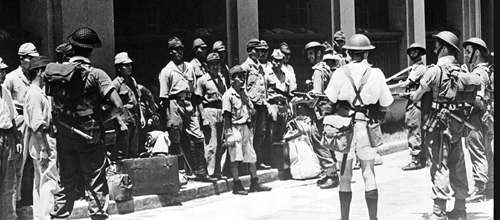
Japanese soldiers captured by the British, 1945
1997: Handover
Handover
night on 30 June is widely regarded as an anti-climax after years of
anticipation. The media focuses on soggy Union Jacks, last governor
Chris Patten’s tears, Prince Charles and his yacht, and Jiang Zemin’s
triumphant toast. The following dawn sees armoured cars rolling across
the border.

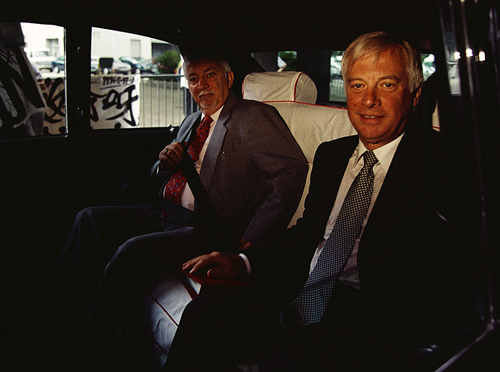
Last governor, Chris Patten
Top 10 Movers and Shakers