Beyond Regent’s Park and the railway termini
of Euston, King’s Cross and St Pancras, North London drifts up into
areas that were once distant villages where the rich built their country
mansions to escape the city. Many of these houses remain and several
are open for the public to wander around and imagine a bygone age. Parts
of their extensive grounds now make up the wild and lofty expanse of
Hampstead Heath. Some of the “villages”, such as Hampstead and Highgate,
are still distinct from the urban sprawl that surrounds them. Home to
the wealthy, cultured and famous, their attractive streets are full of
well-preserved architecture as well as dozens of inviting pubs and
restaurants. Other parts of North London have different flavours,
however – from bustling Camden, with its canal-side market, lively pubs
and clubs, to fashionable Islington, with its clothes and antique shops,
good restaurants, smart cafés and bars.
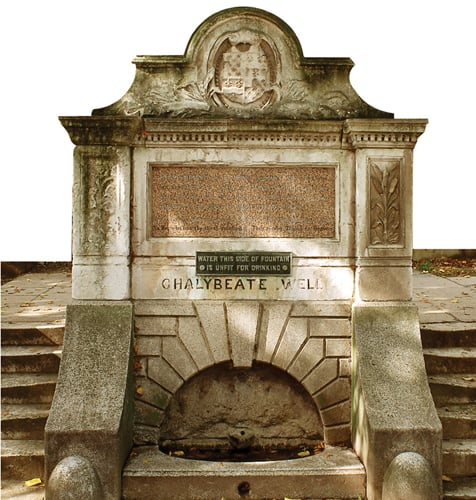
Hampstead WellsHampstead’s heyday began in the early 18th
Site of the well on Well Walk, Hampstead
|
Sights
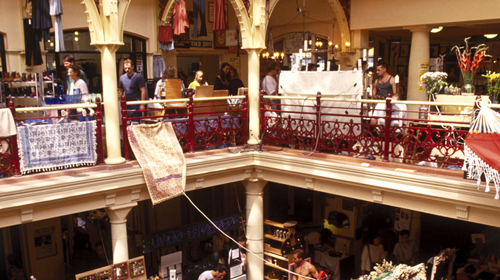
Camden Markets
The
most exciting North London markets are open every weekend, and linked
by the busy and colourful Camden High Street. Camden Market, near the
tube station, is packed with stalls selling clothes, shoes and
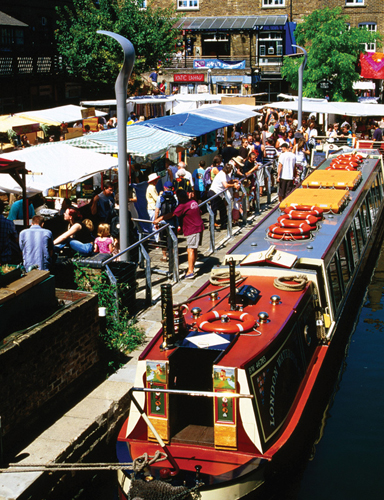
jewellery. Further up the road, by the canal, Camden Lock Market focuses
on crafts and ethnic goods. Stalls in the warehouses of Stables Market
have great food on sale. Open weekends only between 8am and 6pm .Camden High Street & Chalk Farm Road NW1
Tube Camden Town

Camden Lock Market

Regent’s Canal, Camden Lock
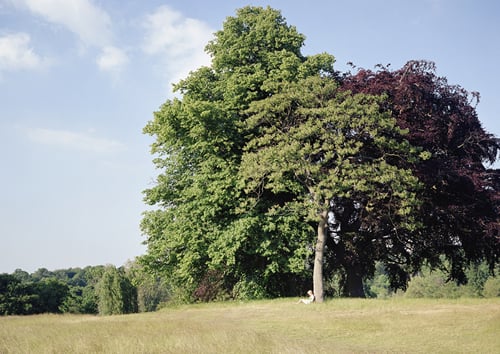
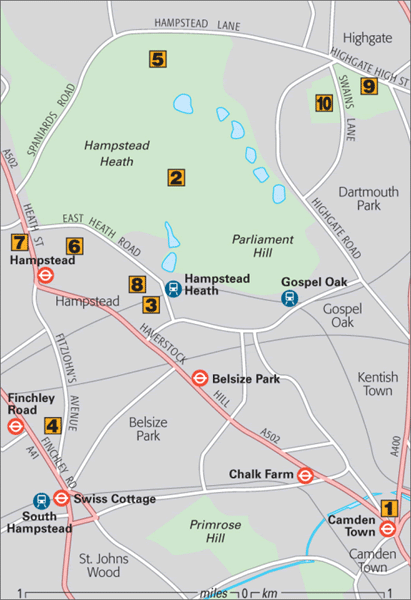
Hampstead Heath and Parliament Hill
A
welcome retreat from the city, this large, open area is one of the best
places in London for walking. Covering 800 acres of countryside, it
contains ancient woodlands and ponds for swimming and fishing. The high
point of Parliament Hill has great city views and is a popular place for
kite-flying.Heath Information Centre, Staff Yard, Highgate Road NW5
Tube Hampstead
020 7482 7073

View over London from Hampstead Heath
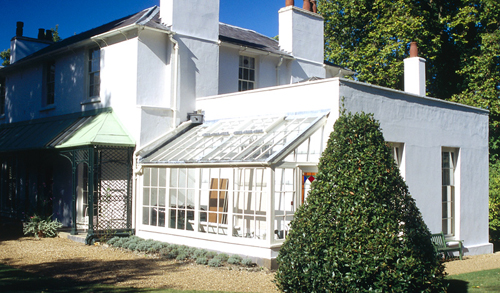
Keats House
Keats
Grove, off Downshire Hill, is one of the loveliest areas of Hampstead.
The house where the poet John Keats wrote much of his work is a pretty
white villa, containing facsimiles of his fragile manuscripts and
letters, as well as some personal possessions. Poetry readings and talks
take place regularly .Keats Grove NW3
Train to Hampstead Heath
For opening times see www.cityoflondon.gov.uk
Admission charge

Freud Museum
Sigmund
Freud, the founder of psychoanalysis, and his daughter Anna, came to
live here when he fled Nazi-occupied Vienna. The house contains Freud’s
collection of antiques and his library, including first editions of his
own works. Also on display is the famous couch on which his patients
related their dreams.20 Maresfield Gardens NW3
Tube Finchley Road
Open noon–5pm Wed–Sun
Admission charge
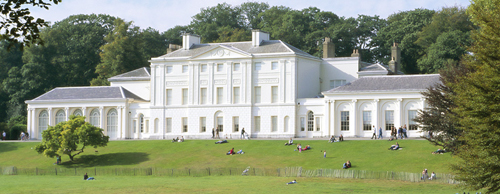
Kenwood House
This
magnificent mansion, filled with Old Masters, is set in an idyllic
lakeside estate on the edge of Hampstead Heath. Vermeer’s The Guitar Player
and a self-portrait by Rembrandt are among the star attractions.
Concerts are held by the lake in summer – audiences sit in the grassy
bowl, with picnics to sustain them (see Kenwood House).Hampstead Lane NW3
Tube Highgate
Open 11:30am–4pm daily
Pre-booked tours available
Free

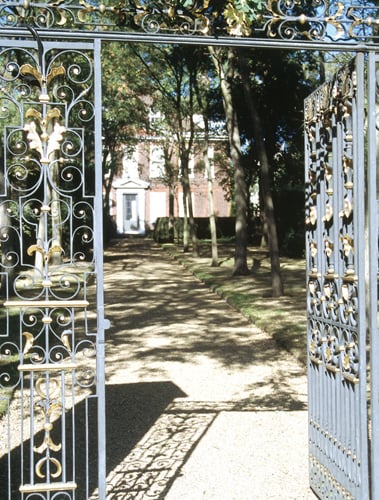
Burgh House
Built
in 1703, Burgh House houses Hampstead Museum, which has a good
selection of local books and a map of the famous people who have lived
in the area. The panelled music room is used for art exhibitions,
concerts and meetings, and there is a pleasant café with garden tables.New End Square NW3
Tube Hampstead
Open noon–5pm Wed–Fri, Sun
Free

Burgh House
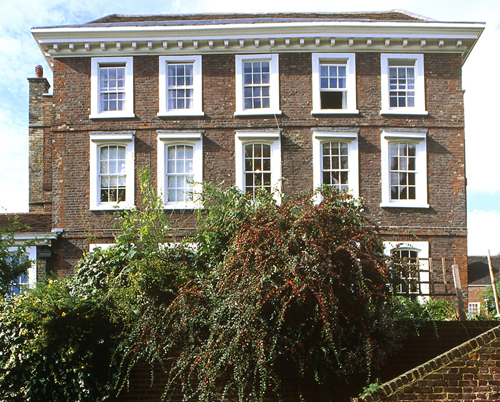
Fenton House
This
splendid 1686 mansion is the oldest in Hampstead. Its exceptionally
fine collection of Oriental and European porcelain, furniture and
needlework was bequeathed to the National Trust with the house in 1952. A
formal walled garden contains an orchard.Windmill Hill NW3
Tube Hampstead
Open Mar–Nov: 2–5pm Wed–Fri, 11am–5pm Sat & Sun
Admission charge

Fenton House
2 Willow Road
Designed
in 1939 by the architect Ernö Goldfinger for himself and his wife, the
artist Ursula Blackwell, this is one of the most important examples of
modern architecture in the UK. A film helps put the life and times of
the couple in context. Goldfinger designed all the furniture and
collected some fine works by Henry Moore, Max Ernst and Marcel Duchamp.2 Willow Road NW3
Train to Hampstead Heath
Open Apr–Oct: noon–5pm Thu–Sat (tours only)
Admission charge
Lauderdale House
Dating
from the late 16th century, Lauderdale House was once associated with
Charles II and his mistress Nell Gwynne. It now houses a popular arts
and cultural centre, with regular concerts, exhibitions and Sunday craft
and antique fairs.Highgate Hill N6
Tube Highgate
Open 11am–4pm Tue–Fri, varies Sat (call 020 834 88716 to check), noon–5pm Sun
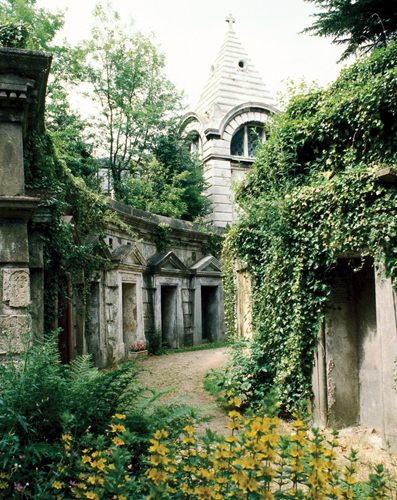
Highgate Cemetery
On
the opposite side of the Heath to Hampstead, Highgate grew up as a
healthy, countrified place for nobility who built large mansions here.
Many of the famous people who lived in the area are buried in Highgate
Cemetery. Soon after it had been consecrated in 1839, its Victorian
architecture and fine views made it a popular outing for Londoners. Karl
Marx and the novelist George Eliot are buried in the less glamorous
East Cemetery
Swain’s Lane N6
Tube Archway
020 8340 1834
East Cemetery
open Apr–Oct: 10am–5pm Mon–Fri, 11am–4pm Sat–Sun; Nov–Mar: 10am–4pm daily.
Closed for funerals (phone to check).
Admission charge
West Cemetery
tours only
Admission charge

Highgate Cemetery