This is where London’s gentry
live. Nannies push prams around Kensington Gardens, uniformed school
children line up in Hans Crescent and the social “in-crowd” gossip in
the Fifth-Floor Café at Harvey Nichols. Whatever time of year, nobody is
without a tan. Harrods is the light beacon of the area; the solid rocks
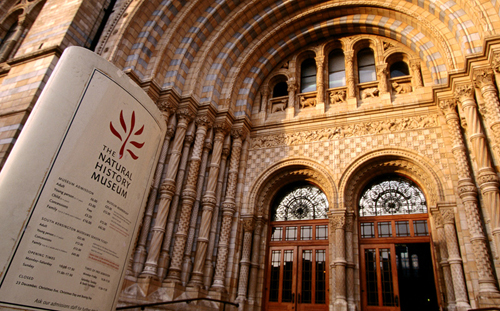
are the great museums established in South Kensington by Prince Albert,
whose name is never far away. Kensington is the Royal Borough where
Lady Diana roamed. She lived in Kensington Palace, the choicest of royal
residences, and shopped in Beauchamp Place. Foreign royalty have homes
here, too. Such mansions need the finest furnishings and some of
London’s best antique shops are in Kensington Church Street and
Portobello Road, the most fun place to be on Saturday mornings.
Prince AlbertQueen Victoria and her first cousin Prince Albert |
Sights
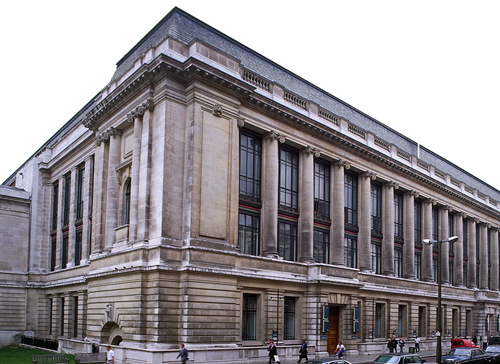
Victoria and Albert Museum
A
cornucopia of treasures is housed in this enchanting museum named after
the devoted royal couple. There are fine and applied arts from all over
the world, from ancient China to contemporary Britain. Highlights
include extraordinary plaster copies of statues, and monuments and
artifacts from the Italian Renaissance. Displays are arranged over six
floors of galleries. The stunning British Galleries display more than
3,000 objects illustrating the best of British art and design since
1500. .
Cromwell Road SW7
Open 10am–5:45pm daily (to 10pm every Fri)
Free
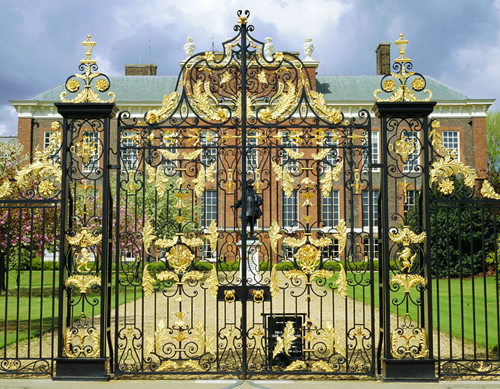
Kensington Palace
This
is a delightful royal residence on a domestic scale, still in use by
members of the royal family: Diana, Princess of Wales lived here as did
Princess Margaret, the Queen’s sister. The first-floor state apartments,
built by Sir Christopher Wren for King William III and Queen Mary, are
open to the public, and the audio guide (free) evokes 17th to
18th-century court life. Rooms on the ground floor have a collection of
royal costumes, including those belonging to Queen Elizabeth II and also
a beautiful collection of gowns that belonged to Princess Diana .Kensington Palace Gardens W8
Open Mar–Oct: 10am–6pm daily; Nov–Feb: 10am–5pm daily (last admission 1 hour before closing)
Admission charge

Kensington Palace
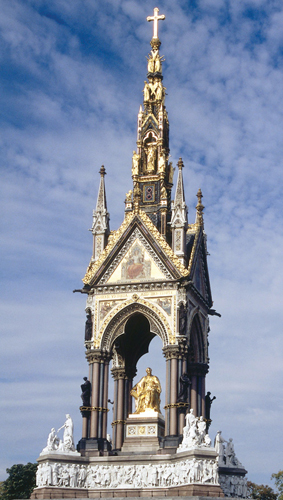
Albert Memorial
This
edifice to Queen Victoria’s beloved consort, Prince Albert, now glowing
from a recent restoration, is a fitting tribute to the man who played a
large part in establishing the South Kensington museums. Located
opposite the Royal Albert Hall, the memorial was designed by Sir George
Gilbert Scott and completed in 1876. At its four corners are tableaux
representing the Empire, which was at its height during Victoria’s
reign.Kensington Gardens SW7

Albert Memorial
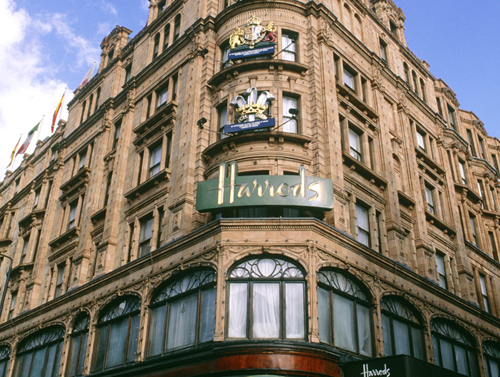
Harrods
No
backpacks, no torn jeans… Harrods’ doormen ensure even the people in
the store are in the best possible taste. This world-famous emporium
began life in 1849 as a small, impeccable grocer’s, and the present
terracotta building was built in 1905. It is most striking at night,
when it is illuminated by 11,500 lights. It has more than 300
departments and on no account should you miss the wonderfully tiled and
decorated food halls. Pick up a floor plan as you go in. An Egyptian
theme decorates the central well, at the bottom of which is a shrine to
Diana, Princess of Wales and Dodi Al Fayed .Knightsbridge SW1

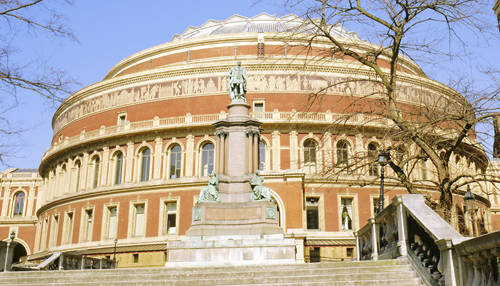
Royal Albert Hall
When Queen Victoria laid the foundation stone for The Hall of Arts and Sciences, to everyone’s astonishment she put the words Royal Albert
before its name, and today it is usually just referred to as the Albert
Hall. It is a huge, nearly circular building, modelled on Roman
amphitheatres, and seats 5,000. Circuses, film premieres and all manner
of musical entertainments are held here, notably the Sir Henry Wood
Promenade Concerts .Kensington Gore SW7
Open for performances and tours

Royal Albert Hall

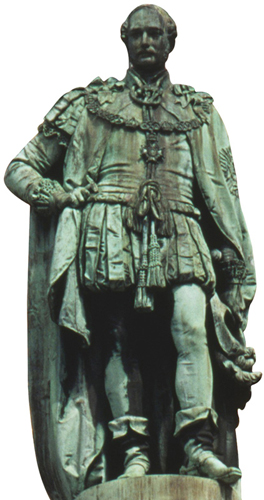
Statue of Prince Albert, outside Albert Hall
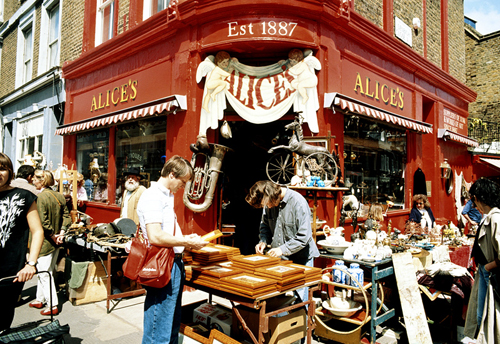
Portobello Road
Running
through the centre of the decidedly fashionable Notting Hill,
Portobello Road, with its extensive selection of antique shops, is a
great place to spend some time. It is especially good on Saturday when
the market is in full swing. This starts just beyond Westbourne Grove,
with fruit and vegetables, bread, sausages, cheeses, then music, clothes
and bric-à-brac. Beyond the railway bridge it becomes a flea market.
Sit upstairs in the Café Grove (No. 253a) and watch it all go by, or
quench your thirst in Fluid’s juice bar (13 Elgin Crescent). Ethnic food
is otherwise what goes down best, and the West Indian flavour spills
over into the vibrant music and colourful clothes stalls .Map A3–A4

Portobello Road Market
Holland Park
There
is a great deal of charm about Holland Park, where enclosed gardens are
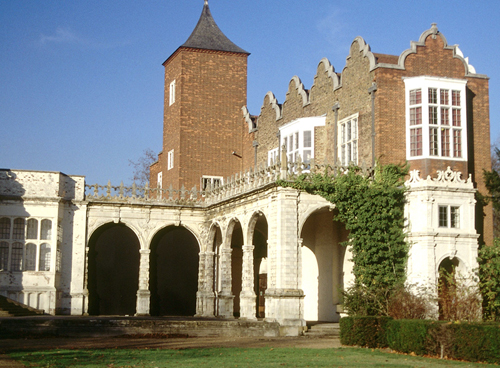
laid out like rooms in an open-air house. At its centre is Holland
House, a beautiful Jacobean mansion, which was destroyed in a bombing
raid in 1941. What remains is used as a youth hostel and the backdrop
for summer concerts. Peacocks roam in the woods and in the gardens,
including the Dutch Garden, where dahlias were first planted in England.Abbotsbury Road W14

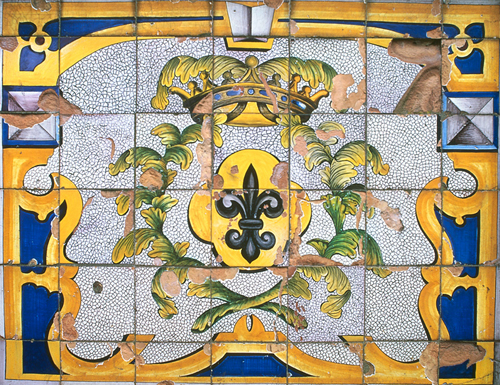
Tiles, Holland House

Holland Park
Leighton House
All the themes of the Victorian Aesthetic movement can be found in Leighton House. It was designed by Lord Leighton
and his friend George Aitchison in the 1860s. Its high point is the
fabulous Arab Hall, with a fountain and stained-glass cupola. Other
friends contributed friezes and mosaics, but many features are original,
notably the Islamic tiles, collected by Leighton and his friends on
their travels.12 Holland Park Road W14
Open 11am–5:30pm Wed–Mon
Admission charge