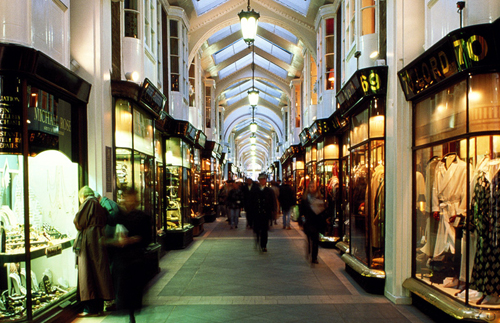
This is where royalty shop
and the rest of us go to gaze. Many of the wonderful small shops around
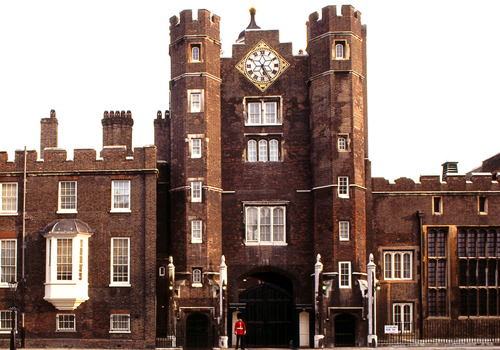
here were established to serve the royal court at St James’s Palace.
Piccadilly – named after the fancy collars called “picadils” sold at a
shop in the street in the 18th century – divides St James’s to the south
from Mayfair to the north, where top shops continue up Bond Street,
Cork Street and Savile Row to Oxford Street. Home to the Royal Academy
of Arts since 1868, Mayfair has long been one of the best addresses in
town. Today most of London’s top-flight art galleries are here.
Americans in MayfairAmerica’s connection with Mayfair dates from |
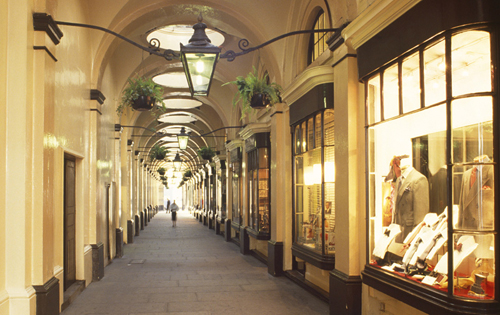
Royal Opera Arcade
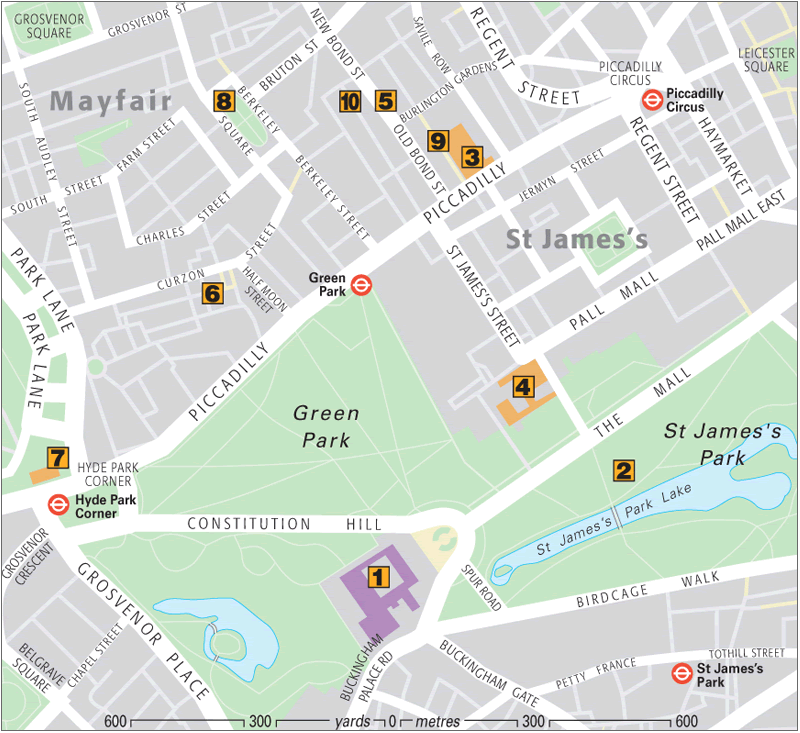
Sights
St James’s Park
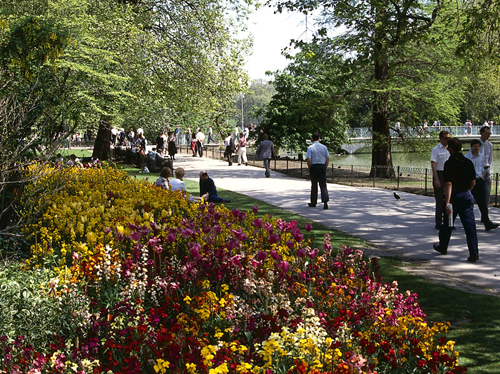
This
is undoubtedly London’s most elegant park, with dazzling flower beds,
exotic wildfowl on the lake, an excellent restaurant/café next to the
lake (Inn the Park, 020 7451 9999to book)
and music on the bandstand in summer. The bridge over the lake has a
good view to the west of Buckingham Palace and, to the east, of the
former Colonial Office where just 125 civil servants once governed the
British Empire that covered one fifth of the world.SW1
Open 5am–midnight daily

St James’s Park
Royal Academy of Arts
Major
visiting art exhibitions are staged at Burlington House, home of
Britain’s most prestigious fine arts institution. The building is one of
Piccadilly’s few surviving 17th-century mansions – you can see the
former garden front on the way up to the Sackler Galleries. Near the
entrance is Michelangelo’s Madonna and Child
(1505) – part of the Royal Academy’s permanent collection and one of
only four Michelangelo sculptures outside Italy. In the Academy’s
popular, annual summer exhibition, new works by both established and
unknown artists are displayed .Burlington House, Piccadilly W1
Open 10am–6pm daily (10pm Fri)
Free (admission charge for temporary exhibitions)
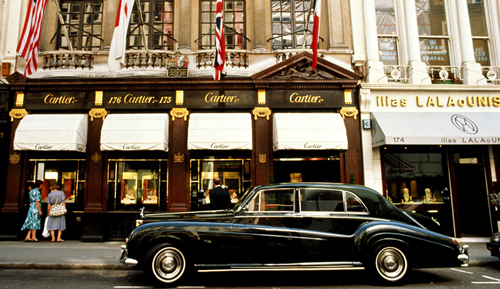
Bond Street
London’s
most exclusive shopping street, Bond Street (known as New Bond Street
to the north and Old Bond Street to the south) has long been the place
for high society to promenade: many of its establishments have been here
for over 100 years. The street is home to top fashion houses, elegant
galleries such as Agnews and the Fine Art Society, Sotheby’s auction
rooms and jewellers such as Tiffany and Asprey. Where Old and New Bond
Street meet, there is a delightful sculpture of wartime leaders Franklin
D Roosevelt and Winston Churchill – well worth a photograph.

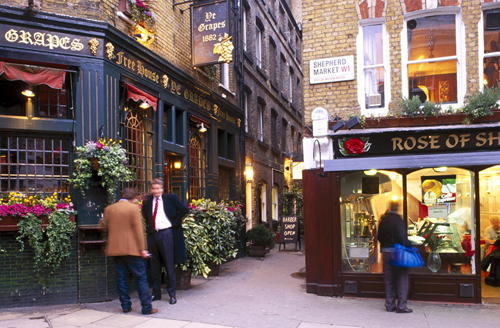
Shepherd Market
The
market was named after Edward Shepherd who built a two-storey house
here in around 1735. Today, this pedestrianized area in the heart of
Mayfair is a good place to visit on a summer evening for a drink or
meal. Ye Grapes, dating from 1882, is the principal pub, while local
restaurants include L ‘Artiste Musclé, Le Boudin Blanc and The Village
Bistro. During the 17th century, an annual May Fair was held here,
giving the area its name.

Shepherd Market
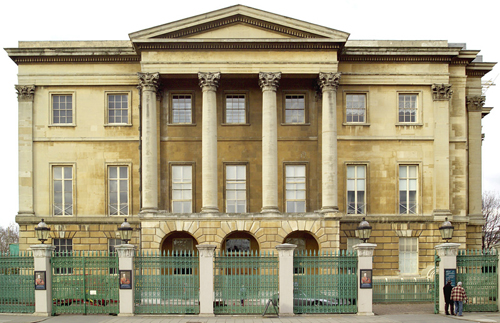
Apsley House
The home of the Duke of Wellington,
Apsley House is still partly occupied by the family. Designed by Robert
Adam in the 1770s, the mansion is given over to paintings, and
memorabilia of the great military leader. Paintings include several fine
works by Diego Velázquez, including The Waterseller of Seville. Antonio Canova’s nude statue of Napoleon has special poignancy.Hyde Park Corner W1
Open Apr–Oct: 11am–5pm Wed–Sun (to 4pm Nov–Mar)
Admission charge

Apsley House
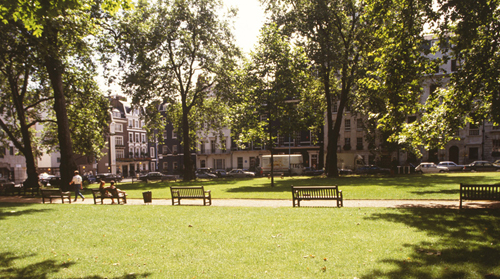
Berkeley Square
This
pocket of green in the middle of Mayfair was planted in 1789 and its 30
huge plane trees may be the oldest in London. In 1774 Clive of India,
hero of the British Empire in India, committed suicide at No. 45.
Memorial benches in the square bear moving inscriptions, many from
Americans who were billeted here during World War II. A Bentley and
Rolls-Royce dealer’s showroom is on the east side of the square.

Berkeley Square
Burlington Arcade
This arcade of bijou shops was built in 1819 for Lord George Cavendish of Burlington House (see Royal Academy of Arts)
to prevent people from throwing rubbish into his garden. The arcade is
patrolled by uniformed beadles who control unseemly behaviour.Piccadilly W1
Burlington Arcade
Royal Institution
Michael
Faraday (1791–1867), a pioneer of electro-technology, experimented in
the laboratories of the Royal Institution, where he was Professor of
Chemistry from 1833–67. These Neo-classical buildings house high-spec
laboratories and fascinating exhibitions including the Faraday
Exhibition.The Royal Institution, 21 Albemarle Street W1
Open 9am–5:30pm Mon–Fri
Admission charge