The National Gallery has around 2,300 pictures, from
the early Renaissance to the Impressionists (1250–1900), forming one of
the greatest collections in the world. Containing work by the most
important painters of the main European schools, the collection was
acquired by the government from John Julius Angerstein in 1824, and
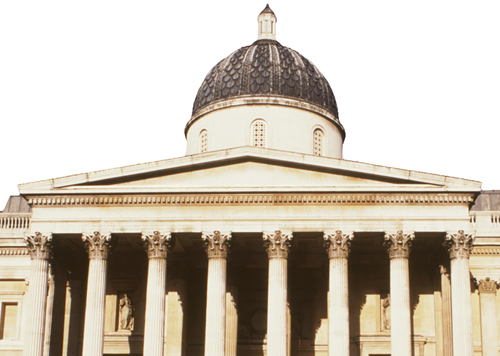
moved to the present building (also home to the National Portrait Gallery, in 1838. The Sainsbury Wing, built in 1991, houses the excellent early Renaissance collection.
Trafalgar Square WC2 020 7747 2885
www.nationalgallery.org.uk
Open 10am–6pm Sat–Thu (10am–9pm Fri). Sainsbury Wing exhibitions open until 9pm on Wed Free Free guided tours at 11:30am and 2:30pm daily (also 7pm Fri)
|
The gallery is divided
into four areas. The Sainsbury Wing contains the Early Renaissance
collection, with paintings from 1250 to 1500. The West Wing displays
works from 1500 to 1600, the North Wing 1600–1700, and the East Wing
1700–1900. Although the main entrance is on Trafalgar Square, the
Sainsbury Wing makes a more sensible starting point. |


National Gallery façade
There is a café and a good restaurant. |
|
The Sainsbury Wing has an excellent art bookshop. |
|
Guided tours and audio guides are available. |
|
Explore the collection on screen with ArtStart, which is situated in the Sainsbury Wing. |
|
Top 10 Paintings
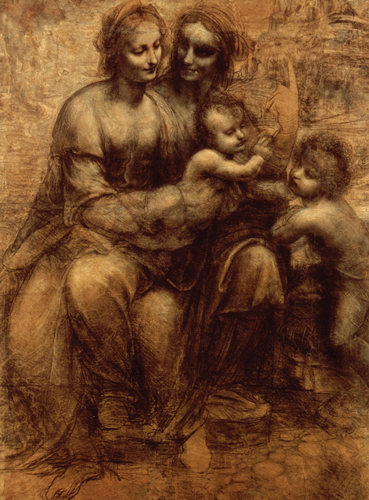
The Virgin and Child with St Anne and St John the Baptist
This
full-size drawing for a painting, known as a cartoon (from cartone, a
large sheet of paper), is one of the masterpieces of the Renaissance, by
Leonardo da Vinci (1452–1519).

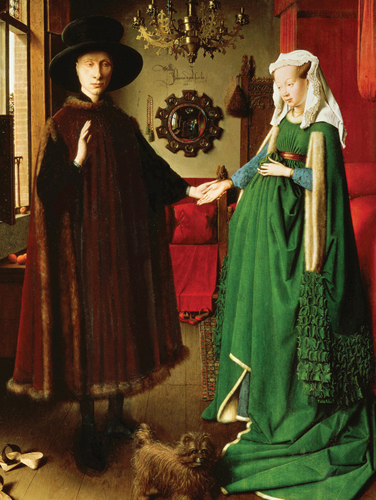
The Arnolfini Portrait
One
of the most famous paintings from the extensive Flemish collection is
this unusual and masterly portrait of an Italian banker and his wife in
Bruges. Jan van Eyck (c.1385–1441) brought oil painting to a new and
colourful height.

The Ambassadors
Symbols, such as the foreshortened skull foretelling death, abound in this painting by Hans Holbein (1533).
The Wilton Diptych
A
highlight of Gothic art, this exquisite English royal painting, by an
unknown artist, shows Richard II being recommended to the Virgin by
saints John the Baptist, Edward and Edmund.
The Rokeby Venus
Painted in Rome to replace a lost Venetian painting, The Rokeby Venus is the only nude by Diego Velázquez (1599–1660), court painter to Spain’s Philip IV.
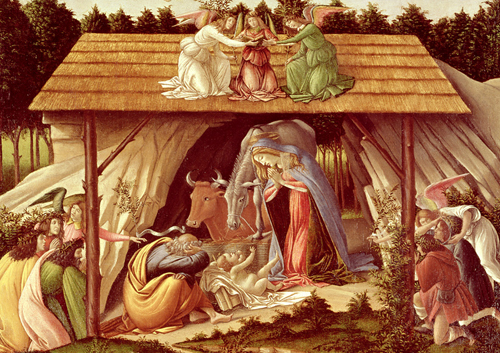
Mystic Nativity
Feminine
grace has never been depicted better than by the painter Sandro
Botticelli (1445–1510). Painted in a centennial year, Mystic Nativity
reflects his own anxieties, with an inscription from Revelation.

The Supper at Emmaus
A
master of light and shade, Caravaggio (1571–1610) painted without
preliminary drawings and used contemporary costumes and settings to
produce a vivid realism.
A Young Woman Standing at a Virginal
Peace
and calm rule the works of the Dutch painter Jan Vermeer (1632–75).
Many of his interiors were painted in his home in Delft, but it has
never been possible to identify his models.
A Woman Bathing in a Stream
This
portrait by Rembrandt (1606–69) was painted when his technical powers
were at their height, and shows his striking brushwork and mastery of
earthy colours.
Bathers at La Grenouillière
Claude
Monet (1840–1926), the original Impressionist, explored the effect of
light on water at La Grenouillière, a popular bathing spot on the Seine,
where he worked alongside Auguste Renoir.