Central Madrid began to take
on its present appearance in the mid-19th century with the modernization
of Puerta del Sol. This busy intersection was the first to have
electric street lighting, trams and, in 1919, Madrid’s first underground
station. Meanwhile Calle de Alcalá was becoming the focal point of a
new financial district as banks, insurance offices and other businesses
set up their headquarters in showy new premises. Building work on the
Gran Vía began in 1910 but was only completed in the 1940s with the
remodelling of Plaza de España. To make way for this sweeping Parisian
style boulevard, 1,315 m (1,440 yds) long and designed with automobile
traffic in mind, more than 300 buildings were demolished and 14 streets
disappeared altogether. The new avenue reflected the American
architectural tastes of the jazz age, with skyscrapers, cinemas, glitzy
cocktail bars, luxury hotels, theatres and restaurants.
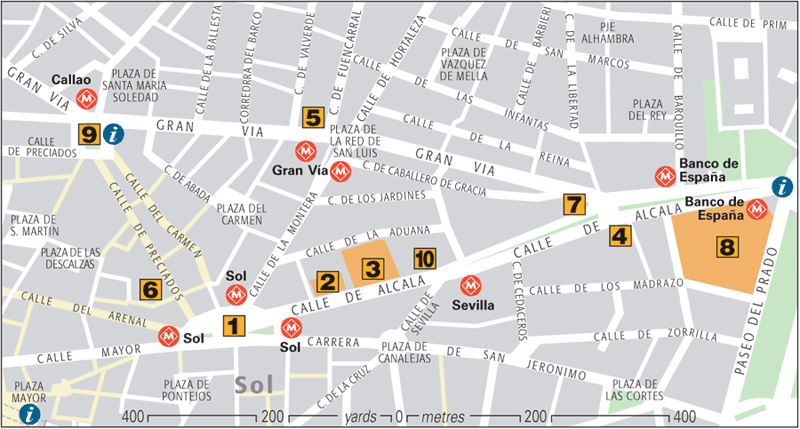
Sights
Puerta del Sol
Ten streets radiate from this elliptical square, which for most madrileños
is the real heart of the city. The name means “Gateway of the Sun”
although the actual gateway was demolished in 1570. Of numerous historic
events to take place here, the most dramatic occurred during the 1808
insurrection when snipers fired on one of Napoleon’s soldiers, provoking
a massacre. Dominating the south side of the square is the 18th-century
Casa de Correos, a post office which later became the Ministry of the
Interior and now houses the regional government. A marker in front of
the building indicates “kilómetro cero”,
from which all distances in Spain are calculated. In the centre of the
square is a statue of Carlos III and, on the corner of Calle del Carmen,
a bronze statue of a bear climbing an arbutus tree, the symbol of the
city.

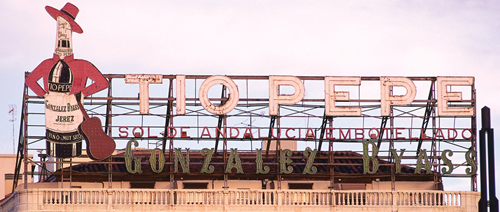
Tio Pepe sign, Puerta del Sol
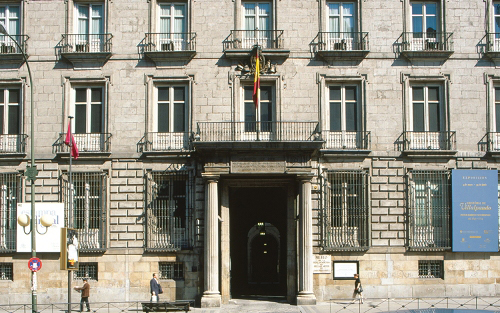
Real Casa de la Aduana
The
royal customs house was a cornerstone of Carlos III’s plans to improve
the appearance of the city. In 1761 the queen’s stables and 16 houses
were demolished to make way for Francesco Sabatini’s Neo-Classical
masterpiece. Huge amounts of money were lavished on the façade alone,
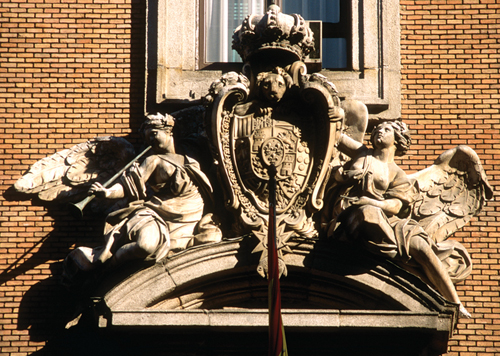
the decorative features of which include ashlar columns and a balcony
bearing the royal coat of arms. It is now home to the Ministry of
Finance.Calle de Alcalá 8
Closed to public

Façade detail, Real Casa de la Aduana
Founded
in the 18th century, the palatial Academy of Fine Arts house a
collection of paintings surpassed only by the Prado and the
Thyssen-Bornemisza. Outstanding among the Spanish paintings are the
Goyas, including the classic fiesta scene Burial of the Sardine.
There are also impressive works by European masters including Bellini,
Tintoretto, Van Dyck, Rubens and Titian. Picasso and Dalí studied here
for a time.Open 9am–7pm Tue–Fri, 9am–2:30pm, 4–7pm Sat, 9am–2:30pm Sun–Mon & public hols
Adm (except Wed)

Círculo de Bellas Artes
While
the golden age of the Arts Club was in the 1920s and 1930s, this
cultural organization is still thriving today. The Círculo promotes
Spanish and world culture, with exhibitions, theatre and ballet
productions, art films, workshops and conferences. It even has a
magazine, Minerva, and a radio station.Open 10am–9pm daily (café open until 1am); Exhibitions: 5–9pm Tue–Sat, 11am–2pm Tue–Sun
Closed Aug
Adm

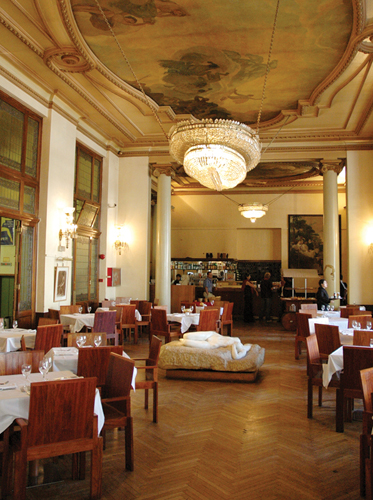
Círculo de Bellas Artes
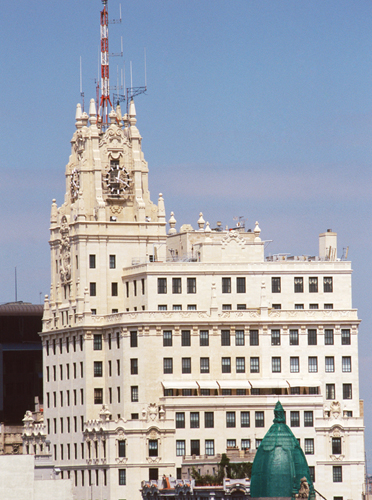
Edificio Telefónica
Now
headquarters of Spain’s national telephone company, this was Madrid’s
first high-rise building. Designed by American architect Lewis Weeks in
1929, it reflects the values of the Chicago School then much in vogue.
The Telefónica building played an important role in the Civil War when
it was used by the Republican army as a vantage point for observing
enemy troop movements in the Casa de Campo. Conversely, Franco’s forces
found it an ideal range finder for their artillery. The Fundación de
Arte y Tecnología Telefónica has an exhibition on the history of
communications as well as a splendid art collection, with works by
Picasso, Juan Gris, Eduardo Chillida and Antoni Tàpies. Another room on
the ground floor hosts temporary exhibitions.Calle de Fuencarral 3
Open 10am–2pm, 5–8pm Tue–Fri, 11am–8pm Sat, 10am–2pm Sun & public hols
Free

Telefónica
El Corte Inglés
The
story of the founder of Spain’s premier department store, Ramón Areces
Rodríguez, is a classic tale of rags-to-riches. Areces emigrated to Cuba
aged 15 and worked as a shop assistant before returning to Spain in
1934. The following year he opened a small tailor’s in Calle de
Preciados and never looked back. Nowadays you’ll hardly leave your hotel
without noticing the distinctive white shopping bags with the green
logo. The store at Preciados No.1 sells CDs, No.2 stocks over half a
million books and No. 3 specializes in fashion. There are numerous
branches in the capital.Calle de Preciados
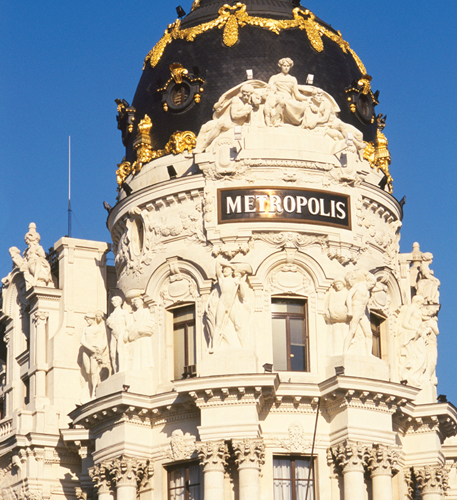
Metrópolis
It
was La Unión y el Fénix insurance company, the original owners of this
Madrid landmark, who commissioned the striking statue on the cupola.
Known as “Ave Fenix”, it represents the fabled Egyptian bird which died on a funeral pyre but rose from the flames once every 500 years. When the Metrópolis company moved into the building, they inherited the sculpture which then lost its significance.Corner Gran Vía & Calle de Alcalá

Metrópolis
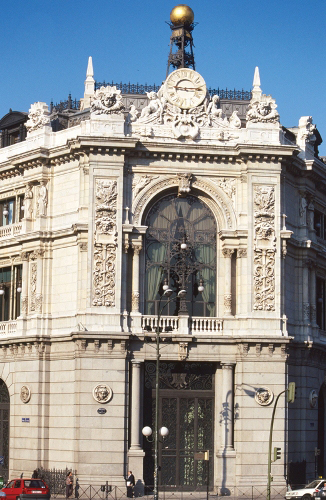
Banco de España
The
Bank of Spain was founded in 1856 and 20 years later acquired the
exclusive right to issue bank notes in its name. The most impressive
part of these headquarters is the corner section, decorated with typical
Neo-Baroque ornamentation – caryatids and medallions, a marble clock
and the distinctive golden globe. Spain’s gold reserves are locked away
in the vaults beneath Plaza de Cibeles. Apart from gold, the bank’s main
treasure is its art collection, with works ranging from Goya to Tàpies.
It can only be viewed by written application to the bank.Calle de Alcalá 50

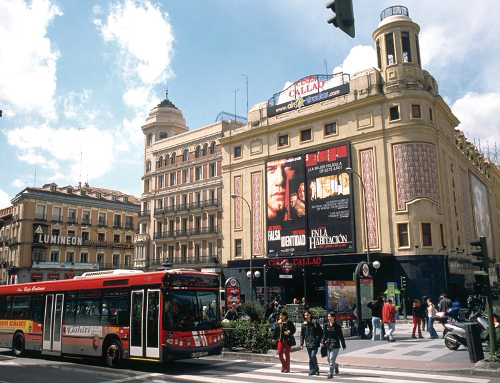
Plaza del Callao
The
look of this busy square reflects the sleek modernist architecture of
1930s America. Good examples are the curved Art Deco façade of the
Carrión building (No. 3), the Palacio de la Prensa (No. 4) and the
Palacio de la Música (Gran Vía 35), all now cinemas. Madrid is one of
only a handful of cities in the world where you can still see
hand-painted film posters.

This
exclusive gentlemen’s club was founded in 1910. The florid architecture
by Luis Esteve and José López Salaberry is typical of the period, but
unfortunately the lavish interior is rarely open to the public.
Non-members, however, are allowed in the restaurant, La Terraza Del
Casino, which has a Michelin star.Calle de Alcalá 15