One of Madrid’s most affluent neighbourhoods,
Salamanca is named after its founder, José de Salamanca y Mayol
(1811–83). The Marquis first saw the commercial possibilities of the
area bordering the Retiro in the 1860s and transformed it into a model
of urban planning, with grid patterned streets and elegant mansions. The
new neighbourhood was an immediate hit with the upper classes who found
the central districts stifling and their own antiquated homes lacking
in such modcons as flushing toilets and hot running water. Salamanca
soon acquired a reputation as a bastion of conservatism and its
residents were among the most loyal supporters of the Franco regime.
Today the streets around Calle de Serrano, Calle de Goya and Calle de
Velázquez form Madrid’s premier shopping district and showcase some of
Spain’s leading fashion designers. The prices, though, may leave you
breathless – shopaholics take note.
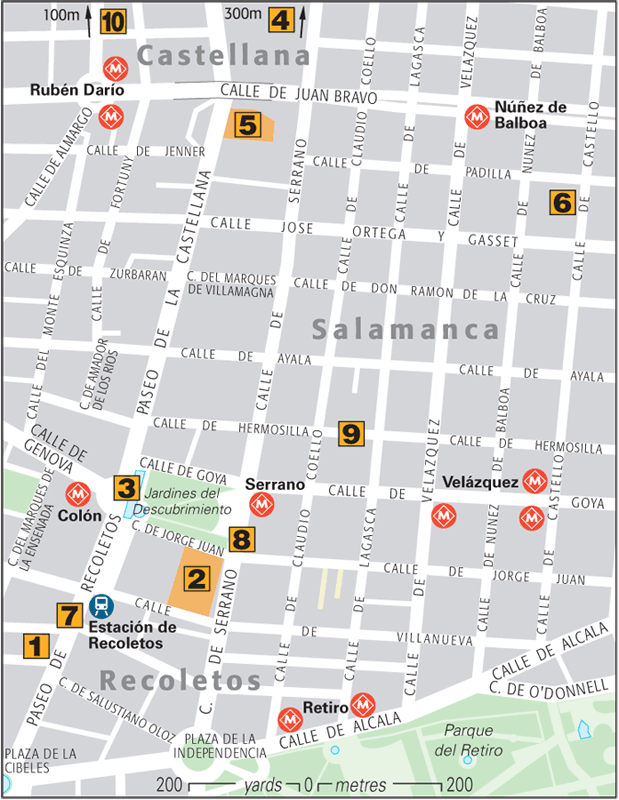
Sights
Café Gijón
The haunt of journalists and leading cultural figures, the Gijón was founded in 1888 and is one of the few surviving tertulia
cafés where, traditionally, men gathered to discuss issues of the day.
Former patrons include the poet Federico García Lorca, the American film
director Orson Welles and – more improbably the famous Dutch spy and
bellydancer, Mata Hari. Order tapas
and drinks at the bar or book a table for lunch. The windows look out
on to Paseo de Recoletos where the café has its own terrace.Paseo de Recoletos 21
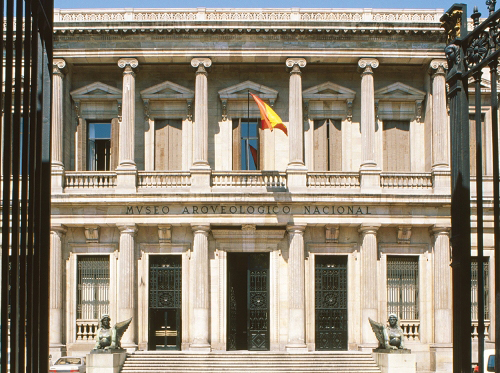
Museo Arqueológico Nacional
The
scale of the Archaelogical Museum’s collections can be daunting, so
home in on what interests you most. The star turn on the main floor is
the Lady of Elche,
a stone bust of an Iberian noblewoman from the 4th century BC. Other
highlights include a Roman mosaic floor representing the months and
seasons, the Recesvinth crown from the Guarrazar treasure (Toledo,
7th-century), an example of Islamic stone-carving from 11th-century
Zaragoza, and an ivory processional cross from the church of San Isidoro
in León (1063). On the lower floor are Bronze and Iron Age finds from
the Canary Islands and a collection of painted amphorae from ancient
Greece. Before leaving, take a look at the reproduction of the cave
paintings of Altamira is on display in the forecourt . Some parts of the museum will be closed for renovations until 2010.Open 9:30am–8pm Tue–Sat, 9:30am–3pm Sun, hols
Closed 1 Jan, 6 Jan, 1 May, 15 May, 24–25 Dec, 31 Dec
Free during renovations

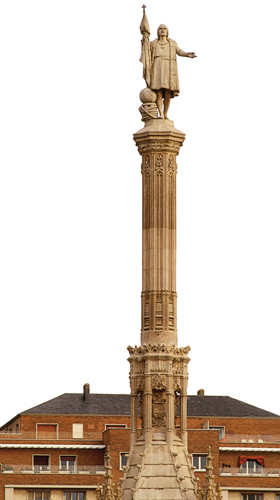
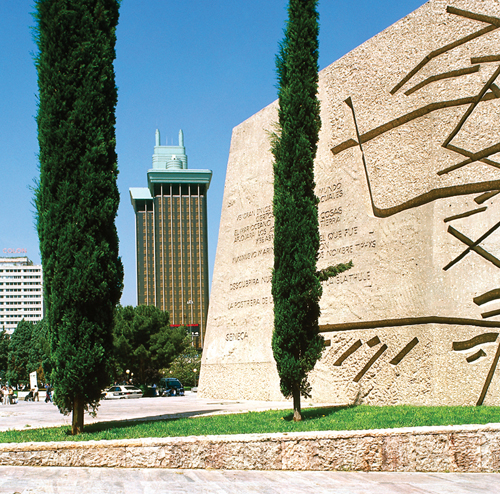
Plaza de Colón
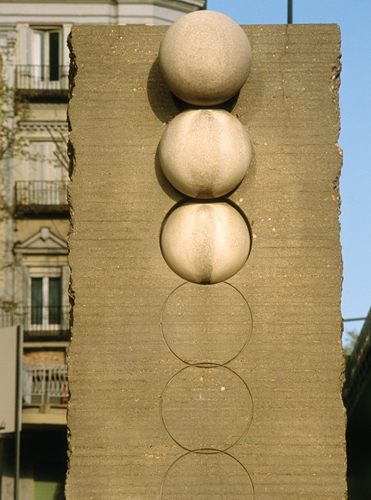
This
expansive square, named after Christopher Columbus, commemorates the
discovery of the New World. The three monumental slabs near Calle de
Serrano were designed by Joaquín Vaquero Turcíos to symbolize the three
ships that made the voyage to America in 1492. In the centre of the
square is a more conventional sculpture of Columbus, erected in the 19th
century. A relief on the base shows Queen Isabel of Castile selling her
jewellery to finance his enterprise.

Plaza de Colón

Plaza de Colón
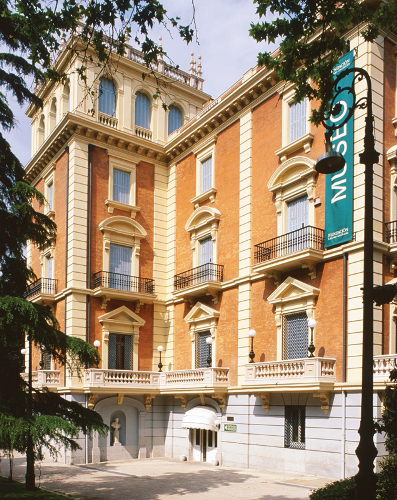
Museo Lázaro Galdiano
José
Lázaro Galdiano (1862–1947) was a distinguished patron of the arts and
collector whose Italian style palazzo is now a museum showcasing his
fabulous possessions. There are Spanish works by El Greco, Zurbarán,
Murillo, Velázquez and Goya and European paintings by Reynolds,
Constable and Gainsborough. There are also spectacular objets d’art .Calle Serrano 122
Metro Rubén Darío or Gregorio Marañón
Open 10am–4:30pm Wed–Mon
Closed public hols
Adm (except Wed)

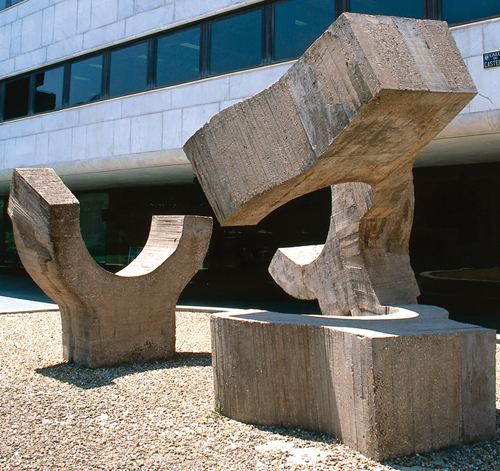
Museo de Escultura al Aire Libre
Situated
beneath a road bridge, the open air sculpture museum is easily
overlooked. Nevertheless, exhibited in its windswept precincts are works
by a number of outstanding modern Spanish sculptors, including Eduardo
Chillída, Julio González, Joan Miró and Pablo Serrano.Paseo de la Castellana

Museo de Escultura al Aire Libre
Fundación Juan March
One
of Spain’s most vital cultural institutions was founded in 1955 by the
banker Juan March Ordinas, to promote contemporary Spanish art. Madrid
shares the permanent collection, especially strong on abstract artists
of the 1950s such as Tàpies, Sempere, Saura, and Millares, with other
branches of the foundation in Cuenca and Palma de Mallorca, but the
foundation’s main attraction is its outstanding temporary exhibitions.Castelló 77
Open 11am–8pm Mon–Sat, 10am–2pm Sun & public hols
Free

Fundación Juan March
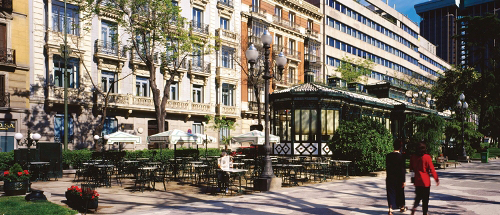
Paseo de Recoletos
“Paseo”
implies a stroll and this lovely avenue, at its best on a sunny morning
or just after sunset, was designed precisely for that purpose. The
first cafés began to appear in the 19th century when the boulevard was
nicknamed “Recoletos beach”. Most of the originals had disappeared by
the 1980s when the Movida gave the terraces a new lease of life.
The Pabellón de Espejo looks the part with its painted tiles and
wrought iron adornments but actually dates from the 1990s. No. 10 was
the residence of the Marqués de Salamanca.

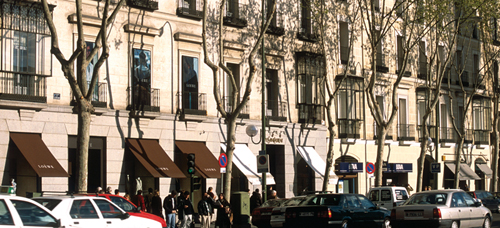
Calle de Serrano
Madrid’s
smartest shopping street runs through the heart of the Salamanca
district. Here, top Spanish designer names such as Adolfo Domínguez,
Purificación García and Roberto Verino, rub shoulders with Armani,
Gucci, Yves St-Laurent and Cartier. Even if you’re not especially
interested in fashion, there’s plenty to amuse you. Madrid’s best-known
department store, El Corte Inglés, has branches at Nos. 47 and 52,
Agatha Ruíz de la Prada (No. 27) stocks colourful dresses, while VIPS
Viajes (No. 39) specializes in travel books. If you’re looking for gifts
visit Papelería Saab (No. 20). For a bite to eat, try Serrano 50 which
has a menú del día as well as tapas.

Calle de Serrano
Calle de Hermosilla
This
side-street off Serrano has everything from cut-glass decanters to
beach bags. For designer clothes for children, try Nanos (No. 21). Vista
Alegre (No. 29) has an array of Portuguese–made tableware. If you’re
off on safari but want to look elegant, Coronel Tapioca (No. 32) fits
the bill with backpacks, cord shorts, shirts and hats for the
fashion-conscious. Estay
is just the spot for lunch. Next door but one is Tea Shop (No. 48),
with more than 40 aromatic teas, including rum, toffee, cherry and
passion fruit.Museo Sorolla
This
museum is devoted to the Valencian artist Joaquín Sorolla y Bastida
(1863–1923) who spent the last 13 years of his life here. Some rooms
have been left as they were in his lifetime, while others are used to
hang his work. Dubbed “the Spanish Impressionist”, his subject matter
ranges from Spanish folk types to landscapes, but Sorolla is at his most
appealing when evoking the sea. Don’t leave without seeing the
Andalusian style garden.