Often overlooked by visitors, this is one of Madrid’s
best museums. The collection comprises more than 20,000 items recovered
from the Americas, including textiles, ceramics, tools, paintings and
sculptures. The star of the show, by general consent, is the fabulous
Quimbayas treasure, presented to the museum by the Colombian government
in the 19th century. The exhibition is organized in five themed areas:
how America was perceived in Europe from the Age of the Discoveries to
the 18th century; the reality; the evolution of the native societies;
religion; and communication between the nations.
Avenida Reyes Católicos 6 Metro Moncloa 91 54 92641
http://museodeamerica.mcu.es
Open 9:30am–3pm Tue–Sat, 10am–3pm Sun, public hols; closed: 1 Jan, 1 May, 9 Nov, 24 Dec, 25 Dec, 31 Dec Dis. access Adm €3.01 (except Sun)
|
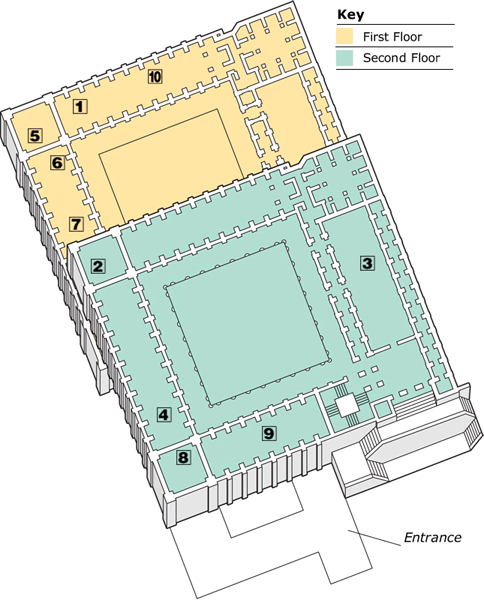
The entrance is on the
ground floor where visitors will also find the toilets, cloakrooms and a
small museum bookshop. The reception area also leads to the Temporary
Exhibitions room. Plans of the museum are available at the ticket
counter. A broad staircase leads to the first floor and the beginning of
the permanent exhibition. From here, signs point visitors in the right
direction for a thematic tour of the displays. Area three continues on
the second floor. |


Façade
The museum café is in the basement, but take your drinks to the tables on the first floor where there are views of the grounds. |
|
Top 10 Exhibits
Caciques Statue
Forged
in Colombia more than 1,000 years ago, this superb statuette in area 4
(cabinet 4.23) is part of the Quimbayas treasure. The fabulous array of
gold objects includes earrings, crowns and musical instruments.
Mayan Funerary Urn
This
painted baked clay urn (cabinet 2.25) dates from AD 600–900, the zenith
of the Mayan civilization of Central America. The face on the lid
represents the deceased.
Jaburú Headdress
This
stunning feather headdress (area 1) belongs to the Karajá Indians of
Brazil and would have been worn during a ritual dance or other
ceremonial. The Karajá are known for their artisanal flair. Less than
500-strong, sadly this small tribe is now under threat.
Huípil
A huípil
(pronounced wee-peel) is an embroidered tunic, and this one, in area 3
(cabinet 3.9), is from Guatemala and is decorated with fertility motifs.
The design designates the wearer’s village, social and marital status,
wealth, religious beliefs and much else besides. A woman might own two
or three huípils during her life.
Paracas Mummy
This
mummy in cabinet 4.21 was discovered in Peru and dates from between 400
BC and AD 100. Paracas tribes wrapped the bodies of the dead in woven
mantles.
Shaman Mask
This
beautiful mask in area 4 (cabinet 4.8) belongs to the Tapirapé Indians
of Brazil. The Tapirapé believed that only the shaman could protect them
from malevolent spirits.
Axe
Inca
craftsmen fashioned this ceremonial axe (area 3, cabinet 3.92) from
bronze, then encrusted it with copper and silver. The Inca empire
flourished between AD 1200 and 1530. The axe was a symbol of imperial
power.
Tlingit Helmet
This
colourful helmet in area 3 (cabinet 3.39) was made from wood, copper,
leather and shells by Tlingit Indians of south Alaska.
Jaburu’s House
There
is more to this replica hut (area 3, cabinet 3.30) than meets the eye.
Both the house and its contents are aligned east to west, following the
movement of the sun. The hut itself represents the cosmos while the roof
beam represents the union of heaven and earth.
Tudela Codex
This
Aztec law code (area 5, cabinet 5.8) dates from around 1553 and is
bound like a book. The Aztecs regularly used ideograms, each picture
representing an idea. The scribe would sketch the outline in black, then
add colour with a fine brush.