The Retiro is the city’s green lung and the madrileños’
favourite weekend retreat. The aristocracy was first admitted to the
former royal grounds in 1767 but it was another century before the gates
were opened to the general public. Visitors can enjoy not only the
decorative features, w hich include statues and sculptural arrangements,
follies, a formal French garden, lakes and ponds, but the numerous
amenities which make the Retiro such a prize attraction. Children make a
beeline for the puppet theatre (Sunday performances start at 1pm),
while adults may prefer the concerts at the bandstand. There are rowing
boats for hire on the lake. Sunday, when there is almost a carnival
atmosphere, is the best day to enjoy everything from circus acts and
buskers to pavement artists and fortune tellers.
The park’s full title,
Parque del Buen Retiro, is a reference to the palace, built for Felipe
IV in 1630–32 near the Jerónimos Monastery – retiro
means retreat. The former royal residence was vandalized by French
troops who occupied it during the War of Independence, and eventually
demolished. The only parts to survive – the ballroom and the Salón de
Reinos have been earmarked as annexes of the Prado . |

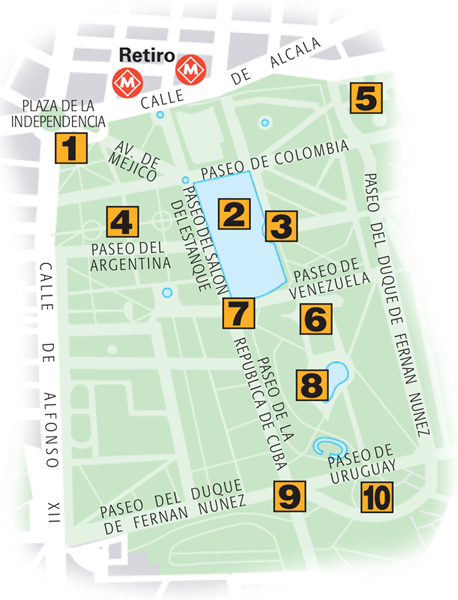
Plan of the Parque del Retiro
Refreshment kiosks can be found at various points in the park. |
|
In June a major book fair takes place in the park and is well attended, especially by parents with children. |
|
Top 10 Features
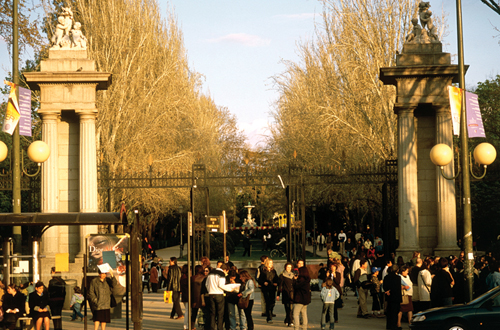
Puerta de la Independencia
The
handsome Independence Gate does not rightfully belong here. It was
designed by Antonio López Aguado as the entrance to a palace built by
Fernando VII for his second wife, Isabel de Bragança. It is, however,
the most important of the park’s 18 gates.

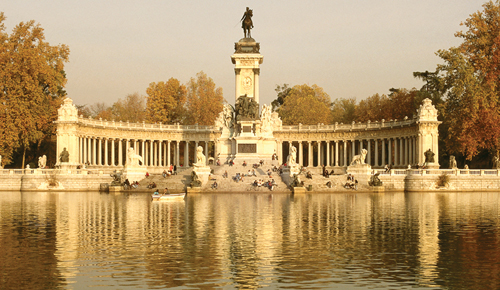
Estanque
The
boating lake is one of the oldest features of the park (1631). In the
days of Felipe IV it was the setting for mock naval battles. Rowing
boats are available for hire from the jetty. Once in a while the lake is
drained for cleaning and 6,000 fish have to find a temporary home.

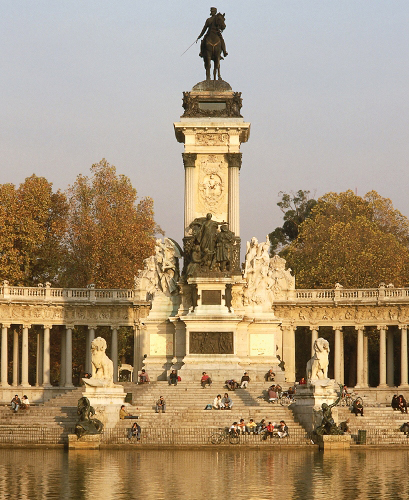
Monument to Alfonso XII
This
huge monument was conceived in 1898 as a defiant response to Spain’s
humiliating defeat in Cuba, but the plans were not realized until 1922.
The statue of the king is by Mariano Benlliure. The most impressive
feature is the colonnade, a popular spot with sun-worshippers.

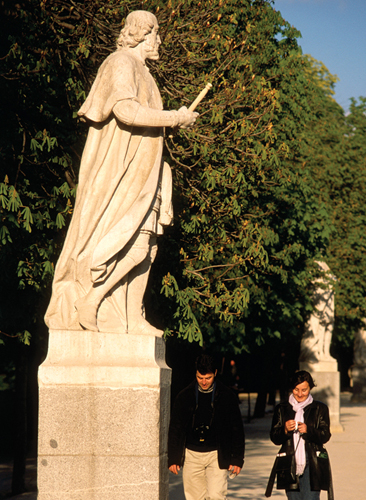
Paseo de las Estatuas
This
line of Baroque statues, representing the kings and queens of Spain,
other Iberian rulers and Aztec chief, Montezuma, was intended to
impress.

Casita del Pescador
The “fisherman’s house”, a typical 18th-century capricho
(folly), was a part of the re-landscaping of the park in the 1820s. A
waterwheel, concealed by the grotto and artificial hill, creates a
cascade.
Palacio de Velázquez
The
Retiro’s exhibition centre is the work of Ricardo Velázquez Bosco. The
tiled frieze nicely offsets the pink and yellow brick banding.
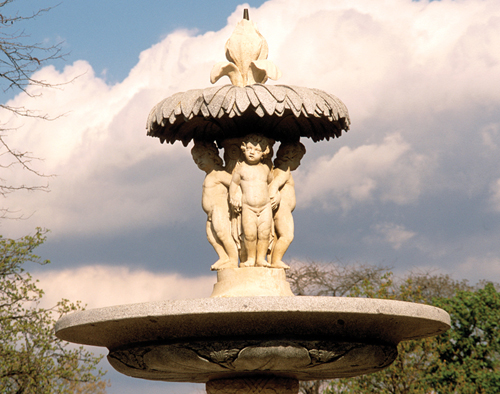
Fuente de la Alcachofa
The
“artichoke fountain” was designed by Ventura Rodríguez, and made of
Sierra de Guadarrama granite and Colmenar stone. The artichoke at the
top is supported by four cherubs.

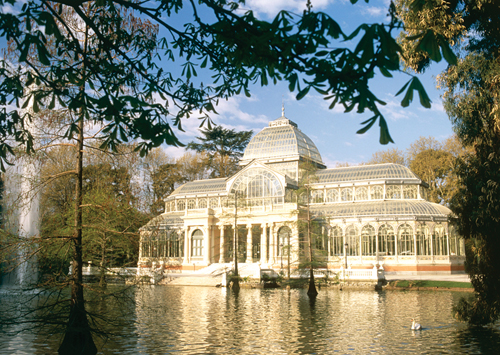
Palacio de Cristal
Mirrored in a lake and framed by trees, the Crystal Palace was inspired by its British namesake in 1887.

El Angel Caído
This
beguiling sculpture, the work of Ricardo Bellver, is said to be the
only public monument to the “fallen angel” (Lucifer) in the world. It
was unveiled in 1878.
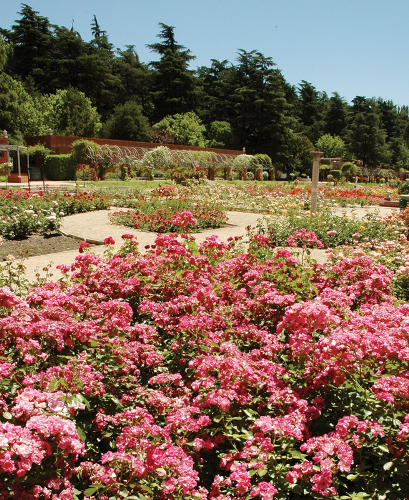
Rosaleda
The
rose garden holds more than 4,000 roses representing 100 different
varieties. Designed by the city’s head gardener, Cecilio Rodríguez, in
1915, it is modelled on the Bagatelle in the Bois de Boulogne, Paris.