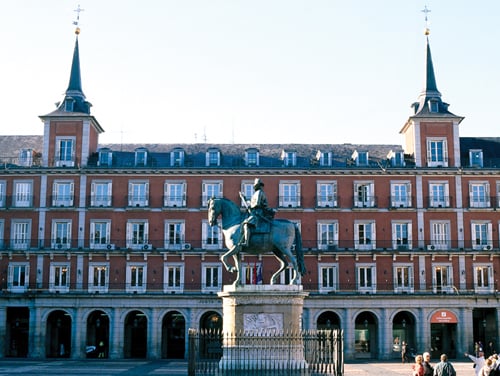
Madrid’s most famous square was built on a grand
scale. Capable of holding up to 50,000 people, it was intended to
impress and still does. Nowadays it’s a tourist attraction first and
foremost: a place for relaxing over a drink and watching the world go
by. Originally known as Plaza de Arrabal (“Outskirts Square”) because it
lay outside the city walls, Plaza Mayor was completed in 1619.
Following a fire in 1791, Juan de Villanueva (architect of the Prado)
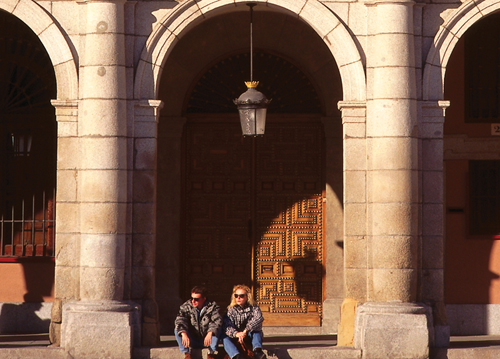
redesigned the square, adding the granite arch-ways that now enclose it.
During its history, Plaza Mayor has been a market, an open air theatre,
a bullring, a place of execution, and a backdrop for tournaments. Its
buildings are now mainly used by the city government.
The cellars of Moore’s
Irish bar (Calle Felipe III) were once used by the Inquisition to
torture the accused until they confessed to heresy, witchcraft and a
multitude of other crimes. Once condemned, they had to undergo a
ceremony known as the auto-de-fé
before being handed over to the secular authorities for punishment.
This macabre spectacle, which included a ritual procession and public
humiliations, lasted from dawn to dusk. The Plaza Mayor witnessed four autos-de-fé between 1624 and 1680. |
Stock up for a picnic on one of the square’s benches in the nearby Mercado de San Miguel.
|
|
The painted enamel street
signs for which Madrid is famous provide a clue to the original
inhabitants, such as Calle de los Botoneros (Buttonmakers’ Street). |
|
One of the city’s main tourist offices is located at
|
|
Top 10 Features
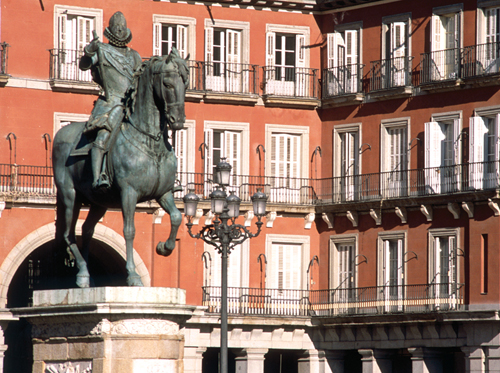
Statue of Felipe III
This
magnificent statue by two Italian artists, Pietro Tacca and
Giambologna, was moved here in the 19th century. Presented to Felipe III
in 1616 by the Florentine ruler Cosimo de’ Medici, it was originally in
the Casa de Campo.

Casa de la Panadería
This
house was the headquarters of the bakers’ guild, which had enormous
power controlling the price of grain. The portal survives from the
original building which burned down in 1672.

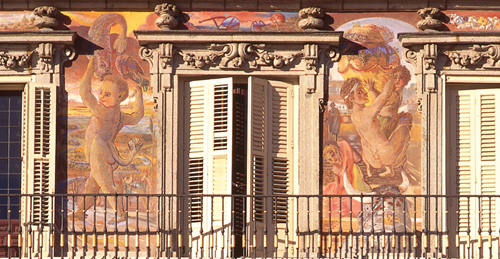
Casa de la Panadería Murals
In
the 1980s it was decided that the façade murals were past saving and a
competition was held for a new design. The winner, Carlos Franco,
painted allegories of the zodiac signs in 1992.
Casa de la Carnicería
The
Casa de la Carnicería was originally the meat market. Outside was a
gallows where criminals were executed. Next door to the building is the
main tourist office.

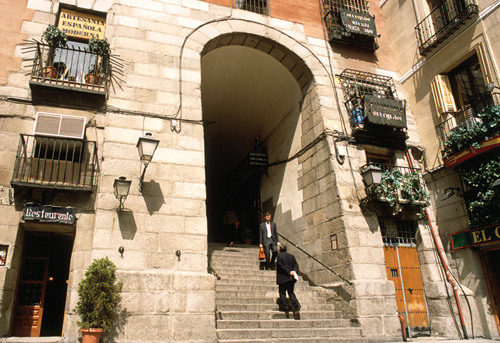
Arco de Cuchilleros
“Cutlers”
Arch is a reminder of the sword makers and knife grinders who once
plied their trades here. Today the street is famous for mesones (taverns) such as Las Cuevas de Luis Candelas, named after a 19th-century bandit said to have hidden in its cellars.

Cava San Miguel
When
the houses were built on this street adjacent to Plaza Mayor, huge
quantities of earth were removed from the foundations of the square. To
prevent its collapse, frontages on the Cava were designed as sloping
buttresses.
Arcade Shops
Buying
and selling has always been the life blood of Plaza Mayor. At El Arco
de los Cuchilleros (No. 9) all the items on sale have been made by local
artisans, continuing a centuries-old tradition.

Arcade shops
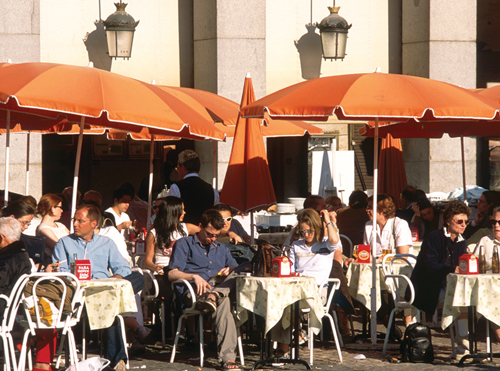
Terrace Bars and Restaurants
Bars
and restaurants put out tables in the summer months and relaxing over a
drink is the best way to appreciate the square. Look out for the
speciality bocadillo de calamares (bread roll filled with squid).

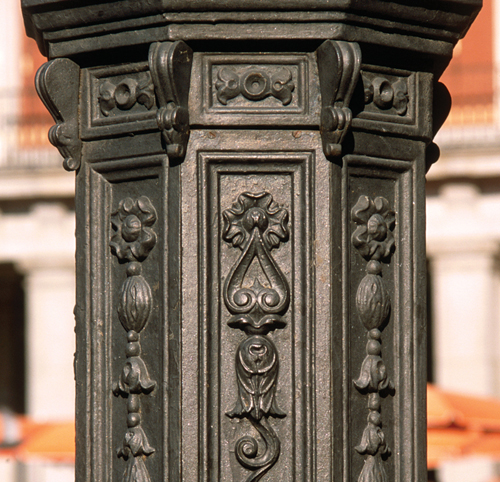
Lampposts
The
modern lamp-posts around the statue of Felipe III are engraved with
scenes depicting life on the square in days gone by. They include a
masquerade ball, an interrogation by members of the Inquisition and a
bullfight.

Stamp and Coin Market
Something
of a tradition, this market takes place every Sunday morning from
around 10am to 2pm and attracts amateur and expert collectors from all
over Spain. Otherwise enthusiasts should head for the specialist shops
on Calle Felipe III, Calle Mayor and outside the Arco de Toledo.