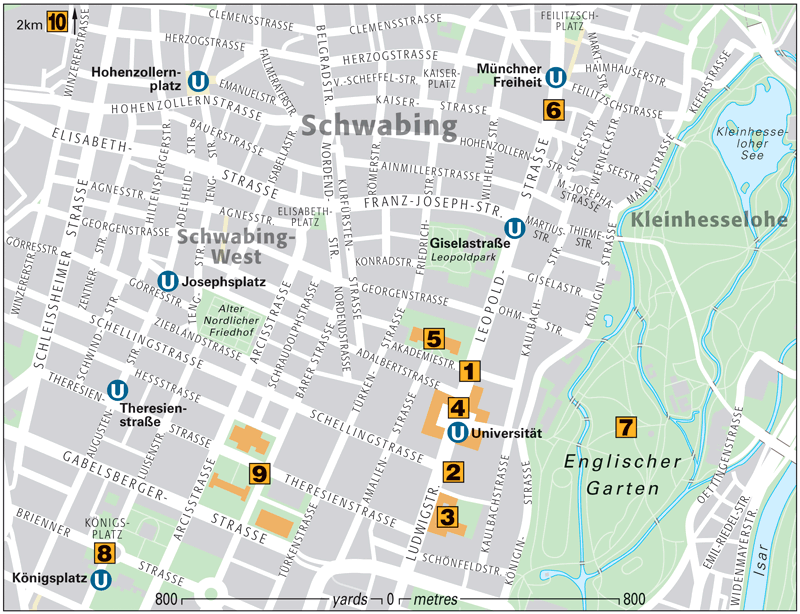
Encompassing Schwabing,
Maxvorstadt, and the fringes of Lehel, this district covers the entire
area lying to the left and right of Ludwigstraße and Leopoldstraße. At
the beginning of the 19th century, the expansion of the Old Town north
and west of Odeonsplatz began with the development of Maxvorstadt, then a
suburb. This is where you will find numerous museums, the university,
polytechnics, colleges, and libraries. Schwabing, an idyllic suburb to
the north, became a well-known bohemian district inhabited by artists
and intellectuals toward the end of the 19th century. Even today, you
can still feel the flair of this interesting area, the centre of Art
Nouveau in Germany.
Sights
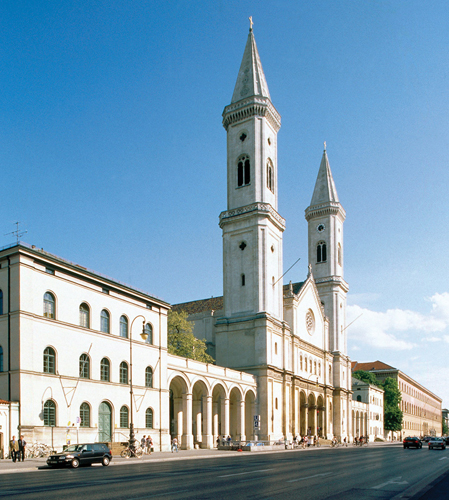
Ludwigstraße & Siegestor
After
the old town wall was pulled down, Ludwig I commissioned a monumental
boulevard in the Italian Renaissance style – the Ludwigstraße (1815–50).
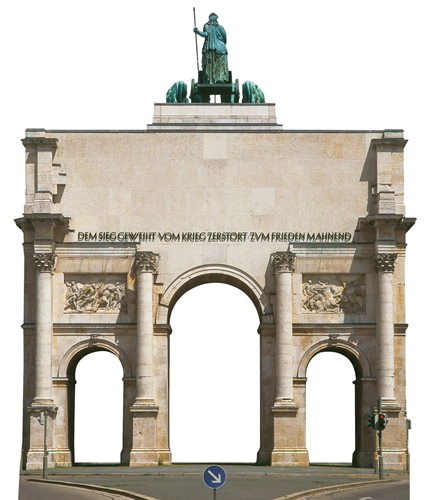
This splendid street is bounded by the Feldherrnhalle to the south and the Siegestor (Victory Gate) to the north. Based on the Arch of
Constantine in Rome, the Siegestor is crowned by the figure of Bavaria
riding a chariot drawn by four lions. Designed for victory parades in
honour of the Bavarian army, the gate, damaged in World War II, has been
restored. The 1958 inscription reads “Dedicated to victory, destroyed
in war, an entreaty for peace.”

Siegestor (Victory Gate)
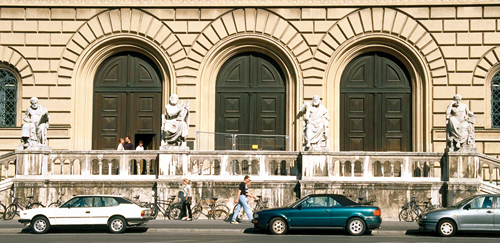
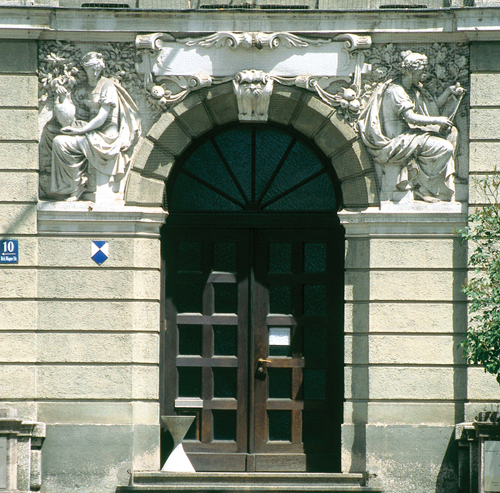
Bayerische Staatsbibliothek
The
Bavarian State library is the second-largest municipal library in
Germany, with more than 6 million volumes, 70,000 manuscripts, and
valuable handwritten documents and prints. It has as its nucleus the
16th-century collections of Albrecht V and Wilhelm V. Today’s building
is the work of F von Gärtner (1832–43) in the style of Italian
Renaissance palaces.Ludwigstr. 16

Bayerische Staatsbibliothek
Leopoldstraße & Münchner Freiheit
Passing
beneath the Siegestor, you will enter Schwabing and the district’s
principal promenade, the Leopoldstraße. Flanked by shops, pavement
cafés, and fast-food outlets, the boulevard has lost some of its 1960s
and ‘70s air, when a new generation of film-makers, students, and
bohemians set the tone, but there are still some interesting pockets.
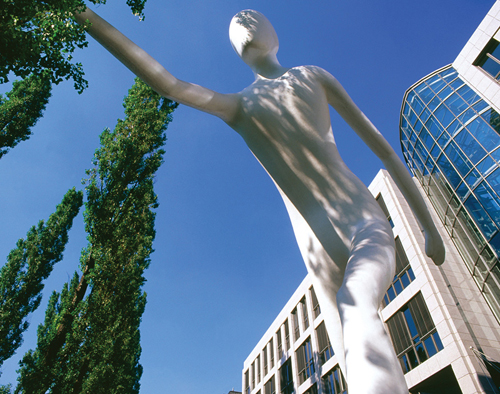
One of the route’s highlights is the Walking Man (1995), a 17-m-
(55-ft-) high sculpture by Jonathan Borofsky at Ainmillerstraße 36. On
the northern end of the Münchner Freiheit, in a café of the same name,
tables are set out in summer beneath a larger-than-life statue of actor
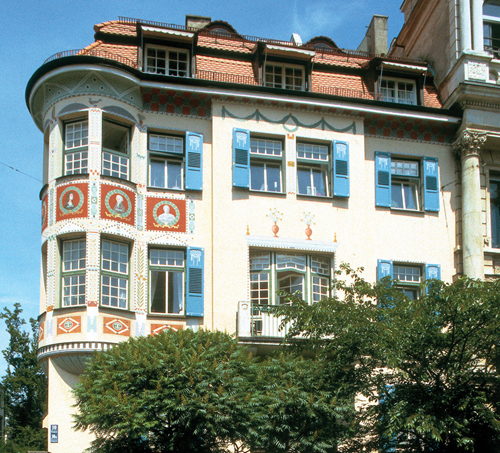
Helmut Fischer. Beautifully preserved Art Nouveau houses are to be found
on several side streets off Leopoldstraße, notably Georgenstraße (Nos.
8–10) and Ainmillerstraße (Nos. 20, 22, 33, 34, 35, and 37). Take a
detour onto Kaiserstraße for a glimpse of a pretty ensemble from the
Foundation Period. Hohenzollernstraße and the section of Maxvorstadt
bounded by Schelling-, Türken-, and Barerstraße, are packed with fun and
eccentric boutiques (see Boutiques & Shops
). Nearly all side streets off the south side of Leopoldstaße lead to the Englischer Garten.

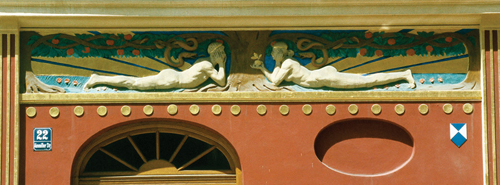
Art Nouveau decoration, Ainmillerstraße house

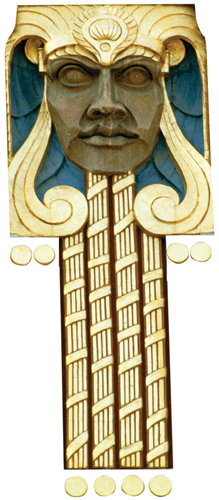
Art Nouveau ornament

Walking Man, by J Borofsky, Leopoldstraße

Pacelli-Palais – Art Nouveau Schwabing style
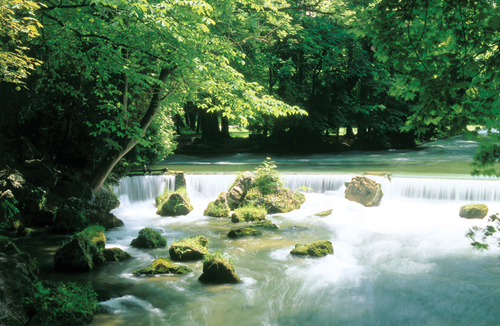
Englischer Garten
Schwabing’s
“backyard” is Germany’s largest urban park, offering a host of leisure
opportunities – walks, beer gardens (Seehaus, Chinesischer Turm,
Hirschau), jogging, boating, and – for the adventurous – surfing in the
Eisbach, a small rocky stream with icy waters. The streets to the south
of Münchner Freiheit lead almost directly to the Kleinhesseloher See and
the Seehaus beer garden in the park.

Around Königsplatz
Munich
owes its Royal Square, or Königsplatz, to Ludwig I and the vision of
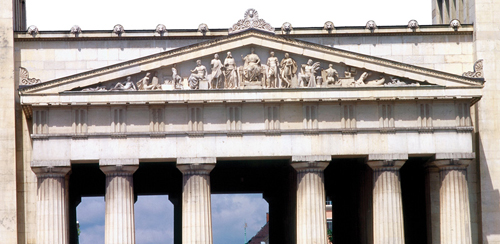
architect Leo von Klenze. The Propyläen (Doric) and the Glyptothek
(Ionic), housing a magnificent sculpture collection, and the
Antikensammlung (Corinthian), a collection of antiquities, were all
built between 1816 and 1862. Directly behind the Propyläen lies the Lenbachhaus ; and one block farther down, the Paläontologische Museum.
On the east side, the Königsplatz merges with the Karolinenplatz. The
obelisk at its centre is a memorial to Bavarian soldiers who died in
Napoleon’s Russian campaign. During the Nazi era, Königsplatz was used
for rallies and parades. Another relic of that era is today’s Academy of
Music and Theatre, then the so-called Führer-Bau, in which the infamous
Munich Agreement was ratified in 1938. Today, this magnificent square
is used for open-air events in summer.

Leo von Klenze’s Propyläen on Königsplatz