Deep green meadows,
snow-capped mountains, steep gorges carved out by streams, ancient
monasteries, and old houses with colourful painted façades – in this
region, Bavaria looks like a picture postcard come to life. Germany’s
highest peak, the towering Zugspitze (2,950 m/9,700 ft), soars into the
sky here. Locals also refer to the region encompassing
Garmisch-Partenkirchen, Oberammergau, and Murnau – set in the Alps and
the foothills against the impressive backdrop of the Wetterstein massif –
as Werdenfelser Land. The Alpine foothills of Bavaria offer cultural
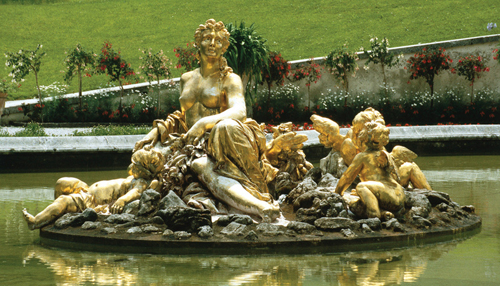
highlights, such as King Ludwig II’s Schloss Linderhof, and Münter house
in Murnau, as well as awesome natural beauty, in places such as Eibsee,
Partnachklamm, and Murnauer Moos. The full spectrum of attractions
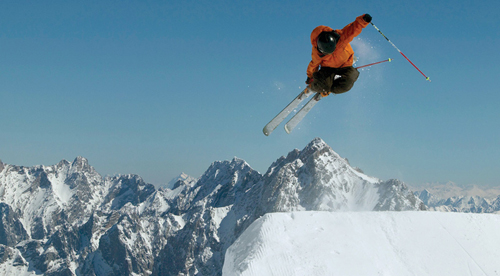
awaits summer and winter visitors. Excellent ski resorts around Garmisch
and on Zugspitz itself draw hordes of visitors in winter. A day
excursion by car is the most comfortable way of exploring this area.
However, there are excellent links by rail and bus between Munich and
the main attractions in the Zugspitz region.
|
|
|
Attractions
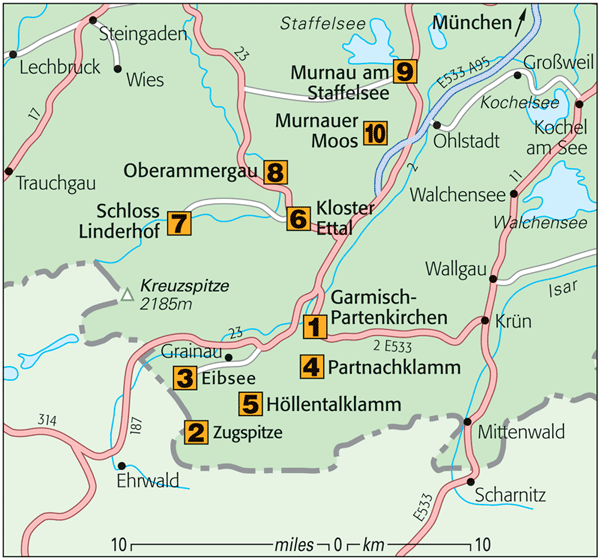
Garmisch-Partenkirchen
Located
at the base of the Wetterstein massif and the Zugspitze, the capital of
Werdenfelser Land is one of the most popular tourist attractions in
Germany. Garmisch-Partenkirchen, which has a population of 30,000, is
chiefly known as a winter sports resort. The Winter Olympics were held
here in 1936. In summer, the town draws just as many visitors as a spa
town and is an ideal base for mountain hiking and excursions into the
region.

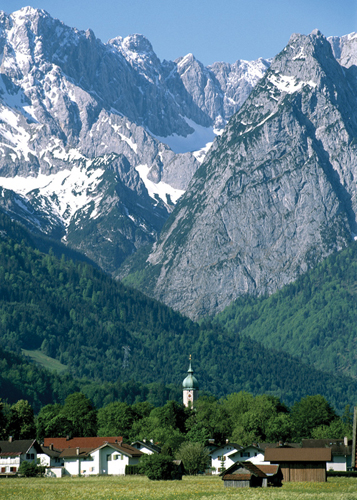
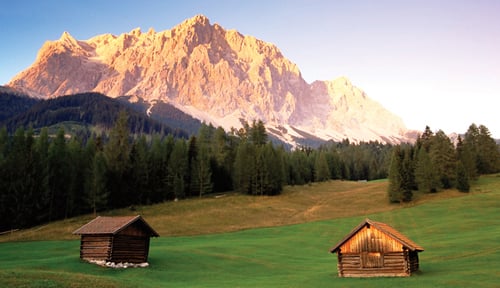
Garmisch, Zugspitz massif in the background

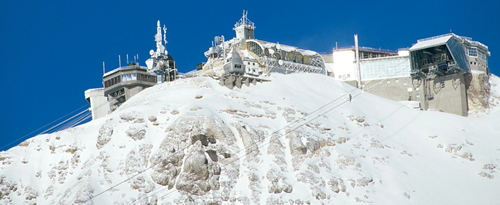
Zugspitze
One
of the best ways to enjoy Zugspitze is to take a round trip from the
base of the mountain on the mountain train and cable cars. In Garmisch,
the journey begins on a funicular, which takes you to the Schneeferner
glacier on the Zugspitzplatt. Here you switch to a cable car, which
ascends to the summit (2,950 m/9,700 ft). The observation platform
affords a spectacular panoramic vista – in clear weather, all the way to
the Dolomites in Italy. Take the Eibsee cable car on your return trip
down to the valley – you’ll be treated once again to wonderful views of
Eibsee, Garmisch-Partenkirchen, and Werdenfelser Land.

Zugspitzplatt

The Zugspitz region
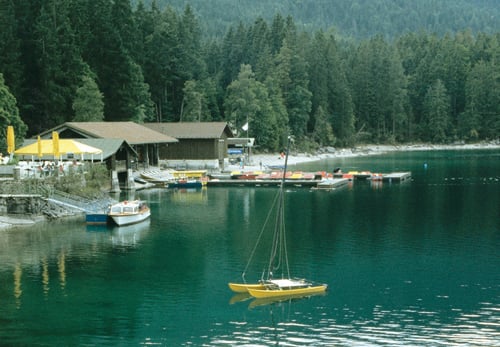
Eibsee
Embedded
in the rocky landscape of the Zugspitz massif, the deep blue waters of
Eibsee lie nearly 1,000 m (3,300 ft) above sea level. The lake formed
after a powerful rock avalanche created a deep crater. A walk around the
lake takes roughly two hours. The shore is dotted with many scenic bays
and idyllic beaches, which are perfect for taking a break or – in
summer – a dip in the lake.

Eibsee
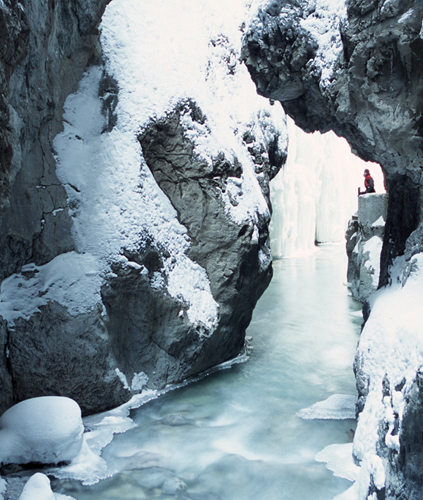
Partnachklamm
One
of the most impressive gorges in the Bavarian Alps, the Partnachklamm
is some 700 m (2,300 ft) long; the rock face along its sides reaches a
height of nearly 100 m (330 ft). A short walk from the Olympic ski-jump
stadium in Garmisch will take you to the entrance to the gorge.open year-round

Partnachklamm near Garmisch-Partenkirchen
Höllentalklamm
Located
near Garmisch at Grainach, this gorge is entirely different in
character to Partnachklamm. The Hammersbach stream tumbles through a
one-km- (half-mile-) long gorge down into the valley. Challenging hiking
paths lead through lit tunnels. Hiking boots and surefootedness are
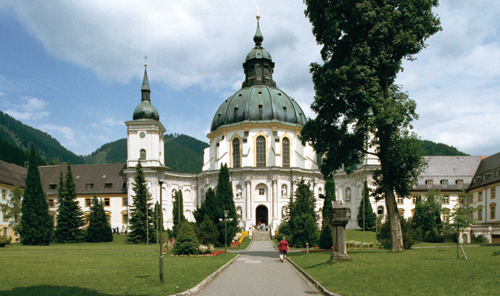
absolutely essential for an excursion in this gorge.Kloster Ettal
Founded
by Emperor Ludwig the Bavarian in 1330, the abbey now houses a boarding
school. The domed structure of the abbey church was reconstructed in
Bavarian Rococo style after a fire. Ettal monastery produces famous
herbal liqueurs – dry (green in colour), sweet (amber), and bitter
(brown).

Kloster Ettal
Oberammergau
This
historic spa town is world-renowned for its passion plays – lay theatre
performed by locals. Most of Oberammergau’s population participates in
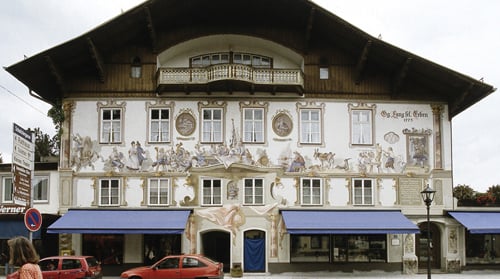
mounting the event once a decade. This picturesque town is also noted
for its façade frescoes. Franz Seraph Zwinck (1748–92), Germany’s most
famous façade frescoe painter, was born here.

Painted façade in Oberammergau
Murnau am Staffelsee
Painters
Wassily Kandinsky (1866–1944) and Gabriele Münter (1877–1962) and
writer Ödön von Horváth (1901–38) worked and lived in this picturesque
town. Follow in the footsteps of the Blue Rider art group – the
Münter-Haus and Schlossmuseum, in particular, are highly recommended.
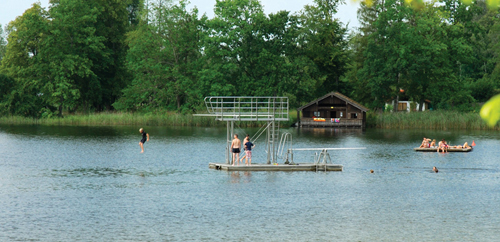
There is a beautiful walking path around the idyllic Staffelsee.Münter-Haus
Kottmüllerallee 6
0 88 41 62 88 80
Open 2pm–5pm Tue–Sun
Adm
Schlossmuseum
Schlosshof 4–5
0 88 41 47 62 01
Open 10am–5pm Tue–Sun (Jul–Sep: to 6pm Sat & Sun)
Adm

First edition of Blue Rider
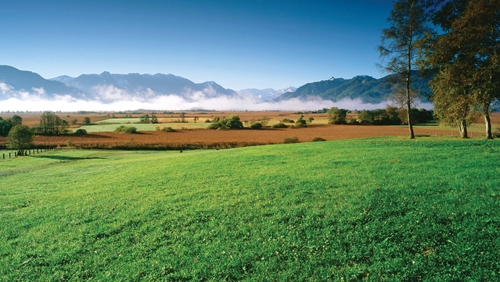
Murnauer Moos
At
32 sq km (12 sq miles), the Murnauer Moos is the largest continuous
fenland in Bavaria. It is home to several thousand animal species and
more than 900 plant species, many of which are threatened with
extinction and have been placed under protection in this conservation
area. Signposted paths through the fen provide beautiful hiking
opportunities in all seasons.

Cafés & Restaurants