To celebrate the birth of their son in 1664, the
Elector Ferdinand Maria and his wife Henrietta Adelaide of Savoy
commissioned Agostino Barelli to build a summer palace to the west of
Munich. The wings and annexe buildings were added from 1701 onwards. The
historic gardens to the rear of the palace beckon for a pleasant
stroll. Over the course of 300 years, the original ornamental garden was
expanded into a vast ensemble comprising a Baroque garden, a system of
canals, and small pavilions scattered throughout the park.
Schloss Nymphenburg
-
Tram 12, 16,17, Bus 51
-
089 179 08 0
Schloss, pavilions & Marstallmuseum
-
Open Apr–mid-Oct: 9am–6pm daily; mid-Oct–Mar: 10am–4pm daily
-
closed 1 Jan; Shrove Tue; 24, 25 & 31 Dec
-
Adm: (includes Schloss, pavilions, and the Marstallmuseum) €10 (reduced €8); in winter €8 (reduced €6)
Schlosspark
-
Open daily Jan–Feb, Nov: 6:30am–5pm; Mar: 6am–6pm; Apr–Sep: 6am–8:30pm; May–Aug: 6am–9:30pm; Oct: 6am–7pm; Dec: 6:30am–5:30pm
-
Park adm free. Free park tours in spring and autumn
|
|
In 1664, the site
featured an ornamental garden. This was enlarged in 1701 and a canal was
added. Its transformation into a formal Baroque garden began in 1715
under the direction of Dominique Girard and Joseph Effner, who built a
system of canals, fountains, hedged gardens, and a forest-like park.
Pavilions and lodges were added over the course of the 18th century. In
the 19th century, Friedrich L von Sckell reconfigured the park in the
style of an English landscape garden.
|
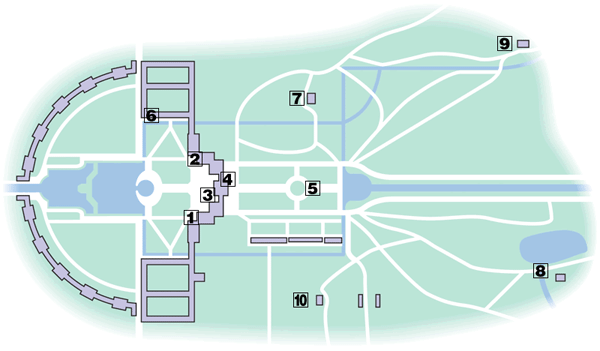
Plan of the Palace Gardens
Porcelain Factory
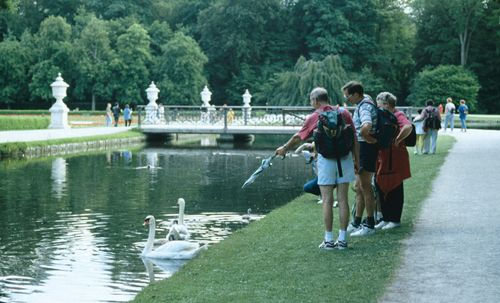
The canal in the gardens of Schloss Nymphenburg
|
The Palmenhaus café is a perfect spot to relax over a cup of coffee (08917 53 09).
|
|
|
Audio guides are available for a fee. Theme tours of the grounds are also offered.
|
|
|
The Porcelain Factory museum, located in an annexe, documents the history of the Nymphenburger Porzellan factory since 1747.
|
|
|
The Museum Mensch und Natur in the right wing of the palace features exhibits on natural science. Visit www.musmn.de
|
|
Top 10 Sights
-
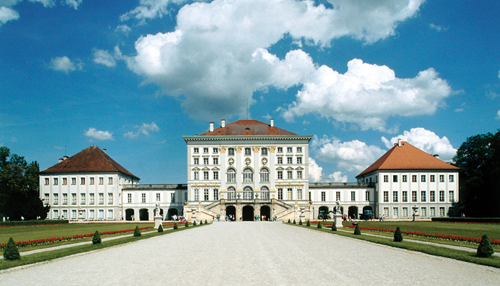
The Palace
Maximilian
II Emanuel and Karl Albrecht expanded the original 1664 villa by adding
buildings designed by Enrico Zucalli and Joseph Effner. Arcaded
galleries connect them to the main building, contributing to the harmony
of the ensemble.
-
Gallery of Beauties
Ludwig
I commissioned Joseph Stieler to create a gallery of beauties – a
collection of portraits of noblewomen, townswomen, and dancers – such as
Helene Sedlmayr, a beautiful tailor’s daughter.
-
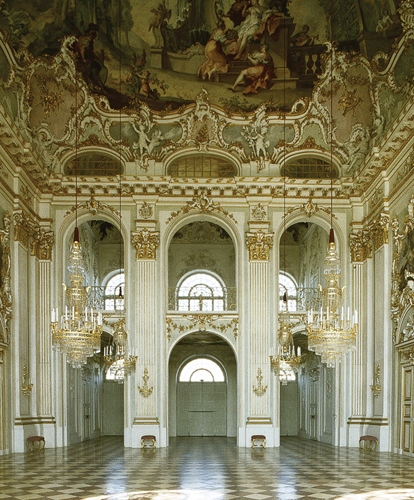
Steinerner Saal
The
Rococo embellishment in the spacious ballroom was created by Johann B
Zimmermann and Cuviliés the Elder during the reign of Maximilian III
Joseph.
-
Lackkabinett
Exquisite Chinese motifs in black lacquer on wood panelling are reprised in the Rococo ceiling fresco
.
-
Palace Gardens
Symmetrically
laid-out French gardens to the rear of the palace give way to an
English-style landscaped park, which was established using the existing
forest. The gardens feature pavilions, lodges, fountains, ornamental
ponds, and other park installations.
-
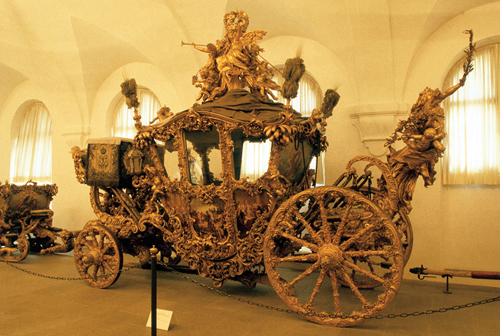
Marstallmuseum
This
building houses carriages and sleighs that once belonged to the
Bavarian rulers. Ludwig II’s gilded state coach is one such example.
-
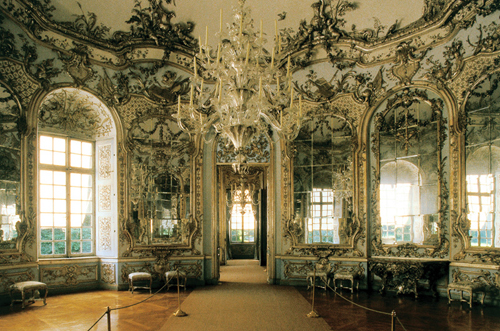
Amalienburg
Built
by Cuviliés the Elder between 1734 and 1739 for Electress Amelia, this
small hunting lodge is a masterpiece of European Rococo
.
-
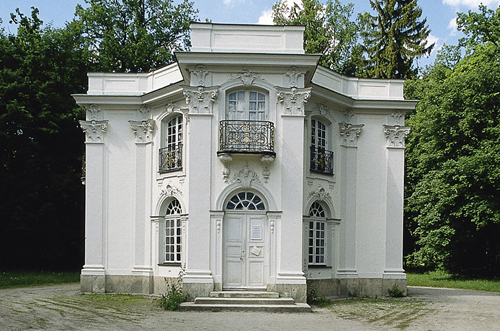
Pagodenburg
In
this 18th-century pavilion with an unusual octagonal floorplan, Western
and Eastern ornamentation is beautifully combined. The ground floor is
decorated with Delft tiles.
-
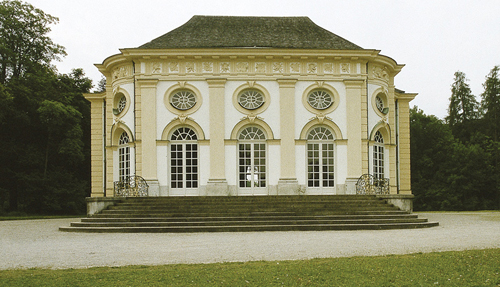
Badenburg
Featuring
a ballroom and a two-storey bathing hall containing a heated pool –
making it one of Europe’s first – this pavilion is definitely worth a
visit. Three of the pavilion’s rooms are lined in costly Chinese
wallpaper.
-
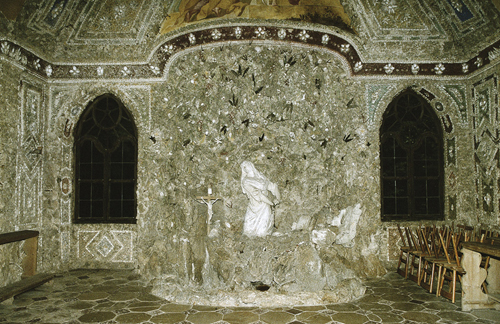
Magdalenenklause
Grottoes
and follies were an expression of 18th-century romantic yearnings. This
folly contains rooms of monastic severity, which served as a peaceful
retreat for Maximilian Emanuel, along with a chapel located in a grotto.