These two ethnic enclaves are
among the most colorful parts of the city. Each was settled by early
immigrants, who preserved their own language, customs, and food in the
midst of the new and foreign land. Little Italy has dwindled to a few
blocks, but it is still an atmospheric center of authentic Italian food
and shops, especially on a warm night, when cafés set out sidewalk
tables and the songs of Napoli fill the air. Chinatown, however,
continues to grow. Up to 150,000 Chinese live there, in crowded
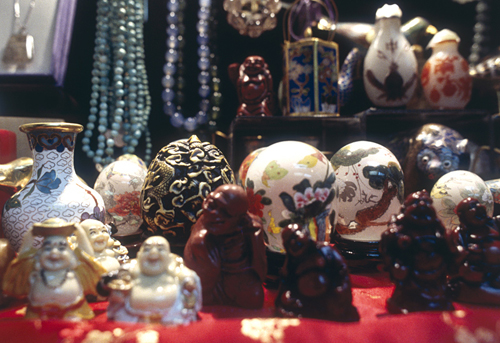
quarters. The shops and sidewalk markets overflow with exotic foods and
herbs, as well as gifts ranging from backscratchers to fine antiques;
and it has been estimated that Chinatown contains an astounding 200
restaurants.
Sights
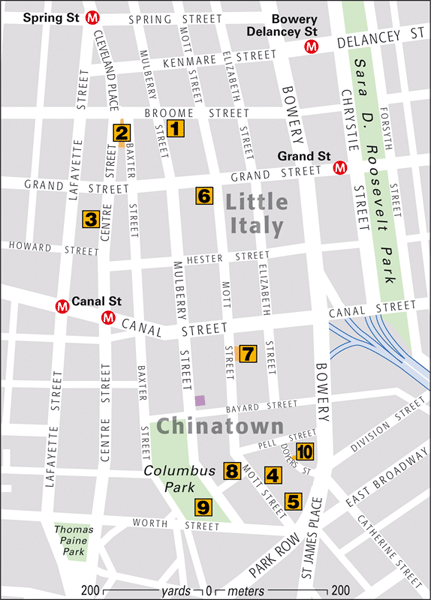
Mulberry Street
There
are many trendy shops on Mulberry Street from Houston down to Spring
Street and though Chinatown is overrunning much of Little Italy, the
block between Broome and Canal remains strictly Italian. It is filled
with restaurants, coffee shops with tempting Italian pastries, and
stores selling pasta implements, statues of saints, and T-shirts saying
“Kiss Me, I’m Italian.”Mulberry St between Broome & Canal Sts

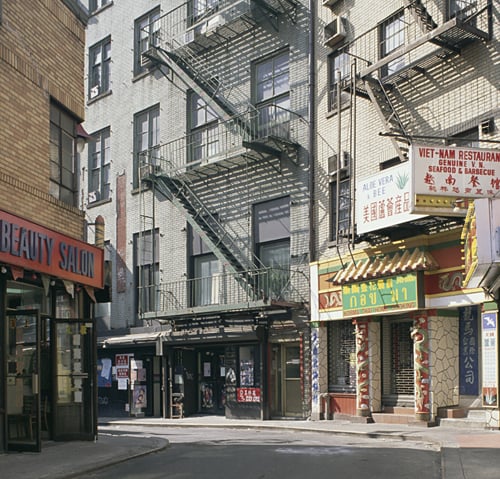
Street scene, Chinatown
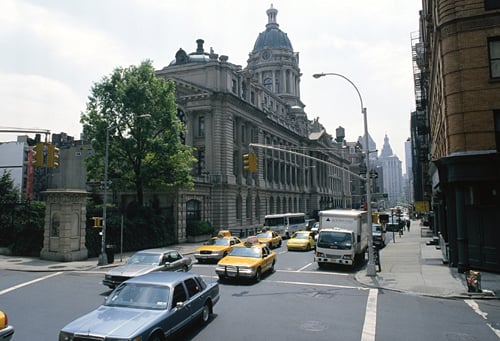
Police Headquarters Building
After
the boroughs merged into Greater New York in 1898, the city’s police
department expanded rapidly. This 1905 headquarters near Little Italy
was the result, a monumental, columned Baroque structure fit for “New
York’s Finest,” with an ornate dome tall enough to be seen from City
Hall. The strange shape of the building fits a wedge-shaped lot. Empty
for more than a decade after the department relocated in 1973, the
building has since been converted into luxury cooperatives, the Police
Building Apartments.240 Centre St
Closed to public

Police Headquarters Building

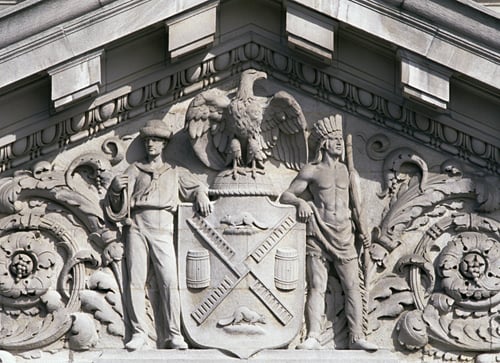
Detail, Police Headquarters Building

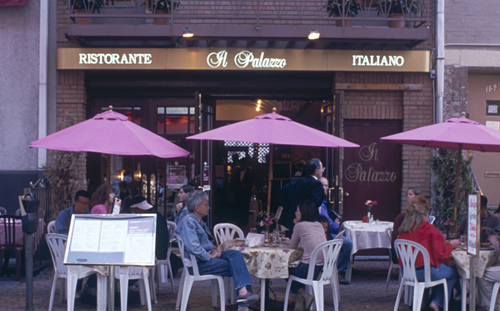
Il Palazzo, Little Italy
This
fascinating museum, devoted to the Chinese experience in the West,
features an exhibit called “Where is Home?,” with personal stories,
photographs, and poetry culled from the community. Among the topics
explored are women’s roles, religion, and the “bachelor society.”
Changing exhibits range from art to the experience of gay Chinese.
Books, area guides, and free flyers on cultural events are available.211–215 Centre St
Open noon–6pm Tue–Thu, Sat–Sun, noon–7pm Fri
Admission charge, free Fri
Mott Street Shopping
Clustered
on this block are shops with a wonderful selection of Oriental goods.
Iki Iki Gift Shop is a paradise for fans of Yu-Gi-Oh! and Hello Kitty.
Lamps made from attractive Oriental vases are the specialty of Pearl of
the Orient Gallery, while New Age Designer makes clothing to order in
your choice of jewel-hued silks. Serious antiques collectors should head
to the Sinotique Gallery.Iki Iki Gift Shop
2 Mott St
Sinotique Gallery
19A Mott St
Pearl of the Orient Gallery
36 Mott St
New Age Designer
38 Mott St
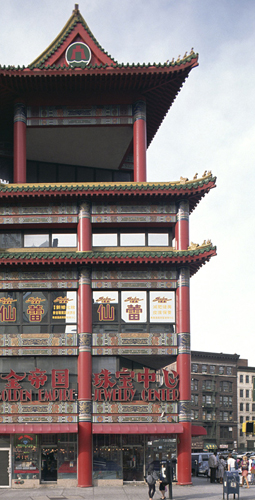
Pearl River Chinese Products Emporium
The
largest department store in Chinatown has a fascinating potpourri of
goods for sale. There are Chinese musical instruments, paper lanterns,
kites, dried herbs, embroidered silk tops, dresses and pajamas with
mandarin collars, purses, dolls, pillows, and sandalwood and jasmine
soaps.477 Broadway

Pearl River Chinese Products Emporium
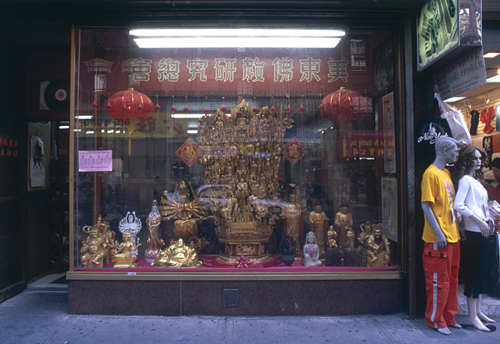
Eastern States Buddhist Temple
Step
into the incense-scented interior, where offerings of fresh fruit are
piled high, and more than 100 gold Buddhas gleam in the candlelight. The
temple takes advantage of Chinatown’s tourist traffic by offering $1
fortunes for sale near the front.64B Mott St
Open 8am–6pm daily
Free

Eastern States Buddhist Temple
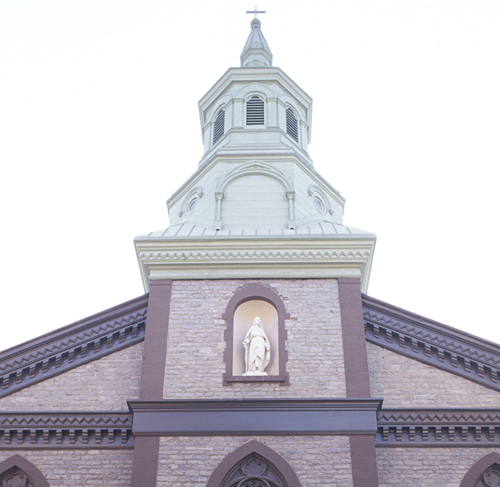
Church of the Transfiguration
Built
by the English Lutheran Church in 1801 and sold to the Roman Catholic
Church of the Transfiguration in 1853, this Georgian-style stone church
with Gothic windows is typical of the influence of successive influxes
of immigrants in New York. The church has changed with the nationalities
of the community it serves, first Irish, then Italian, and now Chinese.
As the focal point of today’s Chinese Roman Catholic community, it
offers classes and services to help newcomers and holds services in
Cantonese and Mandarin.29 Mott St
Open 7:30–9am & 11:30am–1pm daily, 5:30–7pm Sat, 8am–2pm Sun
Free

Church of the Transfiguration
Columbus Park
Chinatown’s
only park was created in the late 1890s as a result of the campaigning
of newspaper reporter Jacob Riis and other social reformers. It filled a
stretch of the city that at the time was New York’s worst slum, where
Riis reported a stabbing or shooting at least once a week. Though it
features more concrete than greenery, the park is popular today, filled
with Chinese kids at play, mah jong players, and people practicing tai chi and martial arts. On the weekends, Chinese fortune-tellers sometimes set up shop in the park.Bayard and Mulberry Sts
Bloody Angle
The
name for this sharp curve on Doyers Street was coined by a newspaper
because this was the site of so many gangland ambushes during the 1920s.
It was a period when the Hip Sing and On Leong tongs, groups similar to criminal gangs, were fighting for control of the opium trade and gambling rackets in Chinatown. The tong wars continued off and on until at least the 1940s, and their rivalries continue in the present-day youth gangs.

Bloody Angle, Chinatown