The area between Morningside Park and the
Hudson River, from 110th–125th streets, is dominated by Columbia
University and two important churches. Further west and extending north
is Harlem, America’s best-known African-American community. In the
1880s, when rail connected the neighborhood to Midtown, the large
townhouses were occupied by Irish, Italian, and Jewish families, but by
the 1920s black families predominated. The Harlem Renaissance, when
nightclubs with black entertainers were frequented by whites, ended
with the Depression. Nevertheless, recent development is reviving the
area, causing some to declare a second Renaissance.
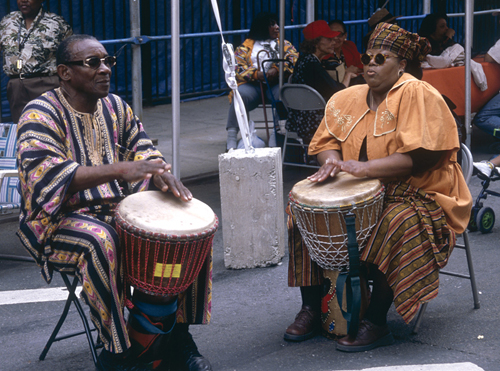
Streetside musicians
Sights
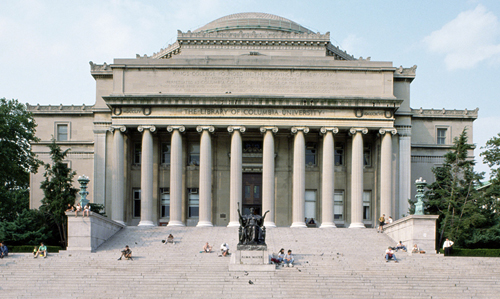
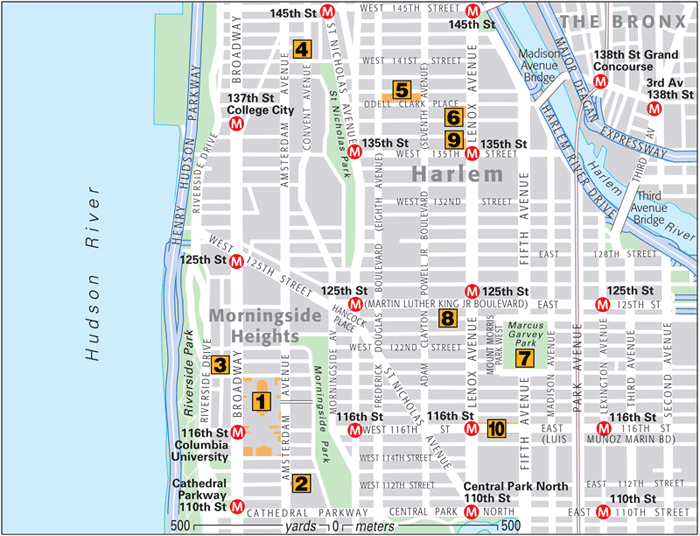
Columbia University
One
of America’s oldest universities, noted for its law, medicine, and
journalism schools, Columbia was founded in 1754 as King’s College. It
moved in 1897 to its present campus, designed by Charles McKim. Notable
buildings include McKim’s 1898 Low Library, and St. Paul’s Chapel with
three windows by La Farge.West 116th St at Broadway

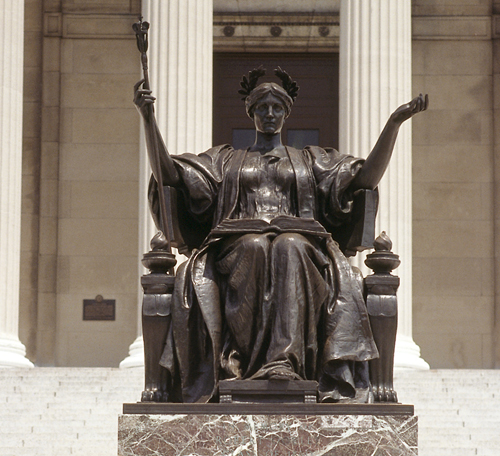
Columbia University

Front of Columbia University Library
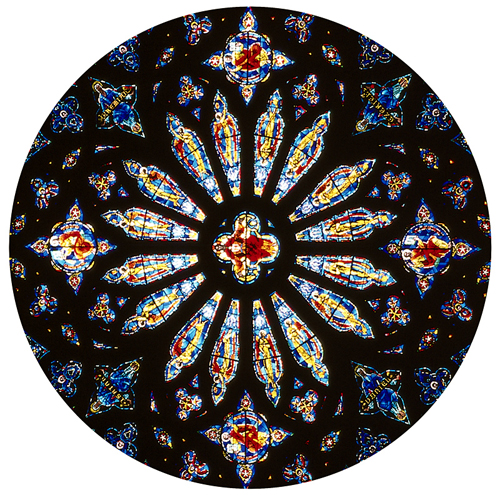
Cathedral Church of St. John the Divine
The
mother church of the Episcopal Diocese of New York, begun in 1892 and
still incomplete, is the largest cathedral in the world. Over 600 feet
(180m) long and 320 feet (96m) wide, the church is a mix of Romanesque
and Gothic styles. Its most impressive features include the west
entrance, the rose window, bay altars, and the Peace Fountain on the
south lawn. The medieval stone carving techniques used on the building
are taught in workshops for disadvantaged youths .1047 Amsterdam Ave at 112th St
Open 7am–6pm Mon–Sat, 1–7pm Sun (to 6pm Jul–Aug)
Free

Rose Window, St. John the Divine
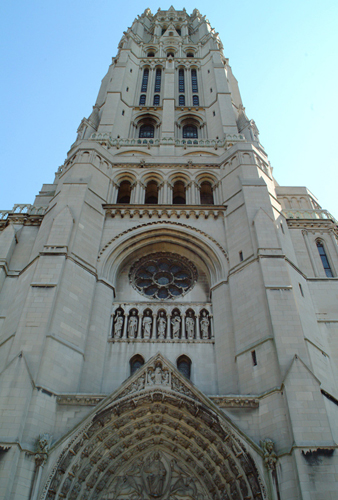
Riverside Church
This
skyscraper Gothic church modeled on Chartres cathedral and financed by
John D. Rockefeller Jr. in 1930, has a 21-story tower with wonderful
Hudson River views. Inside the tower is the world’s largest carillon in
the world, dedicated to Rockefeller’s mother. The brilliant
stained-glass windows are copies of those at Chartres with four notable
exceptions – the early 16th-century Flemish windows on the east wall.
The congregation has long been active in liberal social causes.490 Riverside Drive, between 120th and 122nd Sts
Open 7am–midnight daily

Riverside Church
Hamilton Heights Historic District
Once
part of the country estates of the wealthy, like Alexander Hamilton
whose 1802 home, Hamilton Grange, is here, this location on a hill
above Harlem became desirable in the 1880s when an elevated rail line
was built. Fine residences went up between 1886 and 1906, and in the
1920s and 30s they attracted Harlem’s elite, when the area was dubbed
Sugar Hill. Chief Justice Thurgood Marshall and musicians Count Basie,
Duke Ellington, and Cab Calloway were among those who lived here.West 141 St to West 145th St
St. Nicholas Historic District (Strivers’ Row)
These
fine houses, originally known as the King Model Houses, went up in 1891
when Harlem was a neighborhood for the gentry. Three architects,
including McKim, Mead, and White, managed to blend Renaissance,
Georgian, and Victorian styles and create a harmonious whole.
Successful African-Americans moved here in the 1920s and 30s, giving
rise to the nickname Strivers’ Row.202–250 West 138th St, between Powell and Frederick Douglass Blvds
Abyssinian Baptist Church
One
of the oldest and most influential African-American churches in the
U.S. was organized in 1808 by a group protesting segregation within the
Baptist church. The congregation became politically active (starting in
1908) under such leaders as congressman Adam Clayton Powell, Jr. Today
the church is widely attended on Sundays by many who come to hear the
wonderful gospel choir.132 West 138th St, at Powell Blvd
Sunday services 9am & 11am
Marcus Garvey Park
A
black nationalist who encouraged emigration to Africa, Garvey became a
hero of the Black Pride movement, and the park’s name was changed from
Mount Morris in 1973 to honor him. It adjoins the Mount Morris
Historical District of handsome houses and churches from an earlier,
affluent, German-Jewish era. In the 1920s, as Harlem became mostly
African-American, the synagogues became churches, and the houses were
divided up.West 120th to West 124th Sts, between Lenox & 5th Aves
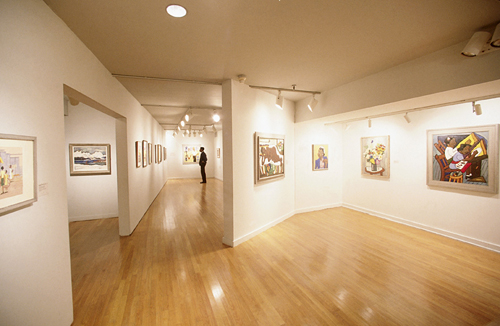
Studio Museum in Harlem
Opened
in 1967 as an artists’ studio, the organization expanded to become an
important center for work by black artists. A local bank donated space
for the present building, which opened in 1982 and has undergone a
major expansion to add more gallery space, an enlarged sculpture
garden, an auditorium, and a café.144 West 125th St, at Lenox Ave
Open noon–6pm Wed–Fri, Sun, 10am–6pm Sat
Donations

Studio Museum, Harlem
Schomburg Center for Research in Black Culture
This
complex, opened in 1991, houses the largest research center for African
and African-American culture in the U.S. The immense collection was
assembled by the late Arthur Schomburg, who became curator when the
collection was given to the New York Public Library. The original
building was the unofficial meeting place for writers in the black
literary renaissance of the 1920s, and the present building includes a
theater and two art galleries.515 Lenox Ave at 135th St
Open noon–8pm Tue–Wed, noon–6pm Thu–Fri, 10am–6pm Sat
Free
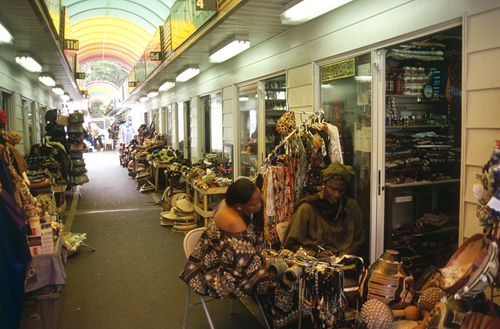
Malcolm Shabazz Mosque/Harlem Market
The
mosque, Masjid Malcolm Shabazz, was the ministry of the late Malcolm X,
and the area around it has become the center of an active Muslim
community. Local shops sell books, tapes, and Muslim clothing, and
restaurants serve Sengalese cuisine. Street vendors who used to crowd
the sidewalks of 125th Street have been moved into an organized complex
of market stalls selling African art, dolls, drums, masks, dashiki
shirts, and fabrics in African prints.Mosque
102 West 116th St at Lenox Ave
Open 10am–8pm daily
Free
Harlem Market
52–60 West 116th St, between 5th & Lenox Aves
Open 10am–6pm daily
Free

Harlem Market