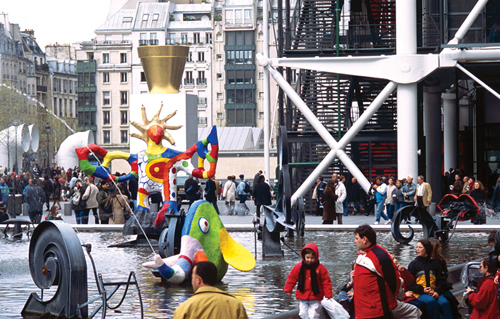
The small but lively Beaubourg quarter, brimming with
art galleries and cafés, has become a major tourist attraction since
the construction of the Centre Georges Pompidou. This inside-out hulk of
modern architecture has become the focus of the area and is France’s
third most visited site after the Musée du Louvre and the Eiffel Tower.
Les Halles was the marketplace of Paris for 800 years, its glass-covered
pavilions packed with butchers, fishmongers and fruit and vegetable
stalls; novelist Emile Zola called it “the belly of Paris”. In 1969, the
market was demolished and moved to the suburbs to alleviate traffic
congestion. Sadly, the soulless underground shopping mall, Forum des
Halles, replaced it, but there are still a few old-time bistros and
specialist food shops that survive to recall its former character.
Sights
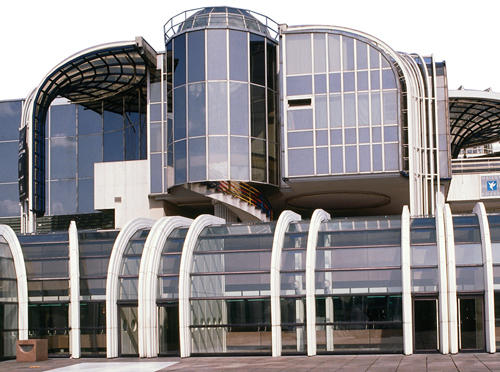
Forum des Halles
Ten
years after the original market was demolished, the so-called “largest
urban hole in Europe” was filled with this controversial shopping
complex. This largely underground maze caters to the young, with music
shops and boutiques. Outside, buskers, young people and tourists throng
the steps and gardens (not a place to linger at night). Separate metal
and glass buildings house the Pavillion des Arts and the Maison de la
Poésie, centres for art and poetry respectively. Today, it’s more of a
sore spot than a hotspot and French architect David Mangin has been
commissioned to oversee its renovation, although a start-date has not
yet been decided.

Forum des Halles

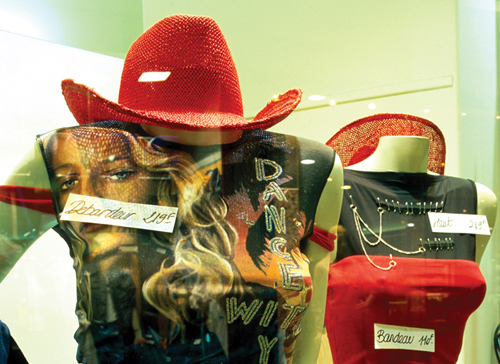
Fashion in Les Halles
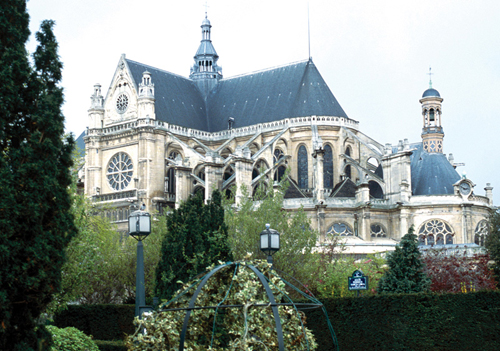
St-Eustache
With
its majestic arches and pillars, St-Eustache is one of the most
beautiful churches in Paris. Although Gothic in design, it took 105
years to build (1532– 1637) and its interior decoration reflects the
Renaissance style of this time. The church was modelled on Notre-Dame,
with double side aisles and a ring of side chapels. The stained-glass
windows made from sketches by Philippe de Champaigne (1631) and the
ornate tomb of politician Jean-Baptiste Colbert (1619–83) are
highlights. Don’t miss the naive sculpture in Chapelle St-Joseph which
recalls Les Halles’ market days.2 impasse St-Eustache, 75001
Open 9:30am–7pm Mon–Fri, 10am–7pm Sat, 9:15am–7pm Sun
Free

St-Eustache
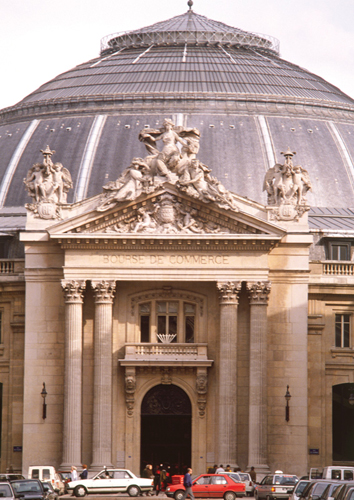
Bourse du Commerce
The
circular building which houses the Commodities Exchange was erected as a
grain market in 1767 and remodelled in the 19th century. It was first
covered with a wooden dome, then by subsequent structures of iron and
copper. Under today’s glass dome, activity in the world commodities
market proceeds at a leisurely pace compared to the way other financial
centres operate.Le Défenseur du Temps
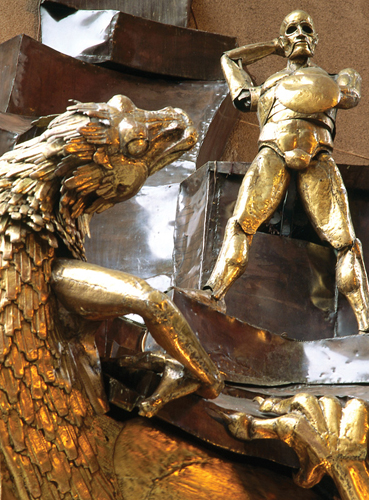
The
“Defender of Time”, Paris’s modern public clock, stands in the grim
Quartier de l’Horloge (Clock Quarter) shopping area. This fantasy
mechanical sculpture of brass and steel by Jacques Monastier is 4 m (13
ft) high and weighs one tonne. When the clock strikes the hour, the
warrior fends off a savage cockerel, crab or dragon (representing air,
water and earth) with his sword, with accompanying sound effects. At
noon, 6pm and 10pm he vanquishes all three (when the clock is working).Rue Bernard-de-Clairvaux, 75003

Le Défenseur du Temps

Fontaine des Innocents
The
Square des Innocents is a Les Halles crossroads and a hang-out for
street performers and young people. It was built atop a cemetery in the
18th century, and two million human remains were transferred to the
Catacombs at Denfert-Rochereau. The Renaissance fountain, the last of
its era built in the city, was designed by Pierre Lescot and carved by
sculptor Jean Goujon in 1547. It originally stood against a wall on rue
St-Denis, and was later moved to the new square, when the fourth side
was added .Eglise St-Merry
Formerly
the parish church of the Lombard moneylenders, St-Merry was built
between 1520 and 1612, and reflects the Flamboyant Gothic style. Its
name is a corruption of St-Médéric, who was buried on this site in the
early 8th century. The bell in the church’s northwest turret, thought to
be the oldest in Paris, dates from 1331 and hung in a chapel which once
stood on the site. Other highlights include the decorative west front,
the 17th-century organ loft, beautiful stained glass and carved wood
panelling.76 rue de la Verrerie, 75004
Open noon–6:45pm daily
Free
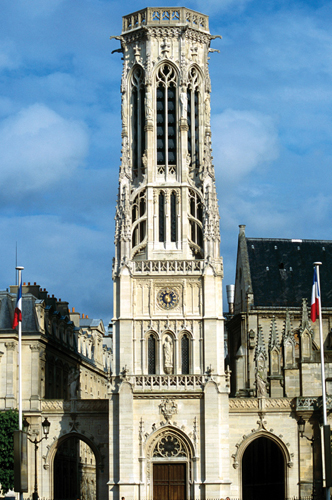
St-Germain l’Auxerrois
When the Valois kings moved to the Louvre palace in the 14th century ,
this became the church of the royal family. On 24 August 1572, the
tolling of its bell was used as the signal for the St Bartholomew’s Day
Massacre, when thousands of Huguenots who had come to Paris for the
wedding of Henri of Navarre to Marguerite of Valois
were murdered. The church features a range of architectural styles,
from its flamboyant Gothic façade to its Renaissance choir. Try and
visit on Sunday afternoon when there are organ recitals.2 pl du Louvre, 75001
Open 8am–8pm daily
Free

St-Germain l’Auxerrois
Musée de la Poupée
This
delightful museum has a superb collection of 300 rare French dolls,
including unglazed hand-painted porcelain dolls which were manufactured
between 1850 and 1950. Many are imaginatively displayed in tableaux
which portray various scenes, such as dolls having tea or playing with
nursery toys. The museum also runs a doll hospital where doll doctor
Véronique Derez works miracles on dolls of all ages.Impasse Berthaud, 75003
Open 10am–6pm Tue–Sun
Closed public hols
Admission charge
Tour St-Jacques
The
late Gothic tower, dating from 1523, is all that remains of the church
of St-Jacques-la-Boucherie, once the largest medieval church in Paris
and a starting point for pilgrims on their journey to Santiago de
Compostela in Spain. In the 17th century the physicist Blaise Pascal
used the tower for barometrical experiments. The church was pulled down
after the Revolution. The tower reopened to the public in 2009 after a
lengthy restoration. Visitors can explore the gardens around the base,
but are not allowed to climb up the tower.Pl du Châtelet, 75004