For many, the Marais is the
most enjoyable quarter of Paris, with its mansions, museums and medieval
lanes, but the district was little more than a muddy swamp until Henri
IV built the place Royale (now place des Vosges) in 1605. Following its
notoriety as the birthplace of the Revolution, the Bastille district
sank into oblivion, until artists and designers arrived in the 1990s.
Its streets are now home to the city’s liveliest nightspots.
Sights
Musée Picasso
When
the Spanish-born artist Pablo Picasso died in 1973, his family donated
thousands of his works to the French state in lieu of estate taxes. Thus
Paris enjoys the largest collection of Picassos in the world. Housed in
the Hôtel Salé,
the museum displays the range of his artistic development, from his
Blue and Pink Periods to Cubism, and reveals his proficiency in an
astonishing range of techniques and materials . The museum is closed for renovation work, which should be completed by 2012.5 rue de Thorigny, 75003
Closed for refurbishment from Aug 2009
Admission charge (free first Sun of month)

Musée Cognacq-Jay
This
small but excellent museum portrays the sophisticated French lifestyle
in the so-called Age of Enlightenment, which centred around Paris. The
18th-century art and furniture on display were once the private
collection of Ernest Cognacq and his wife, Louise Jay, founders of the
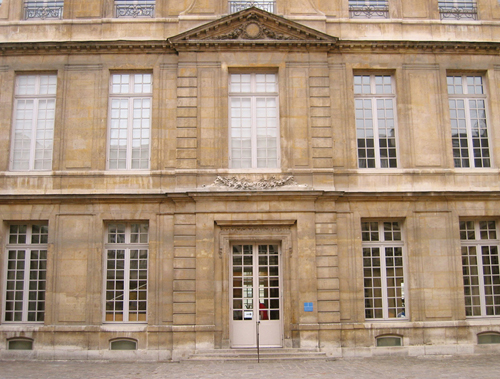
Samaritaine department store. It is superbly displayed in the Hôtel
Donon, an elegant late 16th-century building with an 18th-century façade .8 rue Elzévir, 75003
Open 10am–6pm Tue–Sun

Musée Cognacq-Jay
Place des Vosges
Paris’s
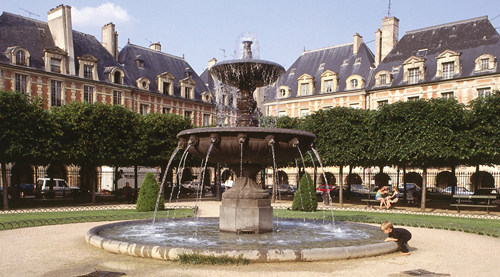
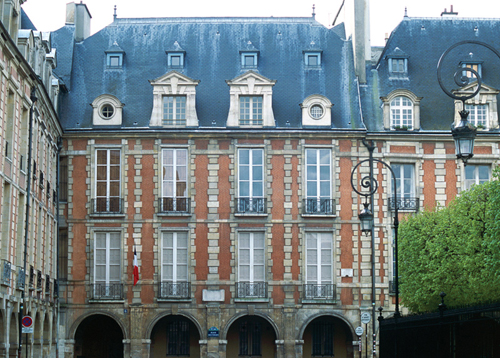
oldest square is also one of the most beautiful in the world.The square was commissioned by Henri IV. Its 36 houses with
red-gold brick and stone façades, slate roofs and dormer windows were
laid out with striking symmetry in 1612.
Originally built for silk workers, the likes of Cardinal Richelieu
(1585–1642) and play-wright Molière (1622–73) quickly moved in and it
remains an upper-class residential address. But everyone can enjoy a
stroll around the area and the art galleries under the arcades.

Place des Vosges
Musée Carnavalet
Devoted
to the history of Paris, this museum sprawls through two mansions, the
16th-century Carnavalet and 17th-century Le Peletier de Saint-Fargeau.
The former was the home of Madame de Sévigné, the famous letter-writer,
from 1677–96 and a gallery here portrays her life. The extensive museum
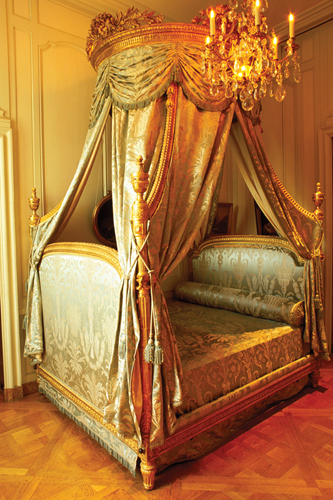
contains period rooms filled with art and portraits. Revolutionary
artifacts and memorabilia of 18th-century philosophers Rousseau and
Voltaire .
23 rue de Sévigné, 75003
Open 10am–6pm Tue–Sun

Place de la Bastille
Today
this notorious square has become a busy traffic circle. Originally, the
Bastille was a fortress built by Charles V to defend the eastern edge
of the city, but it soon became a jail for political prisoners. Angry
citizens, rising up against the excesses of the monarchy, stormed the
Bastille 14 July 1789,
setting off the French Revolution, and destroyed this hated symbol of
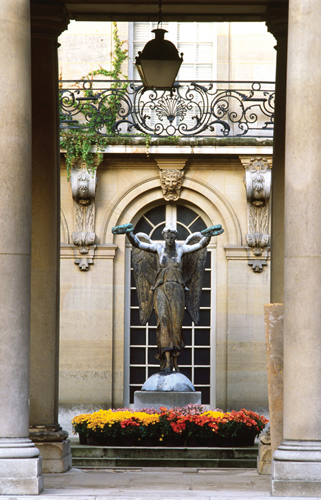
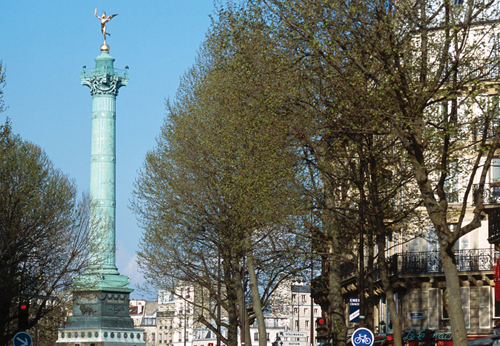
oppression. In its place is the bronze Colonne de Juillet (July Column),
52 m (171 ft) high and crowned by the Angel of Liberty, which
commemorates those who died in the revolutions of 1830 and 1848. Looming
behind it is the Opéra Bastille, once the largest opera house in the
world, which opened on the bicentennial of the Revolution in 1989.

Place de la Bastille
Marché d’Aligre
Set
around an old guardhouse and clocktower, the wonderful Aligre market is
a melting pot of Parisians from all walks of life. It dates back to
1643 and was once as important as the more famous Les Halles
In the gourmet covered market you’ll see everything from rows of
pheasants to a whole wild boar hanging from the stalls. North African
traders give the outdoor produce market an ethnic flare. The flea market
dates back to the days when nuns distributed second-hand clothing to
the poor .pl d’Aligre
Open am daily
The Passages
The
Bastille has been a quarter of working-class artisans and craft guilds
since the 17th century and many furniture makers are still located in
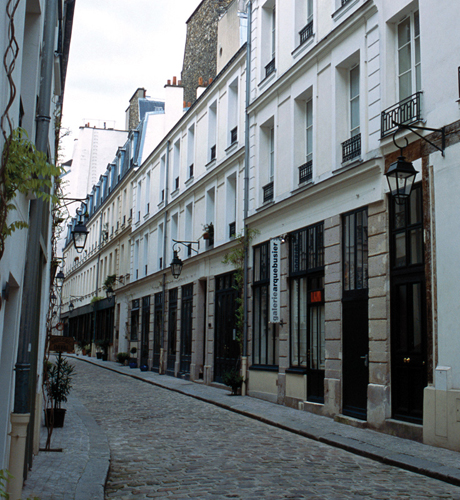
these small alleyways, called passages.
The rue du Faubourg-St-Antoine is lined with shops displaying a
striking array of both traditional period furniture and modern designs,
but don’t neglect to visit the narrow passages,
such as the Passage de l’Homme, running off this and other streets in
the Bastille. Many artists and craftspeople have their ateliers
(workshops) in these atmospheric alleys.

Bastille passage
Rue de Lappe
Once famous for its 1930s dance halls (bals musettes),
rue de Lappe is still the Bastille’s after-dark hotspot. This short,
narrow street is filled with bars, clubs, restaurants and cafés, and
positively throbs with music. Crowds of hip night-owls trawl the
cobblestones looking for action, and spill into the adjoining rue de la
Roquette and rue de Charonne where there are even more trendy bars and
restaurants.Maison Européenne de la Photographie
This
excellent gallery showcasing contemporary European photography opened
in 1996 in an early 18th-century mansion, Hôtel Hénault de Cantorbre.
The restoration is a mix of historic features and modern spaces that
show off its permanent collection and changing exhibitions, including
multimedia works.5–7 rue de Fourcy, 75004
Open 11am–8pm Wed–Sun
Maison de Victor Hugo
French
author Victor Hugo (1802–85) lived on the second floor of the Hôtel de
Rohan-Guéménée, the largest house on the place des Vosges, from 1832 to
1848. He wrote most of
Les Misérables
here and many other works. In 1903 the house became a museum of his life.6 pl des Vosges, 75004
Open 10am–6pm Tue–Sun
Closed public holidays
Admission charge for exhibitions

Maison de Victor Hugo