Paris was born on the Ile de la Cité. The first settlers came to this island on the Seine in 300 BC
and it has remained a focus of church and state power through the
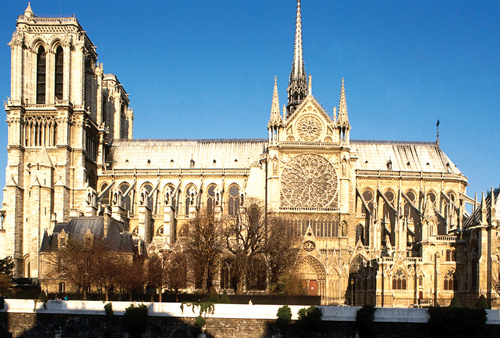
centuries, with the great cathedral of Notre-Dame and the law courts of
the Palais de Justice commanding the island. This tiny land mass also
has the honour of being the geographical heart of the city – all
distances from Paris are measured from Point Zéro, just outside
Notre-Dame. While the Ile de la Cité seems overrun with tourists, the
smaller Ile St-Louis, connected to its neighbour by a footbridge, has a
village-like feel and has been an exclusive residential enclave since
the 17th century. Its main street is lined with shops, galleries and
restaurants and is a wonderful place for a stroll.
Sights
Conciergerie
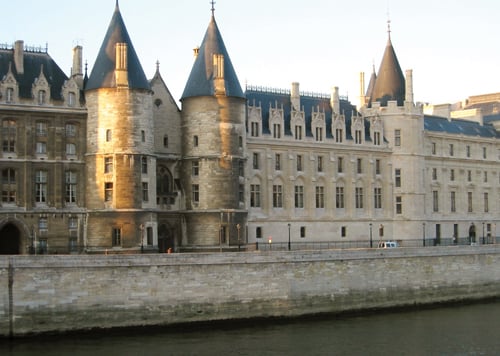
This
imposing Gothic palace, built by Philippe le Bel (the Fair) in 1301–15,
has a rich history. Parts of it were turned into a prison, controlled
by the concierge, or keeper of the king’s mansion, hence the name.
Ravaillac, assassin of Henri IV, was tortured here, but it was during
the Revolution that the prison became a place of terror, when thousands
were held here awaiting execution at the guillotine. Today you can see
the Salle des Gardes and the magnificent vaulted Salle des Gens d’Armes
(Hall of the Men-at Arms), the medieval kitchens, torture chamber, the
Bonbec tower, and the prison. The cell where Marie-Antoinette was held
and the history of other famous Revolution prisoners is on display.
Outside, look for the square Tour de l’Horloge, erected in 1370, which
houses the city’s first public clock, still ticking away.2 blvd du Palais, 75001
Open Mar–Oct: 9:30am-6pm daily; Nov–Feb: 9am–5pm daily
Admission charge

Conciergerie
Marché aux Fleurs
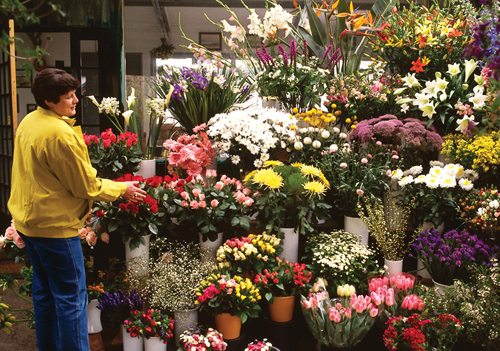
One
of the last remaining flower markets in the city centre, the beautiful
Marché aux Fleurs is also the oldest, dating from the early 19th
century. It is held year-round, Monday to Saturday, in place
Louis-Lépine, filling the north side of the Ile de la Cité with dazzling
blooms from 8am to 7pm. There is also a bird market here on Sundays .

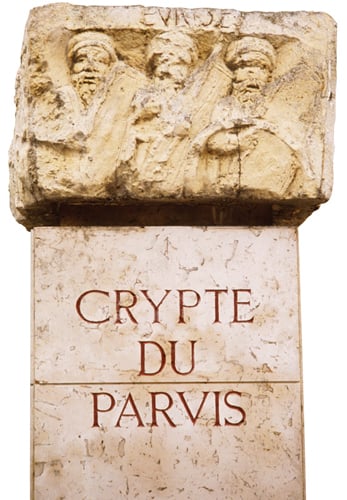
Crypte Archéologique
Fascinating
remnants of early Paris dating back to Gallo-Roman times were
discovered in 1965 during an excavation of the square in front of
Notre-Dame in order to build an underground car park. The archaeological
crypt displays parts of 3rd-century Roman walls, rooms heated by
hypocaust, as well as remains of medieval streets and foundations. The
scale models showing the evolution of the city from its origins as a
Celtic settlement are particularly interesting.Place du Parvis-Notre-Dame, 75001
Open 10am–6pm Tue– Sun
Admission charge

Crypte Archéologique
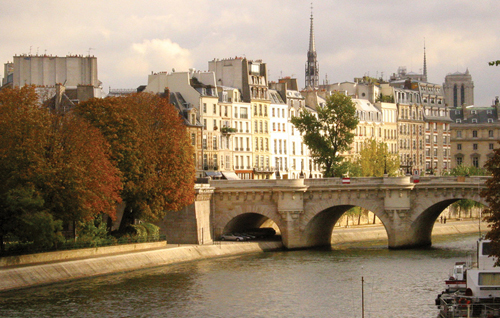
Pont Neuf
An
incongruous name (New Bridge) for the oldest surviving bridge in Paris.
Following its completion in 1607, Henri IV christened it by charging
across on his steed; the bronze equestrian statue of the king was melted
down during the Revolution but replaced in 1818. Decorated with
striking carved heads, the bridge was unique for its time in that it had
no houses built upon it. It has 12 arches and a span of 275 m (912 ft)
extending both sides of the island.

Pont Neuf and Square du Vert-Galant
Palais de Justice
Stretching
across the west end of the Ile de la Cité from north to south, the
Palais de Justice, along with the Conciergerie, was once part of the
Palais de la Cité, seat of Roman rule and the home of the French kings
until 1358. It took its present name during the Revolution and the
buildings now contain the city’s law courts. You can watch the courts in
session from Monday to Friday and wander through the public areas, with
their many ornate features. The Cour du Mai (May Courtyard) is the area
through which prisoners passed during the Revolution on their way to
execution.4 blvd du Palais, 75001
Open 9am–6pm Mon–Fri, 9:30am–6pm Sat
Free
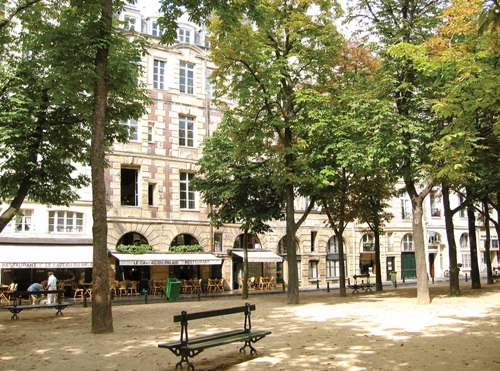
Place Dauphine
In
1607 Henri IV transformed this former royal garden into a triangular
square and named it after his son, the Dauphin and future King Louis
XIII. Surrounding the square were uniformly built houses of brick and
white stone; No. 14 is one of the few that retains its original
features. One side was destroyed to make way for the expansion of the
Palais de Justice. Today this quiet, charming spot is a good place to
relax over a drink or meal (see La Rose de France).

St-Louis-en-l’Ile
This
lovely Baroque church on Ile St-Louis was designed between 1664 and
1726 by the royal architect Louis Le Vau. The exterior features an iron
clock (1741) at the entrance and an iron spire, while the interior,
richly decorated with gilding and marble, has a statue of St Louis
holding his Crusader’s sword.19 bis rue St-Louis-en-l’Ile, 75004
Open 9am–noon, 2–7pm, Tue–Sun
Square du Vert-Galant
The
tranquil western tip of the Ile de la Cité, with its verdant chestnut
trees, lies beneath the Pont Neuf – take the steps behind Henri IV’s
statue. This king had a notoriously amorous nature and the name of this
peaceful square recalls his nickname, meaning “old flirt”. From here
there is a wonderful view of the Louvre and the Right Bank. It is also the departure point for cruises on the Seine on Les Vedettes du Pont-Neuf .