Painters and poets, from Picasso to
Apollinaire, put the “art” in Montmartre, and it will forever be
associated with their Bohemian lifestyles of the late 19th and early
20th centuries. There are plenty of artists around today too, painting
quick-fire portraits of tourists in the place du Tertre. The area’s name
comes from “Mount of Martyrs”, commemorating the first bishop of Paris,
St Denis, who was decapitated here by the Romans in AD 250. Parisians,
however, call it the “Butte” (knoll) as it is the highest point in the
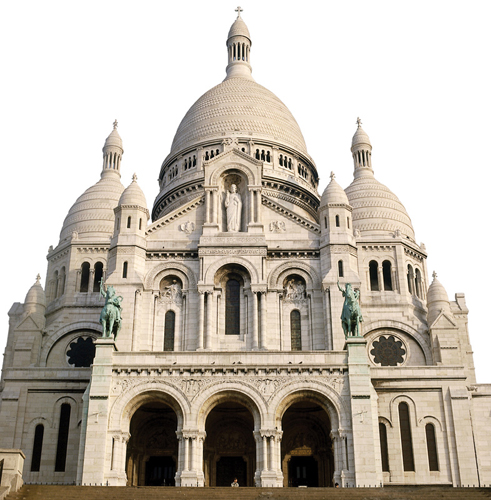
city. Throngs of tourists climb the hill for the stupendous view from
Sacré-Coeur, crowding the main square, but you can still discover
Montmartre’s charms along the winding back streets, small squares and
terraces. Below the hill, Pigalle, once home to dance halls and
cabarets, has largely been taken over by sleazy sex shows along the
boulevard de Clichy.
The Montmartre VineyardsIt’s hard to imagine it today, but Montmartre was |
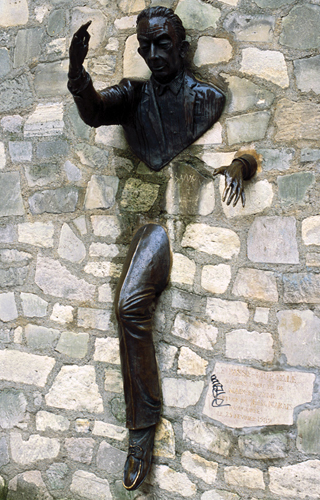
Street art, Montmartre
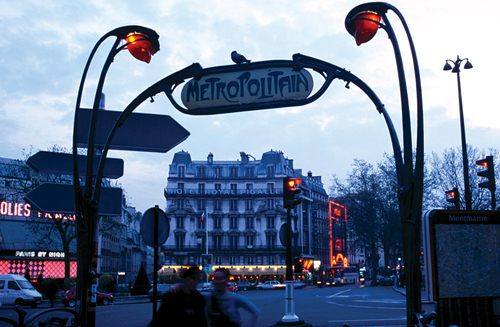
Place Pigalle
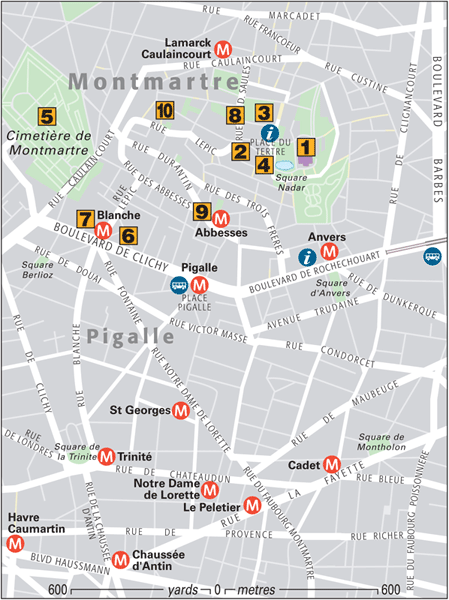
Sights
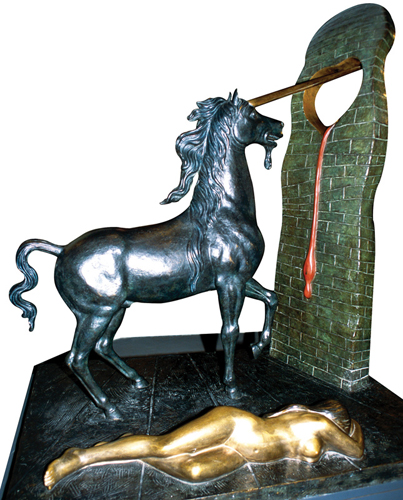
Espace Montmartre Salvador Dalí
The
Dalí works here may not be the artist’s most famous or best, but this
museum is still a must for any fan of the Spanish Surrealist (see Salvador Dalí).
More than 300 of his drawings and sculptures are on display amid
high-tech light and sound effects, including Dalí’s voice, which create a
“surreal” atmosphere. There are also bronzes of his memorable “fluid”
clocks .11 rue Poulbot, 75018
Open 10am–6pm daily
Admission charge

Salvador Dalí
Musée de Montmartre
The
museum is set in Montmartre’s finest townhouse, known as Le Manoir de
Rose de Rosimond after the 17th-century actor who once owned it. From
1875 it provided living quarters and studios for many artists. Using
drawings, photographs and memorabilia, the museum presents the history
of the Montmartre area, from its 12th-century convent days to the
present, with an emphasis on the Bohemian lifestyle of the belle époque. There is even a re-created 19th-century bistro.12 rue Cortot, 75018
Open 11am–6pm Tue–Sun
Closed 1 Jan, 1 May, 25 Dec
Admission charge
Place du Tertre
At
130 m (430 ft), Montmartre’s old village square, whose name means
“hillock”, is the highest point in the city. Any picturesque charm it
might once have had is now sadly hidden under the tourist-trap veneer of
over-priced restaurants and portrait artists hawking their services,
although the fairy lights at night are still atmospheric. No. 21 houses
the Old Montmartre information office, with details about the area.
Nearby is the church of St-Pierre de Montmartre, all that remains of the
Benedictine abbey which stood here from 1133 until the Revolution.Cimetière de Montmartre
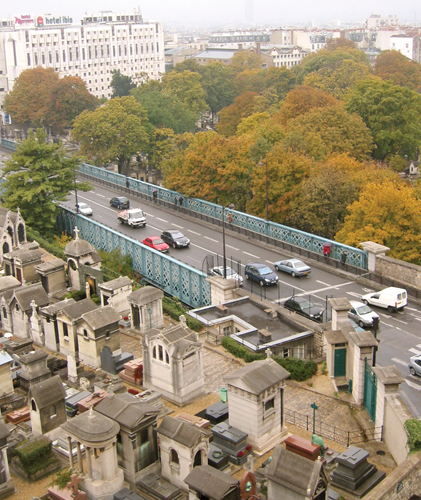
The
main graveyard for the district lies beneath a busy road in an old
gypsum quarry, though it’s more restful than first appears when you
actually get below street level. The illustrious tombs, many with
ornately sculpted monuments, packed tightly into this intimate space
reflect the artistic bent of the former residents, who include composers
Hector Berlioz and Jacques Offenbach, writers Stendhal and Alexandre
Dumas, Russian dancer Nijinsky and the film director François Truffaut.20 ave Rachel, 75018

Musée de l’Erotisme
With
more than 2,000 items from around the world, this museum presents all
forms of erotic art from painting, sculpture, photos and drawings to
objects whose sole purpose seems to be titillation. It’s all tastefully
presented, however, reflecting the sincere interest of the three
collectors who founded the museum in 1997 to explore the cultural
aspects of eroticism. The displays range from spiritual objects of
primitive cultures to whimsical artworks.72 blvd de Clichy, 75018
Open 10am–2am daily
Admission charge
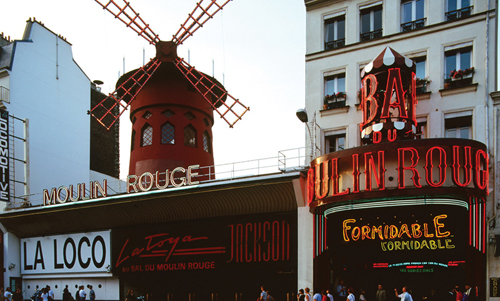
Moulin Rouge
The Moulin Rouge (“red windmill”) is the most famous of the belle époque
dance halls which scandalized respectable citizens and attracted
Montmartre’s artists and Bohemians. Henri de Toulouse-Lautrec
immortalized the era with his sketches and posters of dancers such as
Jane Avril, some of which now grace the Musée d’Orsay. Cabaret is still performed here .82 blvd de Clichy, 75018
Shows daily at 9pm & 11pm (dinner at 7pm)

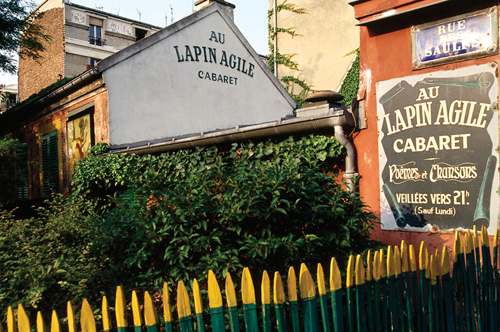
Au Lapin Agile
This belle époque
restaurant and cabaret was a popular hangout for Picasso, Renoir, and
poets Apollinaire and Paul Verlaine. It took its name from a humorous
painting by André Gill of a rabbit (lapin) leaping over a cooking pot, called the “Lapin à Gill”. In time it became known by its current name (“nimble rabbit”).22 rue des Saules, 75018
Open 9pm–2am Tue–Sun

Au Lapin Agile
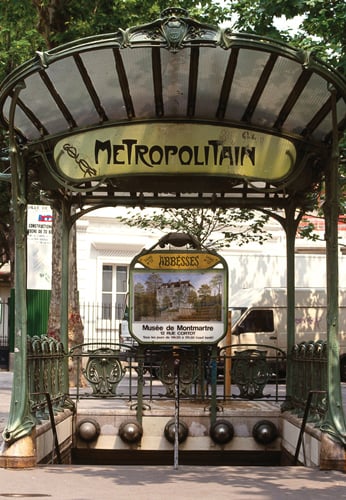
Place des Abbesses
This
pretty square lies at the base of the Butte, between Pigalle and the
place du Tertre. Reach it via the metro station of the same name to
appreciate one of the few original Art Nouveau stations left in the
city. Designed by the architect Hector Guimard, it features ornate green
wrought-iron arches, amber lanterns and a ship shield, the symbol of
Paris, on the roof. Along with Porte Dauphine, it is the only station to
retain its original glass roof. A mural painted by local artists winds
around the spiral staircase at the entrance. But don’t walk to the
platform, take the elevator – it’s the deepest station in Paris, with
285 steps.

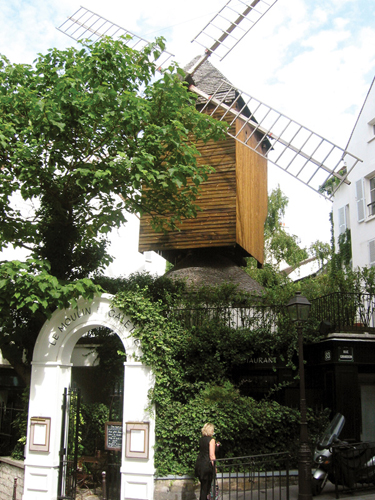
Moulin de la Galette
Montmartre
once had more than 30 windmills, used for pressing grapes and grinding
wheat; this is one of only two still standing. During the siege of Paris
in 1814 its owner, Pierre-Charles Debray, was crucified on its sails by
Russian soldiers. It became a dance hall in the 19th century and
inspired paintings by Renoir and Van Gogh. It is now a restaurant, but it can be admired from outside, and rue Lepic is worth a visit for its shops and restaurants.79 rue Lepic, 75018

Moulin de la Galette