Conciergerie
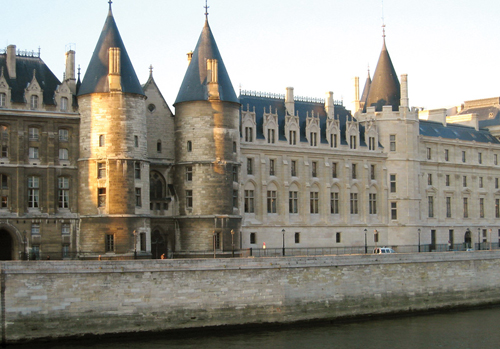
Originally
home to the caretaker and guards of the Palais de Justice, the
Conciergerie was turned into a jail at the end of the 14th century. It
took its place in history during the Revolution, when more than 4,000
citizens (including Marie-Antoinette) were held prisoner here, half of
whom were guillotined. It remained a prison until 1914 .

Conciergerie
Palais de Justice
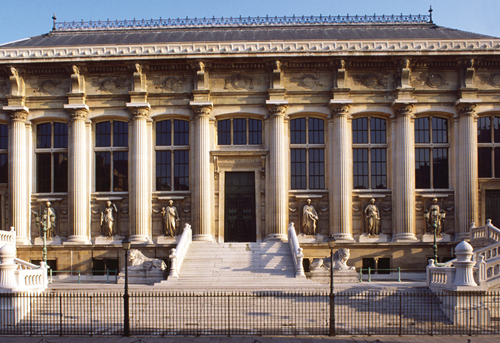
The
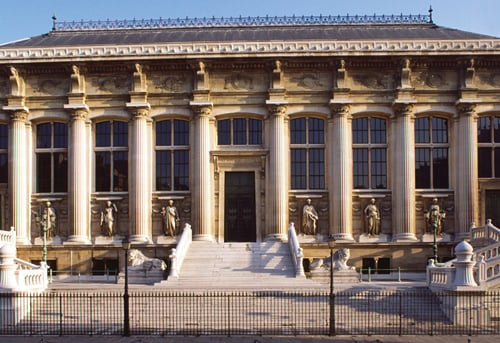
enormous building that now houses the French law courts and judiciary
dates back to Roman times and was the royal palace until the 14th
century, when Charles V moved the court to the Marais. During the
Revolution, thousands were sentenced to death in the Première Chambre
Civile, allegedly the former bedroom of Louis IX .

Palais de Justice
Hôtel Dieu
The
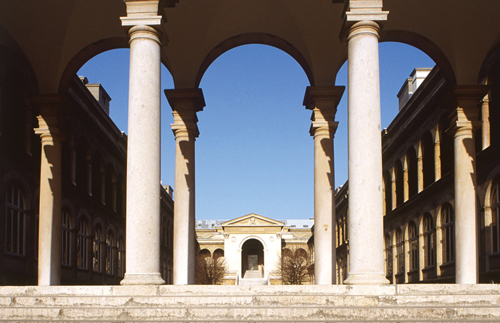
Hôtel Dieu, now the hospital for central Paris, was built on the site
of a foundling home in 1866–78; the original 12th-century building on
the Ile de la Cité was demolished during the urban renewal schemes of
the 19th century. A monument in the courtyard commemorates a courageous
battle here in 1944 when Paris police held out against the Nazis.1 pl du Parvis Notre-Dame, 75001

Palais de l’Elysée
This
imposing palace has been the official residence of the President of the
French Republic since 1873. It was built as a private mansion in 1718
and subsequently owned by Madame de Pompadour, mistress of Louis XV, who
extended the English-style gardens to the Champs-Elysées. Napoleon signed his abdication here in 1815.Hôtel de Ville
Paris’s
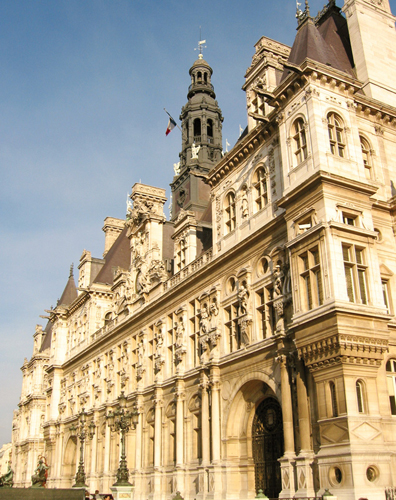
city hall sports an elaborate façade, with ornate stonework, statues
and a turreted roof. It is a 19th-century reconstruction of the original
town hall, which was burned down in the Paris Commune
of 1871. Though the pedestrianized square in front is pleasant now, it
was once the site of gruesome executions: Ravaillac, assassin of Henri
IV, was quartered alive here in 1610.4 pl de l’Hôtel de Ville, 75001
01 42 76 40 40
Open for tours only (booking essential: 01 42 76 54 04)
Free

Hôtel de Ville
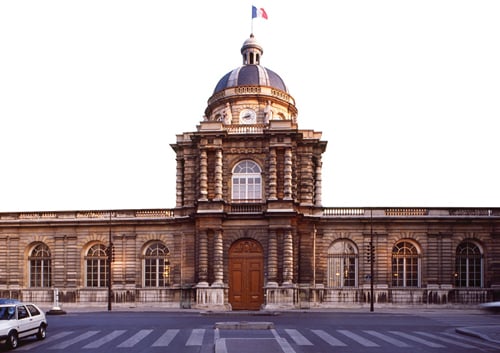
Marie
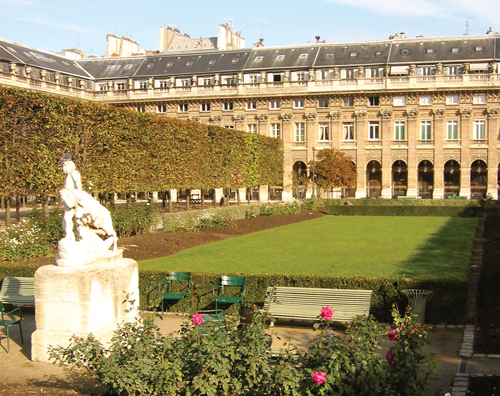
de Médicis had architect Salomon de Brosse model this palace after her
childhood home, the Pitti Palace in Florence. Shortly after its
completion she was exiled by her son, Louis XIII. It was seized from the
Crown during the Revolution to become a prison. The building now houses
the French Senate. Nearby is the Musée du Luxembourg.15 rue de Vaugirard, 75006
01 44 54 19 49
Admission charge

Palais du Luxembourg