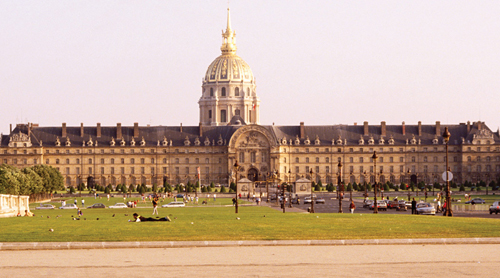
The “invalides” for whom this imposing Hôtel was
built were wounded soldiers of the late 17th century. Louis XIV had the
building constructed between 1671 and 1678, and veterans are still
housed here, although only a dozen or so compared to the original 6,000.
They share their home with the greatest French soldier of them all,
Napoleon Bonaparte, whose body rests in a crypt directly below the
golden dome of the Dôme Church. Other buildings accommodate military
offices, the Musée de l’Armée and smaller military museums.
129 rue de Grenelle, 75007 01 44 42 38 77
www.invalides.org
Open
Apr–Sep:10am–6pm daily, until 9pm Tue (Oct–Mar: until 5pm); closed first
Mon of month (except Jul–Sep), 1 Jan, 1 May, 1 Nov, 25 Dec Admission €8.50 adults; €6.50 concessions; under 18s free; under 26s (EU only) free Limited disabled access
|
Approach the Hôtel
des Invalides from the Seine for the best view, and then walk around to
the south side (by the Dôme Church) to reach the ticket office. You will
need a ticket for the museums and to see Napoleon’s Tomb. If time is
short, concentrate on the Musée de l’Armée, before walking through to
the front of the buildings and reaching the impressive cobbled courtyard
directly in front of the Dôme Church. |

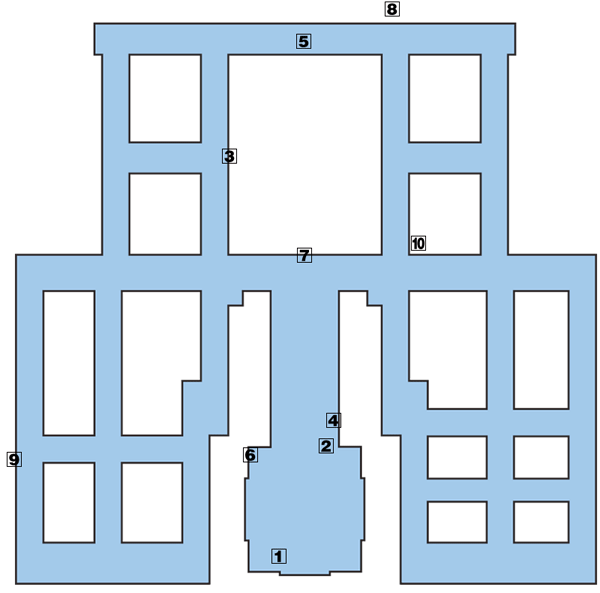
Hôtel des Invalides Floorplan
Le Café du Musée, between the Varenne metro station and the Musée Rodin is a lovely spot for a drink. |
|
A ticket provides access to all attractions. |
|
Top 10 Features
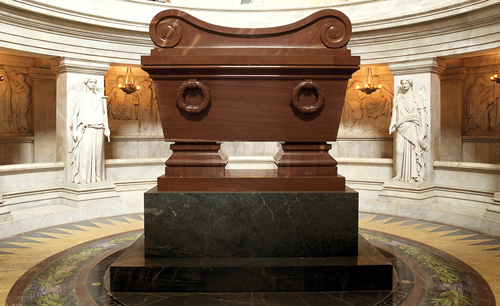
Napoleon’s Tomb
Napoleon’s
body was brought here from St Helena in 1840, some 19 years after he
died. He rests in splendid grandeur in a cocoon of six coffins, almost
situated “on the banks of the Seine” as was his personal wish.

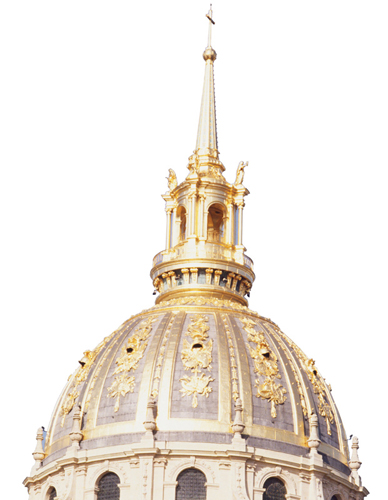
Golden Dome
The
second church at the Hôtel was begun in 1677 and took 27 years to
build. Its magnificent dome stands 107 m (351 ft) high and glistens as
much now as it did when Louis XIV, the Sun King, had it first gilded in
1715.

Musée de l’Armée
The
Army Museum is one of the largest collections of militaria in the
world. Enthusiasts will be absorbed for hours, and even the casual
visitor
will be fascinated. The “Department Moderne”, which traces
military history from Louis XIV to Napoleon III, has been revamped and
is especially worth a visit .

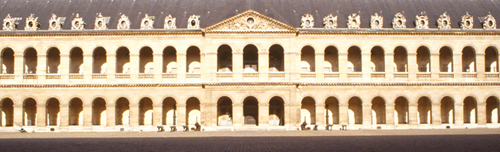
Musée de l’Armée façade
Dôme Church Ceiling
The colourful, circular painting on the interior of the dome above the crypt is the Saint Louis in Glory
painted in 1692 by the French artist, Charles de la Fosse. Near the
centre is St Louis, who represents Louis XIV, presenting his sword to
Christ in the presence of the Virgin and angels.
Hôtel des Invalides
One
of the loveliest sights in Paris, the Classical façade of the Hôtel is
four floors high and 196 m (645 ft) end to end. Features include the
dormer windows with their variously shaped shield surrounds.

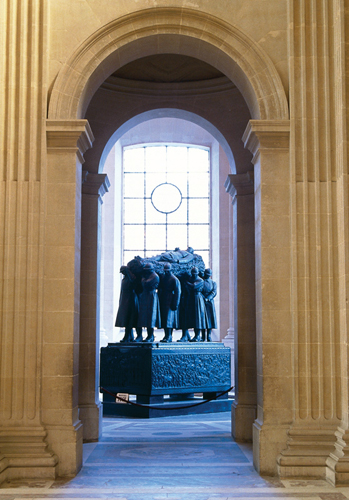
Church Tombs
Encircling
the Dôme Church are the imposing tombs of great French military men,
such as Marshal Foch and Marshal Vauban, who revolutionized military
fortifications and siege tactics.

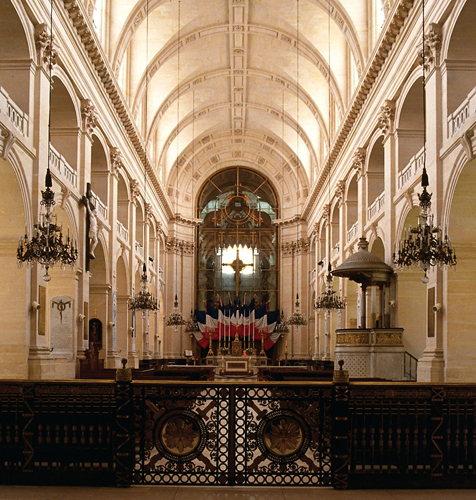
St-Louis-des-Invalides
Adjoining
the Dôme Church is the Invalides complex’s original church. It is worth
seeing for its 17th-century organ, on which the first performance of
Berlioz’s Requiem was given.

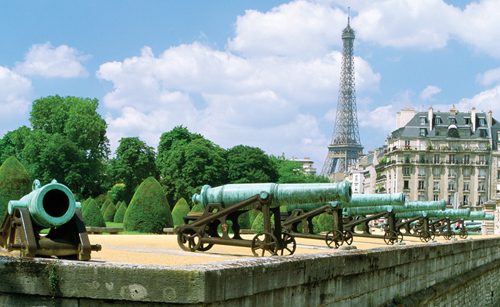
Invalides Gardens
The
approach to the Hôtel is across public gardens and then through a gate
into the Invalides Gardens themselves. Designed in 1704, their paths are
lined by 17th- and 18th-century cannons.

Musée de l’Ordre de la Libération
The
Order of Liberation, France’s highest military honour, was created by
Général de Gaulle in 1940 to acknowledge contributions during World War
II. The museum details the history of the honour and the wartime Free
French movement.
Musée des Plans-Reliefs
Maps
and models of French forts and fortified towns are displayed here and
some of them are beautifully detailed, such as the oldest model on
display, of Perpignan in 1686.