Louvre Collections
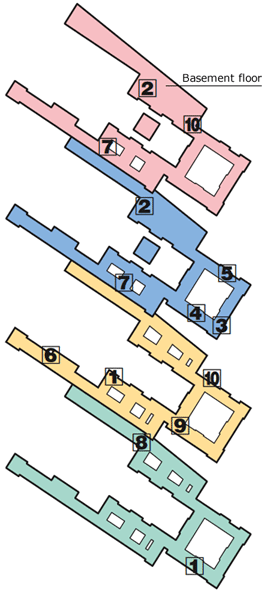
Collections floorplan
Highlights include the Tomb of Philippe Pot by Antoine le Moiturier, the Marly Horses and works by Pierre Puget in the glass-covered courtyards.
Italian Sculpture
Highlights of this collection, dating from the early Renaissance, include a 15th-century Madonna and Child by Donatello and Michelangelo’s
Slaves
.
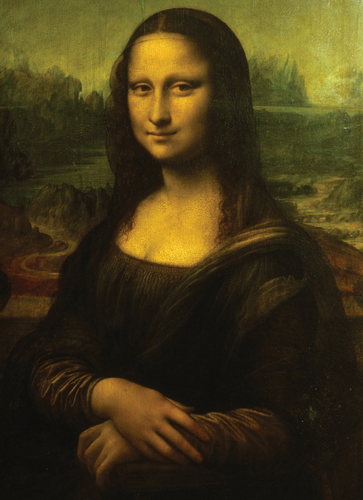
Leonardo da Vinci and the Mona Lisa
Born in Vinci to a
wealthy family, Leonardo da Vinci (1452–1519) first took up an
apprenticeship under the Florentine artist Andrea del Verrocchio, then
served the Duke of Milan as an architect and military engineer, during
which time he painted the acclaimed Last Supper mural (1495). On his return to Florence, to work as architect to Cesare Borgia, he painted his most celebrated portrait, the Mona Lisa (1503–06). It is also known as La Gioconda,
allegedly the name of the model’s aristocratic husband, although recent
speculation suggests that da Vinci himself could be the subject. The
masterpiece, particularly the sitter’s mysterious smile, shows mastery
of two techniques: chiaroscuro, the contrast of light and shadow, and sfumato,
subtle transitions between colours. It was the artist’s own favourite
painting and he took it with him everywhere. In 1516 François I brought
them both to France, giving da Vinci the use of a manor house in Amboise
in the Loire Valley, where he died three years later. The Mona Lisa is the Renaissance master’s only known surviving work of portraiture.
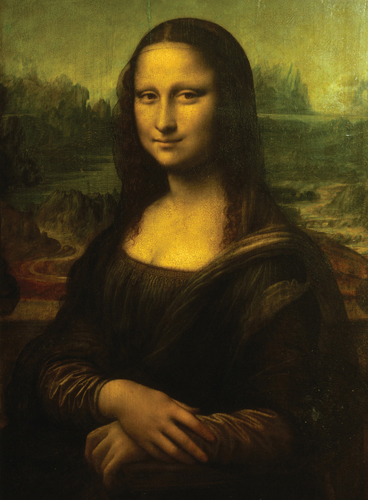
Mona Lisa, Leonardo da Vinci’s enigmatic portrait
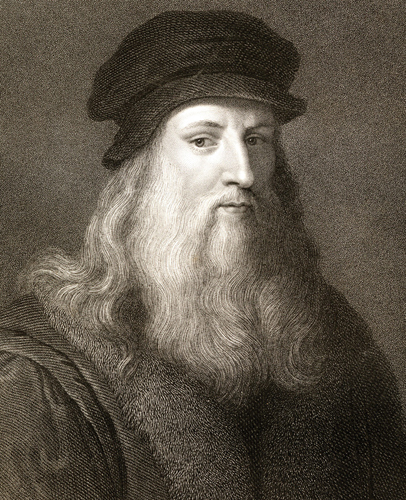
Leonardo da Vinci
A Renaissance man extraordinaire, Leonardo was not only an artist
but a sculptor, engineer, architect and scientist. His many
achievements included the study of anatomy and aerodynamics.
Top 10 Louvre Residents