Famous Visitors to Notre-Dame
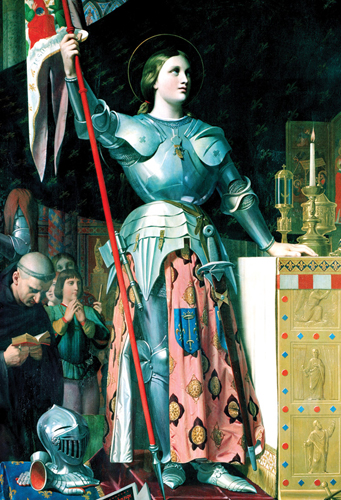
Joan of Arc
The
French patriot Jeanne d’Arc (1412–31), who defended her country against
the invading English, had a posthumous trial here in 1455, despite
having been burnt at the stake 24 years earlier. At the re-trial she was
found to be innocent of heresy.

Joan of Arc
François II and Mary Stuart
Mary
Stuart (1542–87) (Mary Queen of Scots) had been raised in France and
married the Dauphin in 1558. He ascended the throne as François II in
1559 and the king and queen were crowned in Notre-Dame.
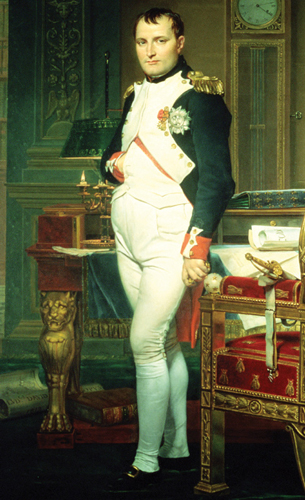
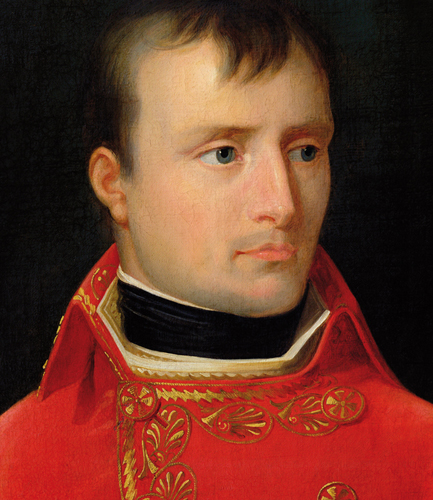
Napoleon
The
coronation of Napoleon (1769–1821) in Notre-Dame in 1804 saw the eager
general seize the crown from Pope Pius VII and crown himself emperor and
his wife Josephine, empress.


Napoleon
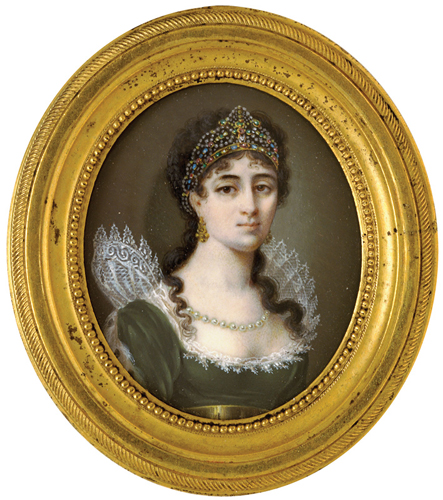
Josephine
Josephine’s (1763–1814) reign as Empress of France lasted only five years; Napoleon divorced her in 1809.

Empress Josephine
Pope Pius VII
In
1809 Pope Pius VII (1742– 1823), who oversaw the Notre-Dame coronation,
was taken captive when the emperor declared the Papal States to be part
of France. The pope was imprisoned at Fontainebleau, 50 km (30 miles)
south of Paris.

Philip the Fair
In
1302 the first States General parliament was formally opened at
Notre-Dame by Philip IV (1268–1314), otherwise known as Philip the Fair.
He greatly increased the governing power of the French royalty.
Henry VI of England
Henry
VI (1421–71) became King of England at the age of one. Like his father,
Henry V, he also claimed France and was crowned in Notre-Dame in 1430.
Marguerite of Valois
In
August 1572, Marguerite (1553–1589), sister of Charles IX, stood in the
Notre-Dame chancel during her marriage to the protestant Henri of
Navarre (1553–1610), while he stood alone by the door.
Henri of Navarre
As
a Protestant Huguenot, Henri’s marriage to the Catholic Marguerite
resulted in uprising and massacres. In 1589 he became Henri IV, the
first Bourbon king of France, and converted to Catholicism, declaring
that “Paris is well worth a mass”.
Charles de Gaulle
On
26 August 1944, Charles de Gaulle entered Paris and attended a Te Deum
service to celebrate the liberation of Paris, despite the fact that
hostile snipers were still at large both inside and outside the
cathedral.
The Man Who Saved Notre-Dame
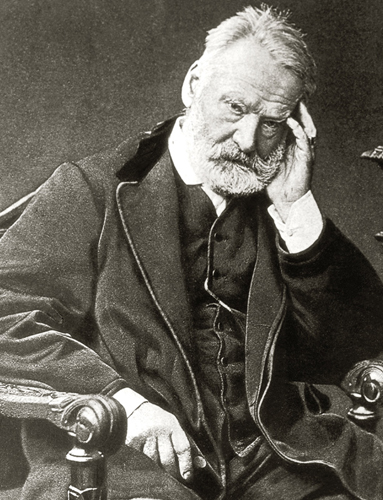
By 1831, when Victor Hugo’s novel Notre-Dame de Paris (The Hunchback of Notre-Dame)
was published, the cathedral was in a sorry state of decay. Even for
the crowning of Emperor Napoleon in 1804, the setting for such
ceremonious state occasions was crumbling and had to be disguised with
wall hangings and ornamentation. During the Revolution, the cathedral
was even sold to a scrap dealer, but was never actually demolished. Hugo
was determined to save the country’s spiritual heart and helped mount a
successful campaign to restore Notre-Dame before it was too late; the
man chosen to design and oversee the restoration was Eugène Emmanuel
Viollet-le-Duc (1814–1879). Paris-born, Viollet-le-Duc had already
proved his skill in restoration work, as evidenced by the cathedrals in
Amiens and Laon, and on the spectacular walled city of Carcassone in
southern France. Work began in 1841 and continued for 23 years until the
building was finished more or less as we see it today. Viollet-le-Duc
later went on to restore Sainte-Chapelle nearby.

Novelist Victor Hugo
Top 10 Events in Notre-Dame History
Construction on the cathedral begins (1163)
St Louis places the Crown of Thorns here temporarily (1239)
Construction is completed (1334)
Re-trial of Joan of Arc (1455)
Crowning of Emperor Napoleon (1804)
Publication of Hugo’s novel The Hunchback of Notre-Dame (1831)
Completion of 23-year restoration programme (1864)
Assassination attempt on Charles de Gaulle (1944)
De Gaulle’s Requiem Mass is held (1970)
Visit of Pope John Paul II (1980)